Digital Privacy at the Border: What Every International Traveler Should Know
By Tommy Pags | Pags on the Go
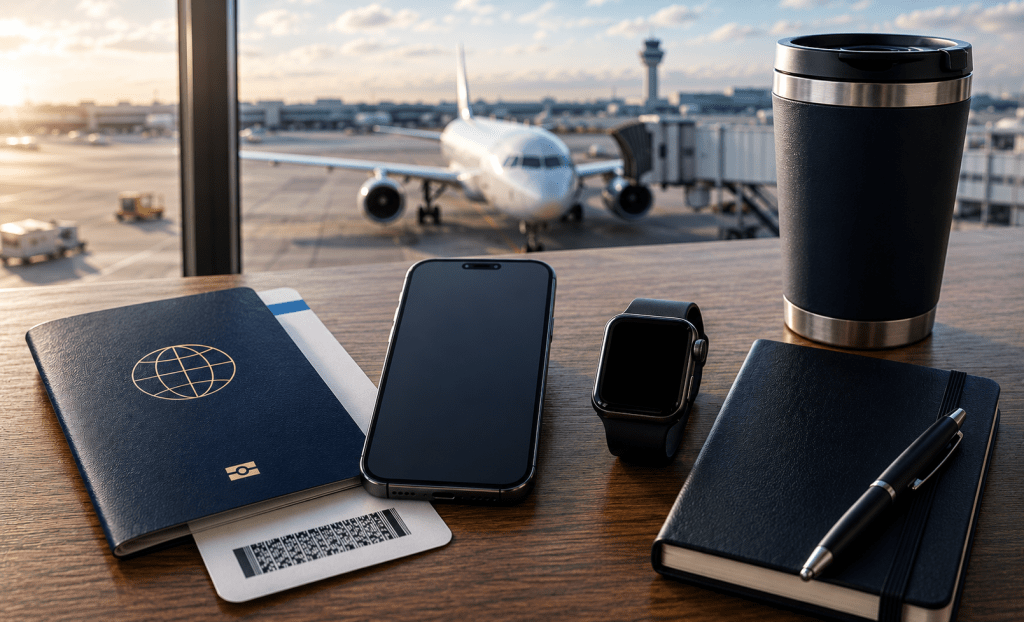
When most people prepare for an international trip, they think about passports, boarding passes, luggage, and maybe currency exchange.
Very few think about the one thing they carry that contains nearly their entire life:
Their smartphone.
For most of us, our phone isn’t just a communication device anymore. It’s our bank, our camera, our email inbox, our medical information, our travel history, our passwords, our social media accounts, and often the key to accessing almost every online service we use. That’s why digital privacy has become an important part of modern travel.
Privacy Isn’t About Having Something to Hide
Let’s get one thing out of the way.
This article isn’t about avoiding law enforcement or interfering with border inspections. U.S. Customs and Border Protection has an important responsibility to protect our borders. They also have legal authority, under certain circumstances, to inspect electronic devices when travelers enter the United States. My goal isn’t to tell people how to avoid inspections. My goal is to help travelers understand just how much personal information they carry every day and encourage them to think intentionally about protecting it.
There’s a difference.
Just because you travel with your entire digital life doesn’t mean you should.
Your Phone Knows More About You Than You Realize
Think about everything stored on the average smartphone.
- Banking apps
- Credit cards
- Password managers
- Email accounts
- Family photos
- Medical information
- Tax documents
- Business files
- Cloud storage
- Location history
- Travel reservations
- Social media
- Shopping history
- Two-factor authentication apps
That’s an incredible amount of personal information sitting in your pocket. Now add your smartwatch.
Many people don’t realize their smartwatch may also contain:
- Messages
- Calendar appointments
- Health data
- Contacts
- Payment cards
- Authentication notifications
- Email previews
- Location information
The average traveler is carrying more personal information today than most people kept in their entire home twenty years ago.
Good Digital Hygiene Makes Sense
Before every international trip, I recommend asking yourself a simple question:
Do I actually need this information on my device while I’m traveling?
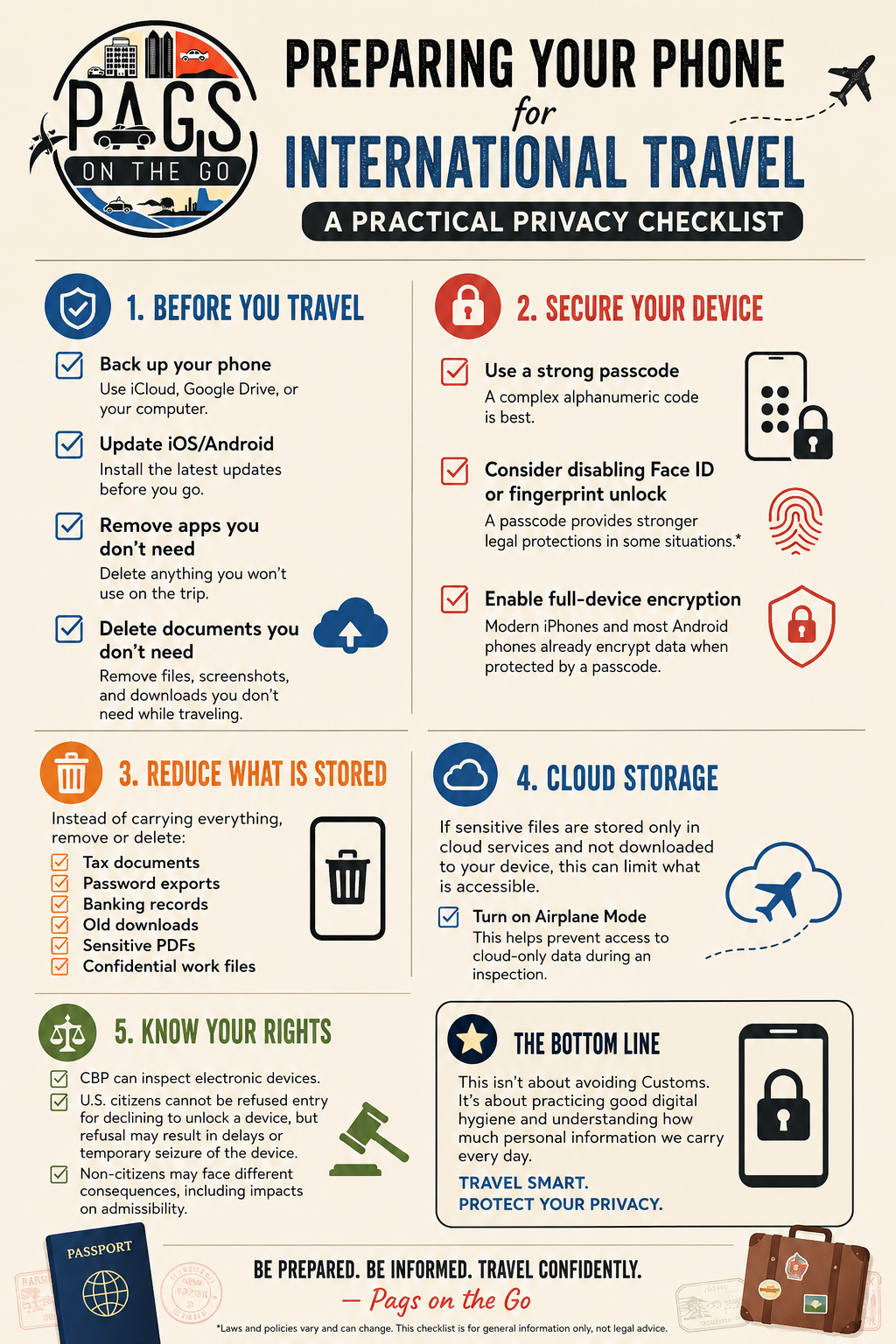
Sometimes the answer is yes. Many times it isn’t. Good digital hygiene means reviewing what’s stored on your phone before you travel, removing files you don’t need, backing up important information, and making sure your device is secured with a strong passcode.
These are good cybersecurity habits whether you’re crossing a border or not.
Know the Rules Before You Travel
Another part of being a smart traveler is understanding the rules before you arrive. Many travelers don’t realize that border inspections operate under different legal standards than a routine police stop inside the United States. Knowing that ahead of time helps you make informed decisions before your trip rather than being surprised at the inspection area. Preparation reduces stress.
My Approach
As someone who spends a significant amount of time traveling, I don’t see digital privacy as something only “privacy advocates” should care about.
I think everyone should. Not because we’re hiding something. Because privacy has value. We lock our homes. We lock our cars. We shred financial documents.
Protecting the information on our phones is simply the digital version of doing the same thing.
Download the Free Practical Privacy Checklist
Before your next international trip, download the Pags on the Go Practical Privacy Checklist.
It covers:
✔ Backing up your phone
✔ Securing your device with a strong passcode
✔ Reviewing cloud storage settings
✔ Reducing unnecessary files
✔ Preparing your smartwatch
✔ Understanding what information you carry across the border
Final Thoughts
Technology has made travel easier than ever. It has also made us more connected and more exposed than ever. You don’t have to be afraid of technology. You just have to be intentional about how you use it. Protect your privacy.
Travel Smart
Tommy Pags
 Pags on the Go