Tag: Air Travel

  • Why It’s “Too Hot to Fly” in Las Vegas, and What Smart Travelers Should Do About It

    Why It’s “Too Hot to Fly” in Las Vegas, and What Smart Travelers Should Do About It

    Why It’s “Too Hot to Fly” in Las Vegas, and What Smart Travelers Should Do About It

    If you’ve ever heard someone say, “It’s too hot for planes to fly,” it sounds ridiculous.

    After all, airplanes fly through deserts every day.

    But this week in Las Vegas, it became reality.

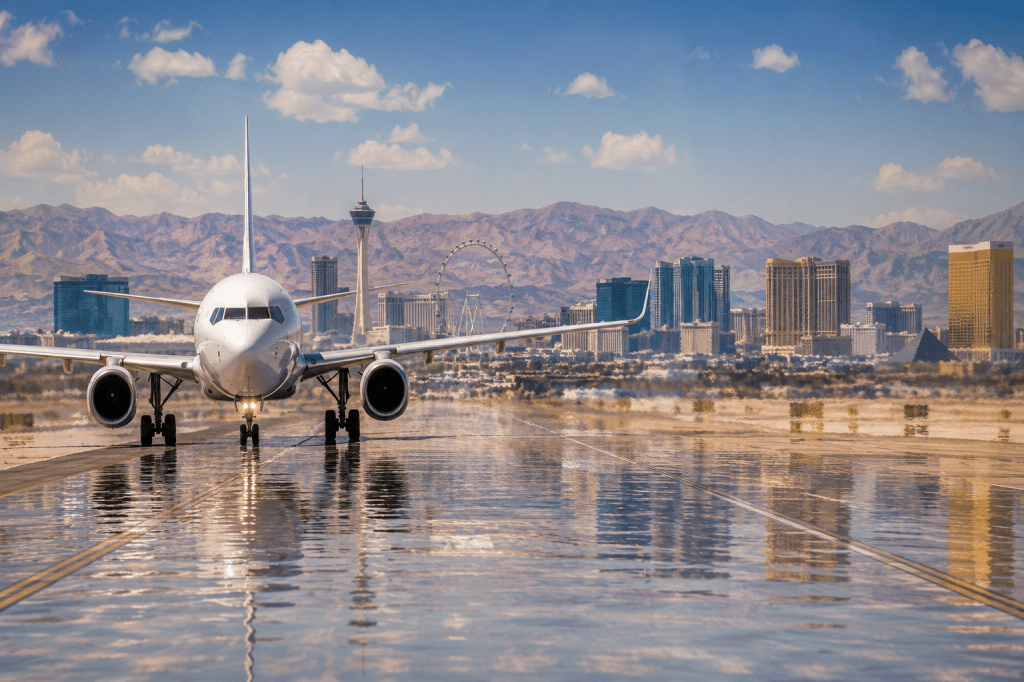
    As temperatures climbed well above 110°F, several flights at Harry Reid International Airport were delayed, and in one widely reported case, passengers were actually asked to volunteer to get off the airplane because it was too heavy to safely depart in the extreme heat.

    I’m actually in Las Vegas this week for the Summer Las Vegas Market, and let me tell you, it’s brutally hot outside. Walking between buildings feels like opening an oven door.

    So what’s really happening?

    The Science Is Actually Pretty Simple

    Airplanes fly because their wings generate lift.

    The hotter the air gets, the less dense it becomes. Think of it as the air becoming “thinner.” Thin air doesn’t give the wings as much to push against, and jet engines also produce slightly less thrust. The result is that airplanes need more runway and more speed before they can safely lift off.

    If the aircraft is carrying too much weight, there may not be enough runway available to safely accelerate and climb.

    That’s when airlines have a few options:

    • Delay the flight until temperatures cool.
    • Offload cargo or baggage.
    • Reduce fuel and make a fuel stop later.
    • Ask passengers to volunteer to take a later flight.

    Safety always wins.

    Las Vegas Makes It Even Harder

    Las Vegas is already challenging because of its desert climate.

    Now combine:

    • Temperatures over 110°F.
    • A busy airport with constant departures.
    • Aircraft loaded with passengers, luggage, and fuel.

    It’s the perfect recipe for weight restrictions. Fortunately, Harry Reid has one of the longest runways in the country, which helps, but even that has limits during extreme heat.

    Here’s the Real Travel Lesson

    The weather itself isn’t the story.

    Preparation is.

    One thing I’ve learned after hundreds of flights is that the travelers who recover the fastest are usually the ones who knew there was a problem before everyone else.

    Don’t just check the weather where you’re leaving.

    Check:

    • Your departure city.
    • Your connection city.
    • Your destination.

    A thunderstorm in Denver can affect your flight from Philadelphia to Salt Lake City. Extreme heat in Las Vegas can impact departures all afternoon.

    Weather anywhere in your aircraft’s journey can become your problem.

    The Biggest Mistake Travelers Make

    When a flight gets canceled, something interesting happens.

    Every single person on your airplane is suddenly trying to get to the exact same destination you are.

    If 180 passengers are stranded, they’re all competing for the same handful of available seats.

    That’s why speed matters.

    If you’ve already been watching your flight, already know your alternate flights, and already have the airline app open, you can often rebook before half the cabin has even stood up.

    I’ve seen travelers spend twenty minutes waiting in line at the gate while someone sitting in Row 22 has already secured the last available seat on the next departure using the airline’s app.

    My Advice

    Weather is one of the few things airlines can’t control.

    What you can control is your awareness.

    Know what’s happening before you leave for the airport.

    Watch your inbound aircraft.

    Know your backup flights.

    If things start going sideways, act quickly.

    In travel, information is often your biggest advantage.

    Travel Smart,

    Tommy Pags
  • TSA Is Finally Cracking Down on Oversized Carry-Ons. Good.

    TSA Is Finally Cracking Down on Oversized Carry-Ons. Good.

    TSA Is Finally Cracking Down on Oversized Carry-Ons. Good.

    If you’ve flown recently, you’ve probably seen it.

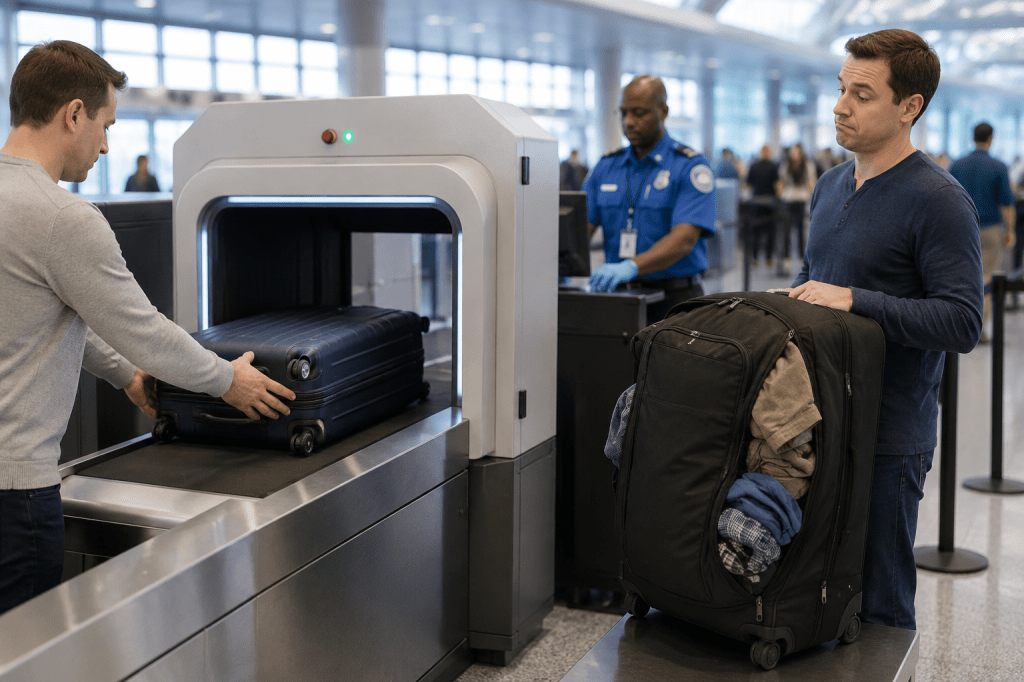
    Someone shows up at the TSA checkpoint with a carry-on that’s bulging at the seams, barely zips shut, and somehow is expected to fit through security, into the overhead bin, and not delay everyone else.

    That may be coming to an end.

    The TSA is rolling out advanced 3D CT scanners at airports across the country. Besides providing much better security screening, these machines have a smaller opening than many of the older X-ray scanners. If your carry-on won’t physically fit through the scanner, you may be sent back to the airline counter to check it before you can continue through security. In many cases, that means leaving the security line, checking the bag, and starting the process all over again. (New Jersey 101.5)

    The Rules Aren’t New

    This is an important distinction.

    The TSA isn’t changing carry-on size limits.

    The airlines already have those rules. For most major U.S. carriers, the standard maximum carry-on size is 22 x 14 x 9 inches, although every airline publishes its own baggage policy. (Yahoo Travel)

    What’s changing is enforcement.

    For years, many travelers pushed the limits. Overstuffed bags, oversized rollers, duffel bags that somehow became twice their normal size. Sometimes they made it through security only to be gate checked later. Sometimes they somehow squeezed into an overhead bin after holding up the boarding process.

    The new scanners don’t care how persuasive you are.

    If the bag doesn’t fit, it doesn’t fit.

    This Is One TSA Change I Completely Support

    I know this probably won’t be a popular opinion with everyone, but I’m all for it.

    If you’ve followed Pags on the Go, you know I’m constantly looking for ways to make air travel smoother.

    The biggest slowdowns at an airport usually happen when something falls outside the normal process.

    That could be:

    • An oversized carry-on
    • A bag stuffed beyond its intended size
    • Someone trying to bring unusual items through security
    • Travelers who aren’t prepared when they reach the checkpoint
    • People reorganizing their luggage in the middle of the line

    Every exception creates friction.

    One person takes an extra minute, then the next person waits, then the next, and before long the entire checkpoint slows to a crawl.

    Multiply that by hundreds of travelers every day, and the delays become significant.

    Frequent Travelers Already Understand This

    There are different types of travelers.

    Some people fly once or twice a year for vacation.

    Others live in airports.

    Business travelers and frequent flyers aren’t trying to rush because they’re impatient. They’re trying to eliminate unnecessary delays.

    That’s why they enroll in TSA PreCheck, CLEAR, or Digital ID.

    That’s why they board efficiently.

    That’s why they pack consistently.

    And that’s why they appreciate anything that keeps the line moving.

    When everyone follows the same process, the entire airport works better.

    Better Technology, Better Security

    The new CT scanners aren’t just about baggage size.

    They produce a three-dimensional image of your carry-on that allows TSA officers to rotate, zoom, and inspect its contents far more effectively than older X-ray systems. At many checkpoints, they also allow travelers to leave laptops and other electronics inside their bags, reducing the amount of unpacking at security. More than 250 U.S. airport checkpoints have already received these scanners, with additional installations planned. (New Jersey 101.5)

    So while stricter carry-on enforcement is getting the headlines, the real story is that airport security is becoming both smarter and, in many cases, faster.

    My Advice

    Before your next trip:

    • Measure your carry-on instead of guessing.
    • Don’t overstuff expandable luggage.
    • Check your airline’s published carry-on dimensions before you leave home.
    • If your bag is questionable, check it before getting in the TSA line.

    A few extra minutes at home can save you from being sent back to the ticket counter after you’ve already waited in security.

    For once, I think this is a change that benefits everyone.

    Less arguing.

    Less congestion.

    Fewer oversized bags competing for overhead space.

    And hopefully, a faster trip through the airport.

    That’s something I can get behind.

    Travel smart,
    Tommy Pags