Tag: airfare

  • Frontier’s $399 GoWild! Pass Might Be Perfect for Flying Home

    Frontier’s $399 GoWild! Pass Might Be Perfect for Flying Home

    Frontier’s $399 GoWild! Pass Might Be Perfect for Flying Home

    By Tommy Pags | Pags on the Go | November 21, 2026

    The first person I thought of when I saw Frontier’s new GoWild! pass was a college student going home for the weekend.

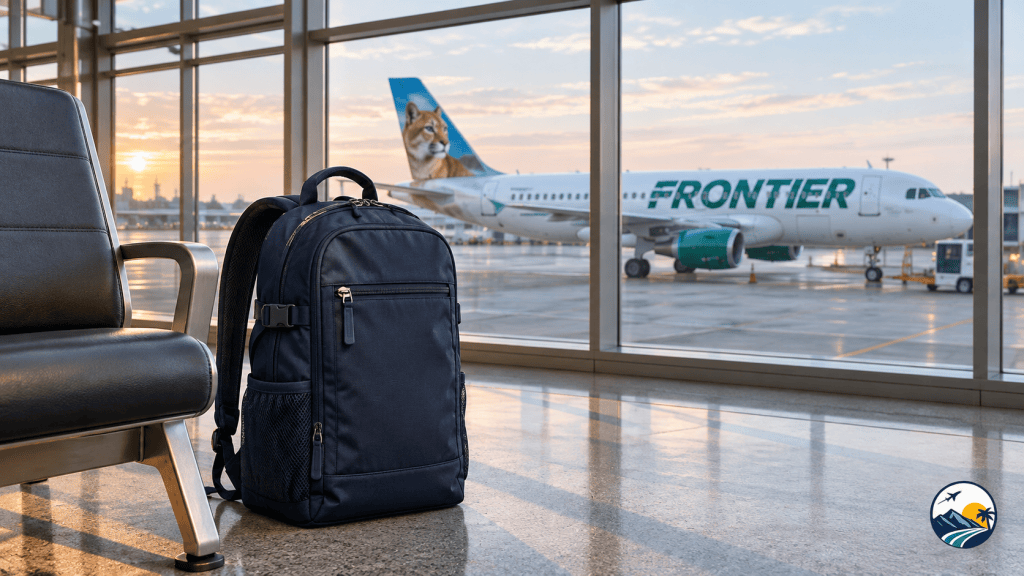
    There’s already a toothbrush at Mom and Dad’s. You can fit a couple of changes of clothes in a backpack. And if flying out Saturday morning instead of Friday night still gets you home for most of the weekend, you’ve got some room to work with.

    That’s where I can see a budget airline doing exactly what you need it to do. Get you from point A to point B so you can spend a couple of days with people you want to see.

    I’d look at the same pass very differently if I had a family of five, four days at the parks and a flight that had to land before dinner.

    What Frontier changed for 2027

    Frontier launched the 2027 GoWild! Annual Pass on November 18 at a limited-time price of $399 per person, or $349 for eligible members who already have Discount Den. You can start flying after purchase, and the pass covers eligible travel through December 31, 2027. For this edition, Frontier removed blackout dates and expanded early booking on select flights. Eligible seats are still limited, and Frontier can charge extra on designated peak days. Frontier’s launch announcement

    What to checkHow it works
    Domestic bookingsStandard GoWild! fares open the day before departure.
    International bookingsStandard GoWild! fares open 10 days before departure.
    Booking earlierSelect flights may be available earlier for an additional charge.
    The one-cent fareBase airfare starts at one cent per eligible flight segment in the standard booking window. Taxes, fees and applicable charges are extra. A connection adds another segment.
    Bags and seatsA qualifying underseat personal item is included. An overhead carry-on, checked bag or advance seat selection generally costs extra unless an eligible benefit covers it.
    Who can use itThe pass belongs to one traveler. Once you complete an eligible booking, you have a confirmed reservation.

    Frontier’s GoWild! booking rules · Taxes and fees · Frontier’s bag rules

    One detail I’d put on the calendar the day I bought it. The new 2027 pass automatically renews at $599 for 2028 under Frontier’s current terms. To avoid that charge, cancel through your Frontier Miles profile before October 31, 2027. Already have the older 2026–2027 Annual Pass? Frontier announced a separate, limited-time $499 early renewal through December 31, 2028, for eligible holders. Frontier’s renewal terms · Early-renewal offer

    A weekend with family is where I’d use it

    Think about the parent who wants to visit a child at college a few times a year, or the student who regularly flies home. If Frontier has a nonstop between the two airports and you can keep basics at both ends, it’s easy to picture getting on the plane with just a backpack. You can repeat that trip several times without paying to bring the same things back and forth.

    I’d check how often Frontier flies in both directions before buying. A route can look great on a map and still give you very few ways to get home Sunday night. If you’re relying on the standard booking window, you might leave for a domestic weekend visit before you can book the return. I’d want to know what the backup flight costs and whether I can live with getting home a day later. Frontier’s GoWild! booking rules

    A family vacation is a different calculation

    I can see using it for a vacation if the whole idea is to get away whenever the flights line up. Give me an open weekend, a place to stay and a backpack, and I’d take a look.

    A park trip works differently for me. If I’ve got four days, landing at 8 p.m. instead of 10 a.m. can cost me most of the first one. Add hotel reservations and kids who need to be back for school, and I want the outbound and return figured out before I start paying for the rest.

    Then there’s the luggage. A backpack works for a quick visit where you already have the essentials. It’s a different story when you’re packing for several kids for a week. If five people all need pass fares, that’s $1,995 upfront at the $399 launch price, before any airfare, taxes or luggage. You also need eligible seats for everyone on flights that work for the family. That’s when I’d price a regular round trip with the bags we’d actually bring. Frontier’s GoWild! offer and availability rules

    Why I’d usually book my work trips differently

    I have nothing against budget airlines. I spend a lot of time flying for work, and my travel days usually have something on the other end of them. I need a flight that gets me to a dealer meeting or a trade show on time. I know which seat I want, I’m bringing my laptop backpack, and depending on the trip I need a carry-on or a checked bag. I also like seeing another flight on the schedule if my first one falls apart.

    By the time I price the schedule, seat and bags I actually need, the budget option often comes in close to what I’d pay elsewhere. Sometimes it’s more. If the total and the schedule work, I’ll happily book it. That’s the comparison I make for every trip.

    How many trips would make it worth it?

    Take the routes you’d actually fly and compare the full round-trip price of a regular ticket with what you’d pay using GoWild!, including taxes, bags, seats and any early-booking or peak-day charges. Then ask how many times you’d realistically keep that difference.

    Say a regular round trip costs $180 all in and the same trip would cost you $80 using the pass. That’s $100 saved per trip, so you’d need four round trips to cover a $399 pass. If the savings are closer to $50, you’d need eight. Those are examples. Your routes, travel dates and packing habits will decide the math.

    My take? If Frontier has a route you’ll use again and again, the people you’re visiting can roll with a change of plans, and everything fits under the seat, I’d give GoWild! a serious look. A few extra weekends with family is a pretty good reason to run the numbers.

    Travel smart,
    Tommy Pags

    Related Pags on the Go Articles

  • AI Should Make Flying Better, Not Figure Out How Much It Can Squeeze Out of You

    AI Should Make Flying Better, Not Figure Out How Much It Can Squeeze Out of You

    AI Should Make Flying Better, Not Figure Out How Much It Can Squeeze Out of You

    I love technology.

    I love what it can do for travelers. I love when an airline uses technology to predict a missed connection, get a bag where it belongs, improve maintenance, reduce delays, communicate better during an irregular operation or help an employee solve a problem faster.

    And I am genuinely excited about what artificial intelligence could do for air travel.

    But there is a line.

    Technology should help companies serve customers better. It should not help companies figure out exactly how much they can squeeze out of each individual customer.

    That is why the growing debate over what is being called “surveillance pricing” deserves the attention it is getting.

    Congress Is Asking Questions

    On August 12, Rep. Frank Pallone, the ranking Democrat on the House Energy and Commerce Committee, announced that he had sent inquiries to eight major U.S. airlines: Alaska, American, Delta, Frontier, Hawaiian, JetBlue, Southwest and United.

    He wants the airlines to explain whether artificial intelligence and consumer data play a role in determining the prices travelers see.

    The airlines have been asked to respond by August 25.

    And Congress isn’t asking only whether airlines use AI.

    The questions get much more specific.

    Pallone’s letter asks about information including age, employment, income, spending history, loyalty-program participation, browsing behavior, location, IP address and device information. In other words, lawmakers want to know whether the airline is pricing the flight, or pricing the person shopping for the flight.

    That difference matters.

    Dynamic Pricing Is Not the Problem

    I want to be careful here because airline tickets have never worked like a gallon of milk sitting on a grocery-store shelf.

    Airlines have used dynamic pricing and revenue management for decades.

    A flight that costs $249 today might cost $329 tomorrow. As seats disappear, demand increases, departure gets closer or competitors change their fares, prices move.

    I understand that.

    I may not always like it, but there is a legitimate business reason behind it.

    What I have a serious problem with is something entirely different.

    Imagine you and I are sitting next to each other.

    Same flight.

    Same date.

    Same cabin.

    Same seat availability.

    Same moment.

    But an algorithm believes I travel frequently for business, knows I usually buy at the last minute, knows my approximate income, sees that I have searched this route four times today and concludes that I am probably desperate to go.

    So my ticket is $489.

    You get $379.

    Not because the flight changed.

    Because the computer decided I would tolerate paying more.

    That is not ordinary dynamic pricing.

    That is the issue Congress is investigating.

    The Federal Trade Commission has already found that surveillance-pricing technology in the broader economy can use remarkably granular information, including location, demographics, browsing activity, shopping history and even how consumers behave on a webpage, to help tailor prices and offers.

    And I think consumers have every reason to be concerned about that.

    Then Delta Said Something That Got Everyone’s Attention

    This controversy didn’t come from nowhere.

    In 2025, then-Delta President Glen Hauenstein discussed the airline’s work with AI pricing company Fetcherr. Delta said the technology was being used across about 3% of its domestic network at the time, with plans to expand it significantly.

    But it was an earlier description of Delta’s long-term pricing vision that really set off alarm bells.

    Hauenstein talked about eventually having a price available for a particular flight, at a particular time, “to you, the individual.”

    He also described the technology as part of a major reengineering of how Delta prices its product.

    Now, to be fair to Delta, the company has subsequently been very clear in its denial.

    Delta says it has never used, is not testing and does not plan to use personal information to create individualized airline fares. It says Fetcherr works from aggregated market and demand information, not individual customer data.

    That matters, and Delta’s denial deserves to be included in this conversation.

    But I also understand why lawmakers heard those earlier comments and started asking questions.

    If you tell Wall Street that technology is going to dramatically improve revenue and someday help create an offer for “you, the individual,” consumers are naturally going to ask:

    Exactly what does the computer know about me when it determines that price?

    That is a fair question.

    And Then Came JetBlue

    JetBlue has an entirely separate controversy.

    In April, a traveler complained publicly after a fare reportedly increased $230 while he was trying to book travel for a funeral.

    JetBlue’s social-media account responded by suggesting that he clear his cache and cookies or try an incognito browser.

    You can imagine what happened next.

    The Internet exploded.

    JetBlue later said the response was simply a mistake by a customer-service employee and that clearing cookies would not have changed the available airfare. JetBlue says it does not use personal information, browsing history or AI to set individualized ticket prices.

    But the exchange helped trigger additional scrutiny and a proposed federal class-action lawsuit alleging that JetBlue uses consumer information in what the complaint calls “dynamic surveillance pricing.”

    Those are allegations, not proven facts, and JetBlue denies them.

    Still, the story demonstrates exactly why airlines need to be incredibly transparent about this.

    Technology Without a Conscience Is a Dangerous Business Model

    Here is where I come down on it.

    I don’t have a problem with airlines making money.

    I don’t have a problem with airlines using sophisticated revenue-management systems.

    I don’t even have a problem with AI helping an airline determine that demand for Allentown to Orlando next Friday is stronger than expected and that the market can support a higher fare.

    That’s business.

    But the price should be based on the product and the market, not on an algorithm digging through my digital life trying to determine my breaking point.

    Because think about where that eventually leads.

    The computer knows you’re searching at 2:00 in the morning.

    It knows you’ve looked at the same flight eight times.

    It knows you’re searching one-way.

    It knows where you are.

    It potentially knows what you’ve bought before.

    Maybe someday it can infer that you’re dealing with an emergency.

    And suddenly the question isn’t, “What is this airline seat worth?”

    The question becomes:

    “How desperate is this person, and how much can we get out of him?”

    That is where technology stops serving the customer and starts exploiting the customer.

    I call that cheating.

    Trust Takes Years to Build and Seconds to Destroy

    Companies sometimes underestimate how quickly consumers figure these things out.

    Twenty years ago, maybe a pricing experiment could remain buried inside a complicated computer system.

    Not anymore.

    Someone posts a screenshot.

    Someone else tries the exact same search.

    Reddit starts comparing prices.

    TikTok picks it up.

    News organizations start calling.

    Congress starts asking questions.

    And suddenly something that looked like a brilliant revenue opportunity in a conference room becomes a full-blown brand problem.

    The worst part is that by the time senior leadership realizes how angry customers are, the damage may already be done.

    Trust is incredibly valuable.

    Customers want to believe that the company they are doing business with is dealing with them fairly.

    They understand sales. They understand promotions. They understand prices changing because supply and demand change.

    What they don’t want is the feeling that a company is secretly sizing them up before deciding how hard it can hit their wallet.

    There Is a Better Way to Use AI

    Interestingly, American Airlines CEO Robert Isom addressed this controversy in 2025 and described a very different approach.

    He said American wanted to use AI to improve things like operations, how products are presented and employee efficiency, and specifically rejected using the technology for “bait-and-switch” or tricking customers.

    That’s the direction I hope the entire industry takes.

    Use AI to predict mechanical problems before they cancel my flight.

    Use it to automatically protect my connection when my inbound aircraft is running late.

    Use it to make baggage tracking nearly perfect.

    Use it to help gate agents.

    Use it to improve scheduling.

    Use it to reduce call-center wait times.

    Use it to identify operational problems before they become problems.

    Use it to make flying safer, easier and less stressful.

    There are a thousand ways artificial intelligence could make air travel better.

    We don’t need the thousand-and-first use to be turning travelers upside down and shaking them to see what falls out of their pockets.

    That isn’t innovation.

    It’s just an incredibly sophisticated way to nickel-and-dime people.

    And if the airline industry ever crosses that line, I suspect travelers will figure it out much faster than the airlines think.

    Pags Take

    I am extremely optimistic about AI.

    But innovation without ethics isn’t progress.

    Airlines should absolutely use artificial intelligence to understand their business better. They should use it to improve the customer experience, support employees, operate more efficiently and make aviation safer.

    What they should never do is use what technology knows about me to figure out how much more they can make me pay.

    The airfare can change because the market changed.

    It should never change because the airline thinks it has figured me out.

    That is a line worth protecting.

    And Congress is right to ask whether anyone has crossed it.

    Travel smart,
    Tommy Pags