Tag: frequent flyers

  • Why It’s “Too Hot to Fly” in Las Vegas, and What Smart Travelers Should Do About It

    Why It’s “Too Hot to Fly” in Las Vegas, and What Smart Travelers Should Do About It

    Why It’s “Too Hot to Fly” in Las Vegas, and What Smart Travelers Should Do About It

    If you’ve ever heard someone say, “It’s too hot for planes to fly,” it sounds ridiculous.

    After all, airplanes fly through deserts every day.

    But this week in Las Vegas, it became reality.

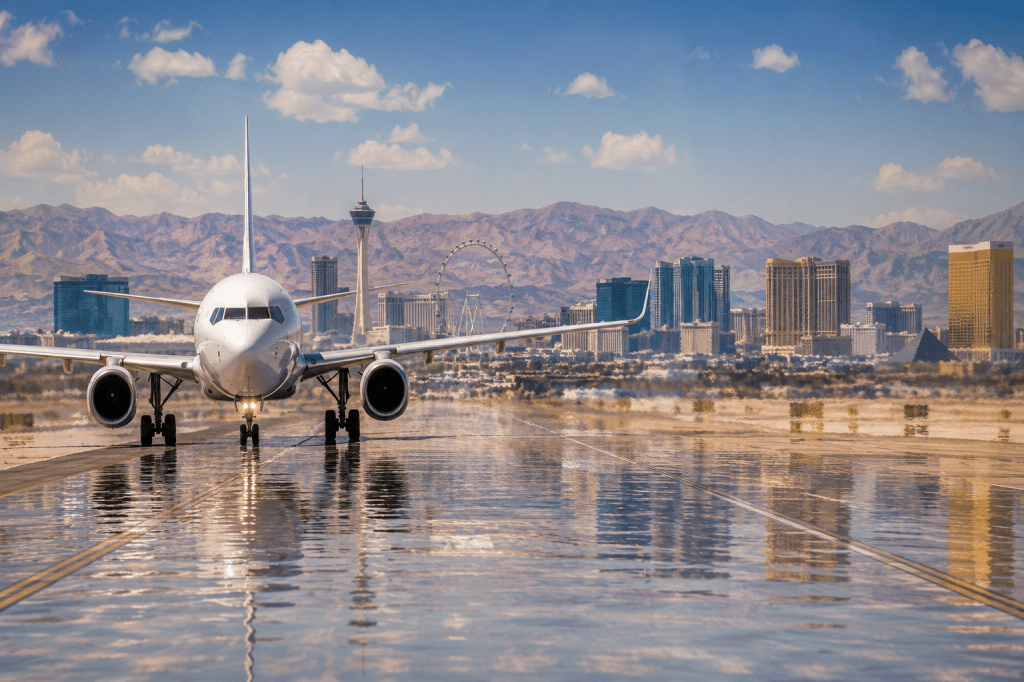
    As temperatures climbed well above 110°F, several flights at Harry Reid International Airport were delayed, and in one widely reported case, passengers were actually asked to volunteer to get off the airplane because it was too heavy to safely depart in the extreme heat.

    I’m actually in Las Vegas this week for the Summer Las Vegas Market, and let me tell you, it’s brutally hot outside. Walking between buildings feels like opening an oven door.

    So what’s really happening?

    The Science Is Actually Pretty Simple

    Airplanes fly because their wings generate lift.

    The hotter the air gets, the less dense it becomes. Think of it as the air becoming “thinner.” Thin air doesn’t give the wings as much to push against, and jet engines also produce slightly less thrust. The result is that airplanes need more runway and more speed before they can safely lift off.

    If the aircraft is carrying too much weight, there may not be enough runway available to safely accelerate and climb.

    That’s when airlines have a few options:

    • Delay the flight until temperatures cool.
    • Offload cargo or baggage.
    • Reduce fuel and make a fuel stop later.
    • Ask passengers to volunteer to take a later flight.

    Safety always wins.

    Las Vegas Makes It Even Harder

    Las Vegas is already challenging because of its desert climate.

    Now combine:

    • Temperatures over 110°F.
    • A busy airport with constant departures.
    • Aircraft loaded with passengers, luggage, and fuel.

    It’s the perfect recipe for weight restrictions. Fortunately, Harry Reid has one of the longest runways in the country, which helps, but even that has limits during extreme heat.

    Here’s the Real Travel Lesson

    The weather itself isn’t the story.

    Preparation is.

    One thing I’ve learned after hundreds of flights is that the travelers who recover the fastest are usually the ones who knew there was a problem before everyone else.

    Don’t just check the weather where you’re leaving.

    Check:

    • Your departure city.
    • Your connection city.
    • Your destination.

    A thunderstorm in Denver can affect your flight from Philadelphia to Salt Lake City. Extreme heat in Las Vegas can impact departures all afternoon.

    Weather anywhere in your aircraft’s journey can become your problem.

    The Biggest Mistake Travelers Make

    When a flight gets canceled, something interesting happens.

    Every single person on your airplane is suddenly trying to get to the exact same destination you are.

    If 180 passengers are stranded, they’re all competing for the same handful of available seats.

    That’s why speed matters.

    If you’ve already been watching your flight, already know your alternate flights, and already have the airline app open, you can often rebook before half the cabin has even stood up.

    I’ve seen travelers spend twenty minutes waiting in line at the gate while someone sitting in Row 22 has already secured the last available seat on the next departure using the airline’s app.

    My Advice

    Weather is one of the few things airlines can’t control.

    What you can control is your awareness.

    Know what’s happening before you leave for the airport.

    Watch your inbound aircraft.

    Know your backup flights.

    If things start going sideways, act quickly.

    In travel, information is often your biggest advantage.

    Travel Smart,

    Tommy Pags

  • A Pilot Made $458,000. Before You Call It Crazy, Think About the Job.

    A Pilot Made $458,000. Before You Call It Crazy, Think About the Job.

    A Pilot Made $458,000. Before You Call It Crazy, Think About the Job.

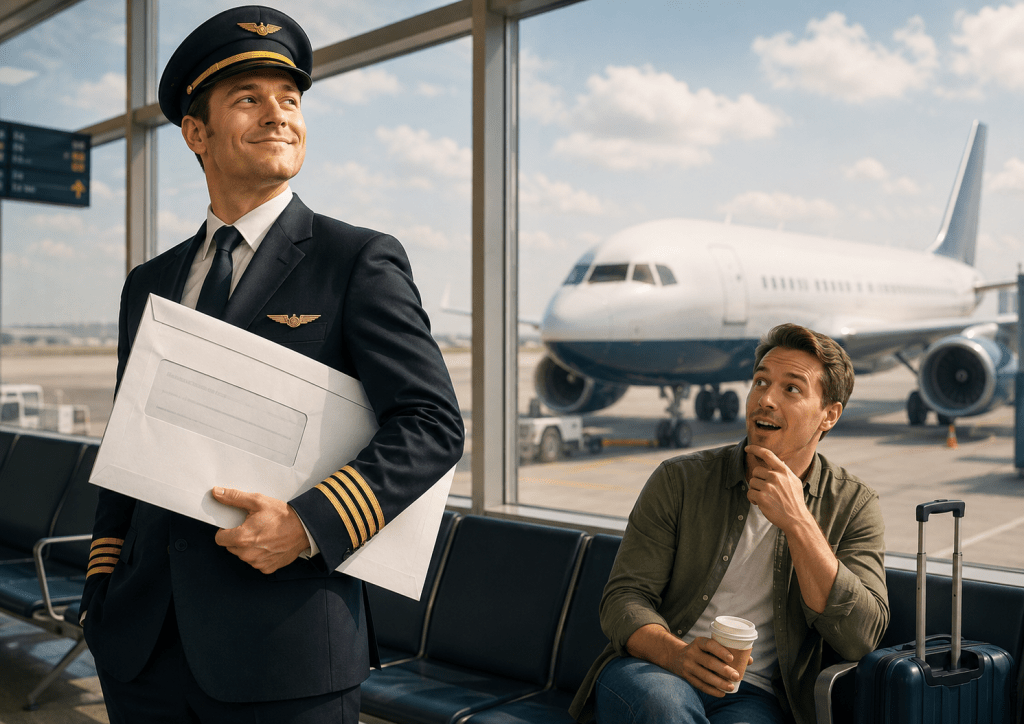
    An American Airlines pilot recently shared a pay statement online, and the number immediately got everyone’s attention.

    The Miami-based Boeing 737 captain had earned nearly $458,000 by the middle of December, with a flight-pay rate of more than $360 per hour. Predictably, social media filled up with people wondering whether they had chosen the wrong profession.

    I understand the reaction. When you first see someone earning nearly half a million dollars flying airplanes, it sounds almost unbelievable.

    But the more I have learned about what it takes to reach that level, the less shocking the salary has become.

    In fact, I think many of the pilots earning that kind of money have probably earned every dollar of it.

    The Retirement Flight That Made Me Start Looking

    I first became interested in pilot salaries after reading about retiring Delta captain Keith Rosenkranz.

    After a 33-year career with Delta, he chartered an Airbus A330neo and took 112 friends and family members on a 24-hour retirement trip to Hawaii. The charter reportedly cost him roughly one year’s salary.

    My first thought was simple:

    How much does a pilot have to make to charter an entire Delta airplane?

    I started thinking about the aircraft, the crew, the fuel, the airport costs and the revenue Delta would normally collect from every passenger who would have occupied that airplane.

    That sent me down the rabbit hole of researching pilot compensation. That was when I realized how much some senior airline captains can earn.

    At first, the numbers were shocking.

    Then I started looking at the career behind the paycheck.

    Nobody Starts at $458,000

    The important thing to understand is that the American Airlines captain in this story was not a brand-new pilot walking into the cockpit on his first day.

    Pilot compensation generally increases based on seniority, airline, aircraft, position, schedule and the amount and type of flying performed. A senior captain flying for a major airline is in a completely different position from a new first officer beginning a commercial aviation career.

    Before most pilots can even qualify for an airline cockpit, they must build an enormous amount of flying experience. The FAA says virtually all new airline-pilot applicants must possess at least 1,500 hours of flight experience, although certain military pilots and graduates of approved aviation programs may qualify for restricted certificates with fewer hours.

    Many pilots spend years building those hours by working as flight instructors, charter pilots, cargo pilots or pilots for smaller regional carriers.

    They may begin flying smaller aircraft carrying dozens of passengers on shorter routes. Over time, they can move to larger airlines, upgrade from first officer to captain and eventually qualify on more complex aircraft.

    That progression requires more than simply waiting around for a promotion. Pilots undergo recurrent training, medical examinations, simulator evaluations, check rides and aircraft-specific qualification programs throughout their careers.

    The paycheck at the top may be impressive, but the runway to reach it is long.

    The Bigger the Aircraft, the Bigger the Responsibility

    There is also a major difference between flying a smaller regional jet and commanding a wide-body aircraft carrying hundreds of passengers across an ocean.

    The larger the airplane and the more complicated the operation, the greater the responsibility.

    A captain must understand the aircraft, weather, fuel, flight planning, airport conditions, mechanical concerns and emergency procedures. The pilots are coordinating with dispatchers, air traffic controllers, flight attendants, maintenance personnel and ground crews throughout the operation.

    Most passengers only notice the pilots when they make an announcement about turbulence or when they are standing near the cockpit door as everyone leaves.

    But during the flight, those pilots are responsible for making decisions that can affect hundreds of lives.

    You are not simply paying a pilot to hold the controls while the airplane cruises through a clear sky.

    You are paying for the pilot’s judgment when the weather changes, a warning light appears, an airport closes, a passenger has a medical emergency or something happens that was not part of the original plan.

    You are paying for the moment when everything does not go perfectly.

    That is when you want the most experienced and capable person possible sitting in that seat.

    There Is a Personal Price Too

    The salary conversation also tends to ignore the lifestyle.

    Pilots spend nights in hotels, work weekends and holidays, cross multiple time zones and regularly miss family events. Newer pilots may spend years working reserve schedules, taking undesirable trips and flying when more senior pilots would rather be home.

    Even when they are not flying, they may be commuting to their assigned base or waiting to find out whether they will be called to work.

    Federal regulations limit flight and duty periods and require rest between assignments, but those rules exist precisely because fatigue and irregular schedules are real safety concerns in aviation.

    As pilots build seniority, they usually gain more influence over their aircraft assignments, vacations and monthly schedules. Airlines commonly use bidding systems that award schedule preferences partly according to seniority.

    That can eventually produce a very good lifestyle.

    But it often comes after spending the first 10 or 15 years taking the schedules nobody else wanted.

    You do not receive the preferred international trip, the better days off and the premium compensation simply because you showed up.

    You earn your position on the seniority list one year at a time.

    So, Are Pilots Overpaid?

    When people see $458,000, they naturally compare it with their own salary.

    That is understandable.

    But I do not think the right question is whether that number sounds high compared with what most people earn.

    The better question is what we should pay someone who has spent decades developing an extremely specialized skill and is responsible for safely transporting hundreds of people through the sky.

    When I step onto an airplane, I want the pilots to be experienced, rested, properly trained and well compensated.

    I do not want the airline searching for the least expensive person it can find to operate the aircraft.

    Pilots are not perfect, and high compensation does not eliminate mistakes. However, this is one profession where experience, training and sound judgment can have immediate life-or-death consequences.

    That is worth paying for.

    I Might Have Chosen the Cockpit

    Honestly, if I could go back in time and select another career, becoming a pilot is something I would seriously consider.

    Part of that is because I enjoy flying and traveling as much as I do. There is something fascinating about aviation, airports, aircraft and the entire system required to move people around the world.

    Of course, I am looking at it now as someone who loves air travel.

    I might have felt differently after my fifth delayed flight of the week, my third night in a hotel and another holiday away from home.

    Still, I understand why pilots love the profession.

    The view from the office is difficult to beat.

    So yes, nearly $458,000 is a remarkable salary.

    But after decades of training, responsibility, missed family time, difficult schedules and safely carrying millions of passengers, I am not going to complain that an experienced airline captain is earning a substantial paycheck.

    I am just going to hope the person flying my airplane is worth every penny.

    Travel smart.

    Tommy Pags

  • Frequent Flyers vs. Vacation Travelers: Why Airports Sometimes Feel Like Two Different Worlds

    Frequent Flyers vs. Vacation Travelers: Why Airports Sometimes Feel Like Two Different Worlds

    Frequent Flyers vs. Vacation Travelers: Why Airports Sometimes Feel Like Two Different Worlds

    If you’ve ever gotten “the look” at the airport, don’t take it personally.

    You know the one.

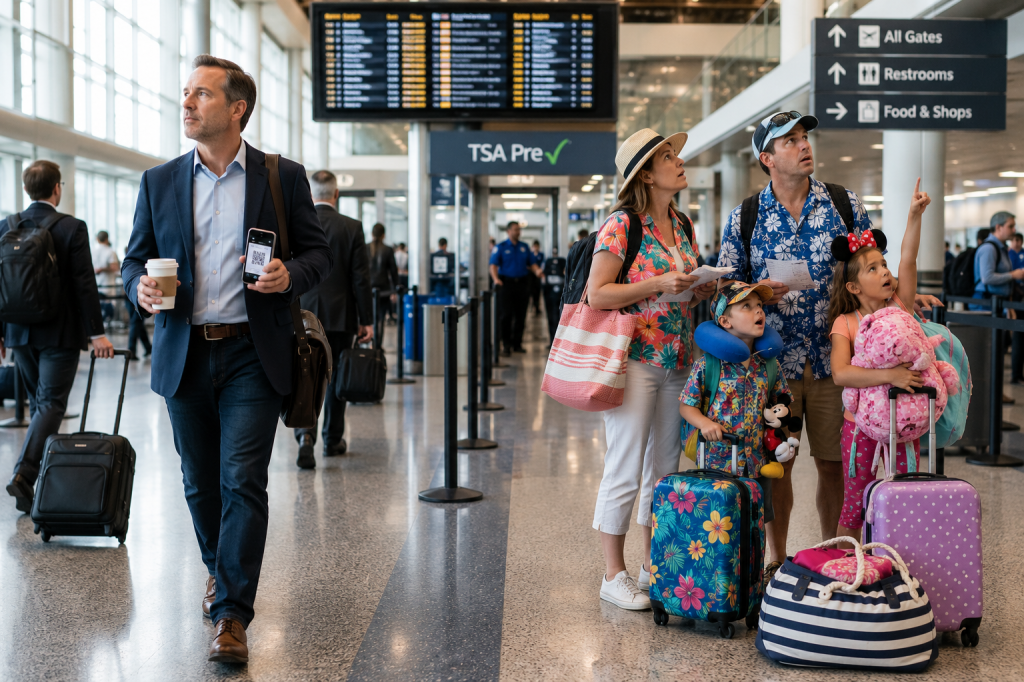
    You’re standing at the front of the TSA line when you suddenly realize your laptop is buried underneath three sweatshirts, your water bottle is still full, your boarding pass disappeared somewhere between the parking garage and security, and now an entire line of people is standing behind you.

    Meanwhile, somewhere back there is a frequent flyer quietly thinking…

    “Please… not today.”

    Here’s the thing.

    They’re probably not mad at you.

    They’re just trying to get home.

    There Are Really Two Different Airports

    One of the funny things about flying is that everyone is using the same airport, but they’re having completely different experiences.

    For the occasional traveler, flying is an event.

    It’s vacation.
    It’s Disney.
    It’s visiting Grandma.
    It’s the cruise you’ve been counting down to for six months.

    Everything is exciting. You have time to browse the gift shops, admire the giant art installations, grab a cinnamon roll, and look out the windows at the airplanes.

    There’s nothing wrong with that.

    In fact, I hope you enjoy every minute of it.

    Frequent flyers, however, live in an entirely different world.

    We’re usually flying for work.

    We’ve already spent several days away from home, slept in hotels, attended meetings, rented cars, and eaten one too many airport meals. By the time we’re heading home, there’s only one thing on our minds:

    Get. Me. Home.

    Airports Become Muscle Memory

    When you fly every week, airports stop feeling like airports.

    They become routines.

    You already know which security checkpoint moves faster.

    You know which escalator to take.

    You know which restroom is usually empty.

    You know which coffee line isn’t worth waiting in.

    You know exactly when boarding starts, when overhead bins fill up, and where to stand without blocking everyone else.

    You’re not trying to rush because you’re impatient.

    You’re moving on autopilot.

    Think about walking through your own grocery store.

    You don’t stop to admire the cereal aisle every week.

    You already know exactly where everything is.

    Airports become that familiar.

    The Biggest Slowdown Isn’t Walking

    It’s uncertainty.

    Confusion creates delays.

    Someone isn’t sure whether liquids stay in the bag.

    Someone forgot they have a full bottle of water.

    Someone reaches the X-ray belt and suddenly starts reorganizing their entire suitcase.

    Someone waits until they’re standing in the aircraft doorway before deciding which overhead bin to use.

    None of those things are a big deal individually.

    But multiply them by hundreds of travelers every day, and suddenly flights board slower, security lines back up, and connections become tighter for everyone.

    The Plane Door Is Not the Best Time to Make Decisions

    Every frequent flyer has experienced this moment.

    The boarding line moves smoothly.

    Everything is perfect.

    Then someone steps onto the aircraft…

    …and stops.

    They look left.

    They look right.

    They examine every overhead bin.

    They take off a backpack.

    Then put it back on.

    Then take it off again.

    Meanwhile, forty people behind them have come to a complete stop.

    We’ve all laughed about it because we’ve all seen it.

    Again, nobody is angry because someone is new.

    It’s simply that everyone behind them has been standing in line for fifteen minutes and now the entire airplane has paused while decisions are being made.

    A Little Preparation Goes a Long Way

    If you don’t travel often, don’t worry.

    Nobody expects you to know every airport procedure.

    But there are a few things that make life easier for everyone:

    • Have your ID and boarding pass ready before you reach the TSA officer.
    • Empty your pockets before you get to the scanner.
    • Know whether your airport requires laptops or liquids to come out.
    • Finish your water before security.
    • Once you reach your airplane row, put your bag away and move into your seat so the next person can keep moving.

    These aren’t unwritten rules designed by impatient business travelers.

    They’re simply habits that keep thousands of people moving efficiently.

    Frequent Flyers Can Do Better Too

    Let’s be fair.

    Frequent flyers aren’t always innocent.

    Sometimes we forget that not everyone flies fifty times a year.

    Sometimes we’re impatient.

    Sometimes we sigh a little louder than necessary.

    Sometimes we forget that our routine is someone else’s once-a-year adventure.

    That family taking pictures at the gate?

    Those kids seeing airplanes up close for the first time?

    That retired couple heading to Hawaii?

    Good for them.

    I genuinely hope they have an incredible trip.

    A little patience works both ways.

    The Bottom Line

    If a frequent flyer seems frustrated, chances are it isn’t about you personally.

    They’re probably thinking about getting home after another week on the road.

    They’re thinking about dinner with their family.

    Their kids’ baseball game.

    Sleeping in their own bed.

    Likewise, if you’re an occasional traveler, remember that the people moving quickly around you probably aren’t trying to be rude.

    They’re simply operating in a world they’ve learned through hundreds of flights.

    We’re all trying to reach the same destination.

    Some of us are just taking our fiftieth flight this year, while others are taking our first.

    A little awareness, a little patience, and maybe a little humor make the airport a better place for everyone.

    After all, whether you’re headed to an important business meeting or the vacation of a lifetime, we’re all hoping for exactly the same thing:

    An on-time departure, an empty middle seat, and a baggage carousel that actually delivers our suitcase first.


    Travel smart,

    Tommy Pags