
The Hotel Floor That Does Not Exist: Why the Number 13 Keeps Disappearing
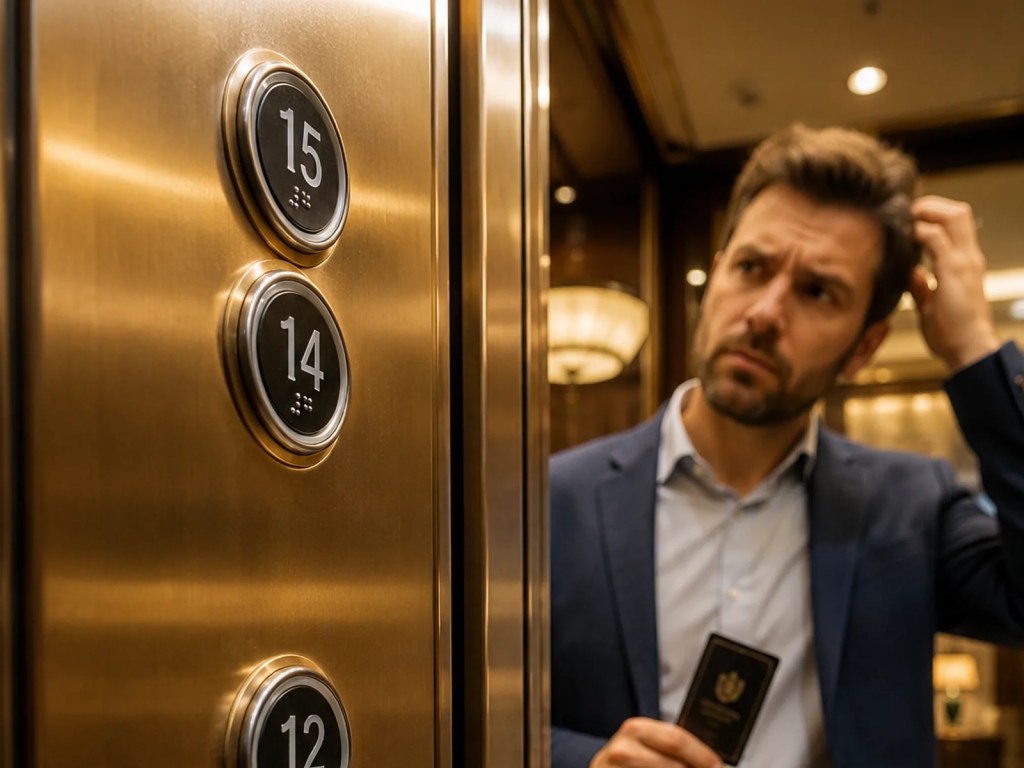
Have you ever stepped into a hotel elevator, looked at the buttons, and noticed that the building apparently jumps directly from the 12th floor to the 14th?
No explanation. No apology. The 13th floor has simply vanished.
Of course, the floor is still physically there. The hotel did not discover a way to suspend the 14th floor in midair. What would normally be called the 13th floor has simply been renamed because, apparently, changing the number is enough to keep bad luck from finding the room.
I am not sure bad luck is that easily confused, but hotels have been doing this for generations.
You May Never Have Noticed
Most of us probably do not inspect hotel elevator buttons very carefully.
We get in, press the number for our floor, and immediately begin watching the doors as though staring at them will make the elevator move faster.
I have spent more nights in hotels than I could possibly count, and I honestly cannot remember the last time I specifically looked to see whether there was a button for the 13th floor.
At many suburban and roadside hotels, the question never comes up. When your hotel has four floors, a complimentary breakfast area, and a parking lot wrapped around the building, there is no mysterious missing floor to investigate.
But stay in a high-rise hotel in New York, Chicago, Las Vegas, or another major city, and you may notice the numbers jump directly from 12 to 14.
Congratulations. You have found the floor that exists but officially does not.
The Missing 13th Floor Is Still Very Common
According to a recent report, approximately 91% of New York City high-rise buildings do not officially label a 13th floor.
Some buildings jump directly from 12 to 14. Others call it 12A, use it as a mechanical floor, or give it another designation that avoids displaying the number 13.
The reason is not structural. It is business.
Even travelers who say they are not superstitious may suddenly become a little less confident when the front desk clerk hands them a key to Room 1313 on the 13th floor.
A hotel could attempt to explain that numbers cannot affect the quality of a stay, but it is much easier to change the elevator button and move on.
After all, hotels already have enough guest concerns to manage. They do not need someone calling the front desk at 2:00 a.m. because the ice machine made a strange noise and the room number feels cursed.
Different Countries, Different Unlucky Numbers
The number 13 is primarily associated with bad luck in Western cultures, but travelers should not assume every country shares the same numerical concerns.
In parts of East Asia, the number 4 may be avoided because its pronunciation can sound similar to the word for “death” in certain languages.
That can affect hotel floors, room numbers, apartments, hospitals, license plates, and even telephone numbers.
In some buildings, you may see several missing numbers. A hotel influenced by both Western and East Asian superstitions might skip 4, 13, 14, 24, and other numbers containing a 4.
At that point, the elevator directory begins to look less like a floor count and more like someone lost several pieces from a board game.
You might be staying on the 38th floor according to the elevator, while the building itself has considerably fewer actual levels.
The view is still real. The numbering may be a little optimistic.
Some Numbers Are Considered Lucky
While certain numbers are avoided, others can be extremely desirable.
The number 8 is considered lucky in Chinese culture because its pronunciation is associated with prosperity. Apartments, telephone numbers, addresses, and other items containing repeated 8s may command higher prices.
One widely reported example involved Sichuan Airlines paying the equivalent of hundreds of thousands of dollars for a telephone number made entirely of 8s.
That is a serious commitment to good fortune.
Most of us are simply hoping the hotel Wi-Fi works and the room is not next to the elevator.
Even Airlines Get Involved
The practice is not limited to hotels and skyscrapers. Some airlines have also skipped row 13 when numbering their aircraft.
The airplane still has the same number of seats, of course. Renaming the row does not create additional legroom or improve the boarding process.
It simply means the passenger in Row 14 may technically be sitting in what would otherwise have been Row 13.
Apparently, bad luck checks the row marker but does not count.
Should Travelers Actually Care?
From a practical standpoint, a missing floor number usually changes nothing about your stay.
The room is still there. The elevator still stops there. Housekeeping still has to clean it.
But it is an interesting reminder that travel is filled with cultural details we often pass without noticing. Elevator buttons, room numbers, building layouts, and even telephone numbers can reflect beliefs that have existed for generations.
It is also worth remembering that a room number considered perfectly ordinary at home may carry a very different meaning somewhere else.
You do not need to become an expert in international numerology before checking into a hotel. Just pay attention. Travel becomes more interesting when you begin noticing the small decisions built into the places around you.
The next time you enter a hotel elevator, take a quick look at the buttons.
You may discover that the 13th floor is missing.
Or perhaps it is hiding behind a button marked 14, hoping nobody figures it out.
Travel smart,
Tommy Pags


 Pags on the Go