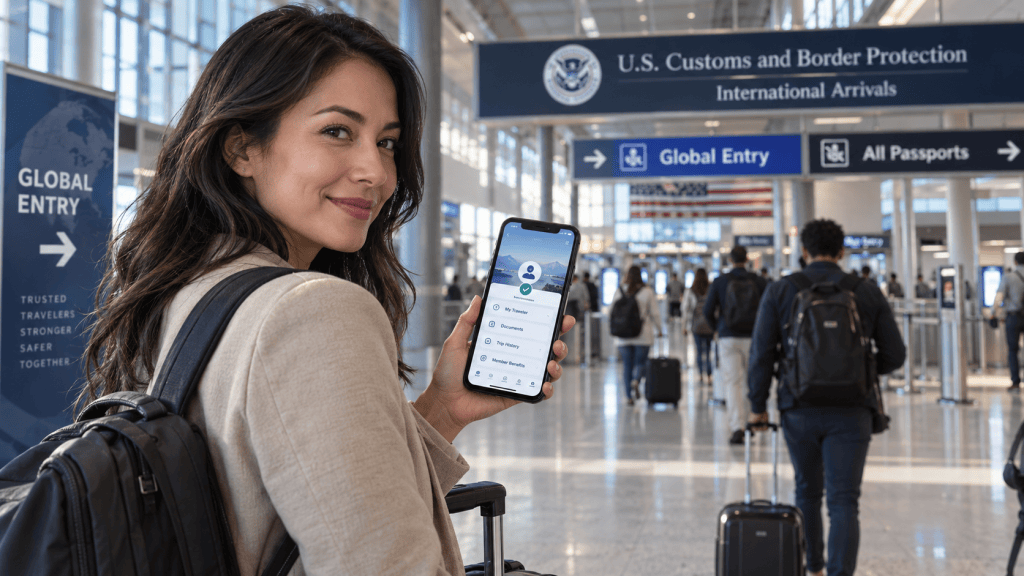
The Global Entry App Is Gone: Here’s What Travelers Should Download Before Their Next International Trip
If you use Global Entry when returning to the United States, there is a change you should know about before your next international trip.
The Global Entry Mobile app is gone.
As of September 15, 2026, U.S. Customs and Border Protection officially retired both the old Global Entry Mobile app and the separate Trusted Traveler Programs app.
They have been replaced by one new app called DHS Trusted Traveler.
And before anyone panics, let me start with the most important part:
Your Global Entry membership is still good.
You do not have to reapply.
You do not lose your membership.
Your existing login credentials still work.
This is an app change, not a Global Entry program change.
Why CBP Changed the Apps
Until now, CBP had two separate apps doing two different jobs.
The Global Entry Mobile app was primarily designed to help eligible Global Entry members process their arrival into the United States using their phone instead of a stationary Global Entry portal.
The separate Trusted Traveler Programs app handled more of the account-management side of things, including applications, membership information, interview scheduling, and document updates.
CBP has now combined those functions into one place.
The new DHS Trusted Traveler app supports Global Entry, NEXUS, SENTRI, and FAST and brings both arrival processing and membership management together in one app.
And from a traveler’s perspective, that makes a lot of sense.
One app.
One login.
One place to manage everything.
What Can the New Trusted Traveler App Do?
For Global Entry members, one of the biggest features is that the mobile arrival process continues.
If you are arriving at a participating airport, eligible Global Entry members can use the app to confirm their arrival into the United States rather than beginning the process at a stationary Global Entry portal.
The previous Global Entry app allowed travelers to select their arrival airport, submit a photo for biometric verification, receive a digital receipt, and then proceed to a CBP officer.
CBP says that mobile arrival functionality is carrying over to the new Trusted Traveler app. Availability still depends on your eligibility and the location where you are arriving.
But the new app does much more than arrivals.
Depending on your program and eligibility, you can also use it to manage your Trusted Traveler membership, check application or membership status, schedule enrollment interviews, manage or renew a membership, and access enrollment-related services.
If you are applying for a Trusted Traveler Program, there is one important distinction.
The entire application is not completed inside the app. The new app can direct you into the enrollment process, but CBP says the actual application continues through its separate Trusted Traveler Programs website.
Your Membership Does Not Reset
This is probably the biggest point worth repeating.
You do not need to create a new Global Entry membership just because CBP changed its app.
If you were already enrolled in Global Entry, NEXUS, SENTRI, or FAST, your existing membership remains active.
Your current credentials continue to work.
Your membership and profile information should transfer into the new app.
CBP specifically says you do not need to reapply because of this transition.
So if you open your phone and see that your old Global Entry app no longer works, don’t assume something happened to your membership.
The app was retired.
Your membership wasn’t.
What I Would Do Before My Next International Trip
This is where the Pags on the Go part comes in.
Don’t wait until you land.
Seriously.
The worst time to discover that an app has changed, your password isn’t working, or you downloaded the wrong thing is when you’ve just spent eight hours on an airplane and you’re standing in an international arrivals hall with several hundred other people.
Download the new DHS Trusted Traveler app before your trip.
Sign in.
Make sure your profile appears correctly.
Confirm your membership information.
And spend a few minutes learning where everything is.
If you normally use mobile Global Entry processing, understand how the new app works before you need it.
That five minutes at home can save you a lot of frustration later.
This Is What I Mean by Traveling Smart
I’ve said this before, and it applies to much more than Global Entry.
Traveling smart isn’t just finding a cheap airfare or having the right credit card.
A huge part of traveling well is knowing what is going to happen before it happens.
Know your airport.
Know your terminal.
Know your connection.
Know whether you have lounge access.
Know your transportation plan when you land.
Know which app you’re going to need when you go through customs.
Don’t wait until you’re standing underneath an airport sign with 40 other people trying to figure out where you’re supposed to go.
The more you can do ahead of time, the easier your travel day usually becomes.
The Mobile Arrival Feature Can Be a Big Time-Saver
This is also why I think the Trusted Traveler app is worth having even if you haven’t used the old Global Entry Mobile app before.
The mobile arrival feature was designed to let eligible Global Entry members validate their arrival on their phone and potentially avoid using a Global Entry kiosk or portal.
CBP has said that this type of mobile processing can reduce passport-control inspection time and overall wait times.
That doesn’t mean you bypass Customs and Border Protection.
You still have to complete the required inspection process, and a CBP officer can request additional travel documentation.
But anything that can make that process smoother is worth understanding before you arrive.
One App for More Than Just Global Entry
Another improvement here is that the new app isn’t simply a Global Entry replacement.
It is meant to become the mobile home for several Trusted Traveler Programs.
That includes:
Global Entry for expedited entry into the United States by air.
NEXUS for eligible travel between the United States and Canada.
SENTRI for expedited entry at the southern land border.
FAST for eligible commercial drivers.
Bringing those programs together into one app should make account management easier, especially for travelers who participate in more than one program.
Make Sure You Download the Official App
This is also worth mentioning because these programs involve a lot of personal information.
On Apple’s App Store, the new app is currently listed as DHS Trusted Traveler, and the developer is U.S. Customs and Border Protection.
Before entering login information into any travel or government app, verify that you have the official version.
That is especially important when a brand-new app launches and travelers start searching for it by name.
If you aren’t sure, go through CBP’s official website and use the app links provided there.
One other practical note for iPhone users: the current App Store listing requires iOS 18.0 or later. If you use an older phone, that’s something worth checking before your trip rather than discovering it after you land.
Global Entry and Mobile Passport Are Not the Same Thing
One other point because these apps can get confusing.
The new Trusted Traveler app is not Mobile Passport Control.
Global Entry is a Trusted Traveler Program for pre-approved members.
Mobile Passport Control is a separate CBP service for eligible travelers entering the United States and does not require Global Entry membership.
They’re different programs with different eligibility rules and different apps.
So make sure you know which service you’re actually planning to use before you travel.
My Two Cents
I like this change.
Anytime a government agency can take two apps and combine them into one, I’m interested.
But the biggest benefit isn’t really that CBP created a new app.
The benefit is having the information and tools you need before you arrive.
International travel has enough variables already.
Immigration.
Customs.
Baggage.
Connections.
Ground transportation.
Jet lag.
You don’t need “Why doesn’t my Global Entry app work anymore?” added to the list.
Download the new app.
Sign in before you travel.
Verify that your membership information is there.
Learn how the arrival process works.
Then when you land back in the United States, you’re ready to move.
That’s what traveling smart looks like to me.
Travel smart,
Tommy Pags