Tag: Business Travel

  • The Most Important Part of a Business Hotel Might Be Helping You Stop Working

    The Most Important Part of a Business Hotel Might Be Helping You Stop Working

    The Most Important Part of a Business Hotel Might Be Helping You Stop Working

    I spend a lot of time traveling for work, and there’s one thing people sometimes forget about business travel.

    Just because I’m traveling for work doesn’t mean I want to work 24 hours a day.

    Hyatt recently commissioned a survey of 2,000 U.S. business travelers, and one number immediately caught my attention.

    Ninety percent said their hotel room was the only place they truly felt “off the clock” during a business trip.

    I completely understand that.

    Because after spending the day working with customers, attending meetings, standing at a trade show, traveling between appointments or dealing with airports, there comes a point where you need the day to end.

    And sometimes the only place where that actually happens is when the hotel room door closes behind you.

    A Business Hotel Has to Do Two Things

    Here’s the challenge.

    I still need to work in my hotel room.

    There are emails that need responses. There may be reports to finish, presentations to adjust or preparation for the next morning.

    Hyatt’s research found that nearly three-quarters of the business travelers surveyed typically do some work in their hotel rooms after the normal workday.

    Again, I get it.

    That’s why I want a legitimate desk or work area.

    I want a comfortable chair.

    I want enough outlets.

    I want strong Wi-Fi.

    And please, hotel designers, put outlets somewhere that makes sense.

    But once I’m finished, I want that room to transition from office back to hotel room.

    That’s the part I think some hotels miss.

    I Don’t Want to Sleep in My Office

    There’s a difference between having a good workspace in a hotel room and having a room that feels like somebody shoved a bed into an office.

    A business hotel needs to let me work efficiently so I can finish what I need to do and then put the laptop away.

    After that, I want to relax.

    Watch television.

    Order something to eat.

    Call home.

    Take a shower.

    Maybe scroll through my phone for longer than I should.

    And sleep.

    That’s normal.

    Business travel already blurs the line between work and personal time. A good hotel shouldn’t blur it even more.

    The Little Things Become Big Things

    The Hyatt survey found business travelers placed a premium on things such as comfortable beds, reliable Wi-Fi, food availability, breakfast and early check-in.

    None of those things sound revolutionary.

    That’s exactly the point.

    When you travel regularly, consistency beats gimmicks.

    I’d rather have great Wi-Fi than an app-controlled curtain.

    I’d rather have a comfortable mattress than mood lighting with six different settings.

    I’d rather have easily accessible outlets than a decorative telephone I’ll never touch.

    And when I’ve been traveling all day, having food available without needing another Uber can feel like a luxury.

    The best business hotels understand that.

    Give Me a Good Desk

    I do think the desk deserves more attention.

    Hotels increasingly design rooms around leisure travelers, and some properties have reduced the traditional work area to a tiny table or shelf.

    That doesn’t always work for business travelers.

    Sometimes I actually need to spread out.

    Laptop.

    Phone.

    Chargers.

    Notebook.

    Maybe paperwork.

    Possibly an iPad.

    I don’t need a corporate cubicle in my room, but I need enough functional space to work comfortably for an hour or two.

    The faster I can finish my work, the faster I can stop working.

    That’s the real benefit.

    Then Let Me Shut the World Off

    Nearly half of the travelers in Hyatt’s study said they would rather spend their downtime relaxing alone in the room than attend an optional networking event.

    That doesn’t surprise me either.

    There’s only so much talking a person can do.

    Business trips can involve spending almost every waking minute around people.

    Customers.

    Coworkers.

    Convention attendees.

    Restaurant servers.

    Uber drivers.

    Airport crowds.

    People sitting next to you on airplanes.

    Sometimes the best amenity a hotel can give you is simply a quiet room and a closed door.

    What I Look For

    The longer I travel, the more I appreciate hotels that get the basics right.

    For business travel, my ideal room isn’t necessarily luxurious.

    It’s functional.

    I want:

    • A comfortable bed
    • A real work surface
    • A comfortable desk chair
    • Fast, reliable Wi-Fi
    • Accessible outlets
    • Good lighting
    • A strong shower
    • Effective blackout shades
    • A room that stays quiet
    • Good climate control
    • Food available reasonably late
    • A television that actually works easily

    None of that belongs in a hotel commercial.

    All of it matters when you’re actually staying there.

    Loyalty Matters Too

    Another interesting result from Hyatt’s study was that 80% of respondents said hotel loyalty programs influence where they stay for business.

    That makes sense.

    If work requires you to spend nights away from home, earning points, elite status and benefits toward future travel at least gives you something back.

    But loyalty only goes so far.

    I won’t keep staying somewhere uncomfortable simply because there’s a logo on the building.

    The hotel still has to do its job.

    My Take

    A business hotel doesn’t have to entertain me every minute.

    It has to make my trip easier.

    Give me somewhere I can work when I need to work.

    Give me what I need to get that work done efficiently.

    Then give me a comfortable place where work can stop.

    Because business travelers aren’t traveling machines.

    We’re still people.

    And at some point during every business trip, the laptop needs to close.

    Travel smart,
    Tommy Pags.

  • Chase Is Tightening Sapphire Lounge Access, and I Think It Is the Right Move

    Chase Is Tightening Sapphire Lounge Access, and I Think It Is the Right Move

    Chase Is Tightening Sapphire Lounge Access, and I Think It Is the Right Move

    Beginning August 15, 2026, Chase is changing who can enter its Sapphire Lounges and giving some of its own cardholders more time inside.

    The biggest change is that Chase Sapphire Lounges will no longer participate in the Priority Pass or LoungeKey networks. Until now, travelers who received Priority Pass through another credit card could visit a Sapphire Lounge once per calendar year at no charge. Additional visits, or certain guest visits, were available for $75.

    That option is going away.

    After August 15, complimentary access will be reserved for customers with an eligible Chase-issued card, including the Chase Sapphire Reserve, Sapphire Reserve for Business, J.P. Morgan Reserve and Ritz-Carlton Credit Card. Eligible cardholders will continue to receive unlimited Sapphire Lounge visits and may bring up to two complimentary guests. Additional guests will continue to cost $27 each.

    At the same time, Chase is adding a useful benefit for its customers. Cardholders traveling on a same-day connecting itinerary will be allowed to enter a Sapphire Lounge up to five hours before the departure of their connecting flight. That is an increase from the current three-hour window.

    The five-hour rule does not apply when you are starting your trip. Travelers originating at an airport, including those taking a nonstop flight, will still be limited to entering three hours before departure.

    Airport Lounges Are More Than a Travel Perk

    I understand why some travelers will be disappointed by the decision. Losing access to a good lounge is never going to feel like an improvement, particularly for someone who has been saving that one annual Priority Pass visit.

    But as someone who spends a lot of time in airports, I think Chase is making the right move.

    There is a real difference between the way a frequent business traveler uses an airport and the way an occasional vacation traveler may experience it. For the casual traveler, getting to the airport can be part of the excitement of the trip.

    For someone who travels regularly, the airport is usually not entertainment. It is another workplace, a place to answer emails, return phone calls, prepare for a meeting or simply decompress before getting on another airplane.

    That is why a good lounge matters.

    It provides a quieter environment, reliable Wi-Fi, room to work, something to eat and, depending on the day, perhaps a cocktail. During a delay or a long connection, the lounge can become the difference between getting meaningful work done and spending several hours searching for an outlet near a crowded gate.

    The complimentary food and drinks are certainly valuable, but the real benefit is having a functional place to spend your time.

    We Have Seen This Crowding Problem Before

    There was a period following the pandemic when Delta Sky Clubs became incredibly busy. At some airports, lines formed outside the clubs because so many people had access that the passengers who depended on them most frequently could not get inside.

    I remember seeing those lines and wondering what good lounge access was if you had to stand in the terminal waiting for permission to enter.

    Delta eventually tightened several of its access policies. Today, many eligible premium credit card customers have a limited number of Sky Club visits each year unless they meet a substantial annual spending requirement. Delta also generally limits entry to three hours before departure, although connecting customers may enter during their layovers.

    Those decisions were unpopular with some customers, but something had to change. A lounge cannot provide a calmer, more premium experience when it is just as crowded as the terminal outside.

    Chase now appears to be confronting the same issue.

    As the Sapphire Lounge network has expanded and more travelers have discovered how good the lounges are, demand has increased. Chase currently lists Sapphire Lounges in Boston, Las Vegas, New York-JFK, New York-LaGuardia, Philadelphia, Phoenix, San Diego and Dallas-Fort Worth, with a Los Angeles location coming soon.

    These are not basic waiting rooms with a bowl of pretzels and a soft-drink machine. Chase has invested in locally inspired food, made-to-order selections, signature cocktails, comfortable workspaces and, at some locations, wellness services and other premium amenities.

    I have had the opportunity to visit a Sapphire Lounge, and it was impressive. The lounge looked great, the food was excellent and the experience felt noticeably more elevated than sitting in the terminal. In fact, it deserves a complete review of its own.

    Chase Is Prioritizing Chase Customers

    The old Priority Pass policy was an effective way to introduce travelers to the Sapphire Lounge experience. Someone with Priority Pass from American Express, Capital One or another provider could visit once a year, see what Chase was offering and potentially consider becoming a Chase Sapphire Reserve customer.

    But that introductory period appears to be ending.

    Chase has built a recognizable lounge network, and now it wants to make sure that the customers carrying its premium cards can use it. That does not strike me as unreasonable.

    These lounges are part of the value Chase is selling to Sapphire Reserve customers. If the lounges become so crowded that those customers face long waits or cannot find a place to sit, Chase is weakening one of its own most visible benefits.

    The company is not eliminating lounge access for Sapphire Reserve customers. Eligible Chase cardholders will retain their Sapphire Lounge access, guest privileges and Priority Pass Select membership for participating lounges elsewhere in the Priority Pass network. Chase is simply removing the ability to enter its branded Sapphire Lounges through a Priority Pass or LoungeKey membership issued outside the eligible Chase card portfolio.

    That distinction is important.

    The Five-Hour Connection Window Makes Sense

    The other side of the announcement is particularly valuable for frequent travelers.

    A three-hour entry limit may be reasonable when someone arrives extremely early for the first flight of the day. A connection is different. Travelers do not always choose the length of their layovers, and delays, schedule changes and limited flight availability can create connections lasting four or five hours.

    Allowing eligible Chase cardholders to enter during a connection up to five hours before the next flight shows that Chase understands how its customers actually travel.

    A long connection is exactly when a lounge is most useful. You can have a meal, charge your devices, work for a few hours or simply relax without sitting at the gate for half a day.

    It is also worth noting that Delta currently allows eligible connecting passengers to access a Sky Club during a layover without applying its normal three-hour predeparture restriction. Chase’s new five-hour policy is more clearly defined, but both companies recognize that connections need to be treated differently from the beginning of a trip.

    Lounges Are Returning to Their Original Purpose

    Airport lounges have become a major part of the competition between airlines and premium credit card companies. Delta is investing heavily in its Sky Clubs and Delta One Lounges. American Express has its Centurion Lounges. Capital One continues developing its own lounge network, and Chase has quickly created a Sapphire Lounge product capable of competing with all of them.

    Some companies will offer better food. Others will have larger spaces, better bars, showers, wellness rooms or more impressive designs. Individual locations will always vary.

    But underneath all those premium touches, the basic purpose remains the same.

    A lounge should be a comfortable place to eat, relax and get some work done while waiting for a flight. It should also provide somewhere dependable to go when a delay turns a short airport visit into a much longer one.

    For lounges to serve that purpose, access has to be managed.

    Chase’s decision will disappoint travelers who were using a non-Chase Priority Pass membership for their annual Sapphire Lounge visit. That reaction is understandable. But for Sapphire Reserve customers, the change should help preserve the experience they are paying to receive.

    In my view, that is not Chase taking something away from its customers. It is Chase taking better control of a product it created for them.

    The airport lounge may never be the most exciting part of a trip, but for frequent travelers, it can be one of the most useful.

    Travel smart,

    Tommy Pags.

  • Frequent Flyers vs. Vacation Travelers: Why Airports Sometimes Feel Like Two Different Worlds

    Frequent Flyers vs. Vacation Travelers: Why Airports Sometimes Feel Like Two Different Worlds

    Frequent Flyers vs. Vacation Travelers: Why Airports Sometimes Feel Like Two Different Worlds

    If you’ve ever gotten “the look” at the airport, don’t take it personally.

    You know the one.

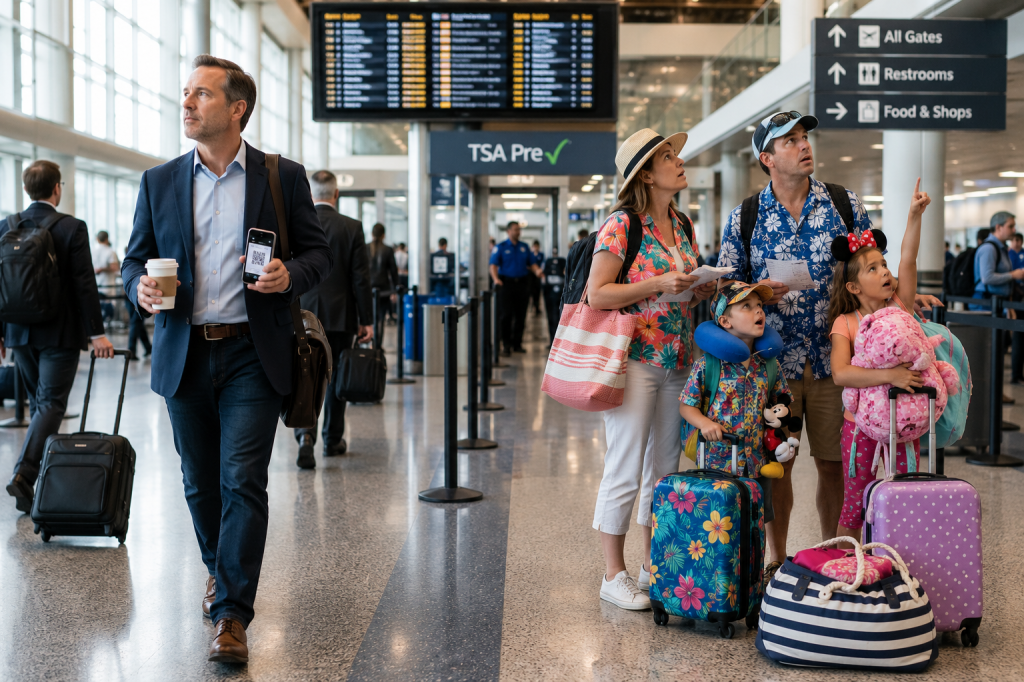
    You’re standing at the front of the TSA line when you suddenly realize your laptop is buried underneath three sweatshirts, your water bottle is still full, your boarding pass disappeared somewhere between the parking garage and security, and now an entire line of people is standing behind you.

    Meanwhile, somewhere back there is a frequent flyer quietly thinking…

    “Please… not today.”

    Here’s the thing.

    They’re probably not mad at you.

    They’re just trying to get home.

    There Are Really Two Different Airports

    One of the funny things about flying is that everyone is using the same airport, but they’re having completely different experiences.

    For the occasional traveler, flying is an event.

    It’s vacation.
    It’s Disney.
    It’s visiting Grandma.
    It’s the cruise you’ve been counting down to for six months.

    Everything is exciting. You have time to browse the gift shops, admire the giant art installations, grab a cinnamon roll, and look out the windows at the airplanes.

    There’s nothing wrong with that.

    In fact, I hope you enjoy every minute of it.

    Frequent flyers, however, live in an entirely different world.

    We’re usually flying for work.

    We’ve already spent several days away from home, slept in hotels, attended meetings, rented cars, and eaten one too many airport meals. By the time we’re heading home, there’s only one thing on our minds:

    Get. Me. Home.

    Airports Become Muscle Memory

    When you fly every week, airports stop feeling like airports.

    They become routines.

    You already know which security checkpoint moves faster.

    You know which escalator to take.

    You know which restroom is usually empty.

    You know which coffee line isn’t worth waiting in.

    You know exactly when boarding starts, when overhead bins fill up, and where to stand without blocking everyone else.

    You’re not trying to rush because you’re impatient.

    You’re moving on autopilot.

    Think about walking through your own grocery store.

    You don’t stop to admire the cereal aisle every week.

    You already know exactly where everything is.

    Airports become that familiar.

    The Biggest Slowdown Isn’t Walking

    It’s uncertainty.

    Confusion creates delays.

    Someone isn’t sure whether liquids stay in the bag.

    Someone forgot they have a full bottle of water.

    Someone reaches the X-ray belt and suddenly starts reorganizing their entire suitcase.

    Someone waits until they’re standing in the aircraft doorway before deciding which overhead bin to use.

    None of those things are a big deal individually.

    But multiply them by hundreds of travelers every day, and suddenly flights board slower, security lines back up, and connections become tighter for everyone.

    The Plane Door Is Not the Best Time to Make Decisions

    Every frequent flyer has experienced this moment.

    The boarding line moves smoothly.

    Everything is perfect.

    Then someone steps onto the aircraft…

    …and stops.

    They look left.

    They look right.

    They examine every overhead bin.

    They take off a backpack.

    Then put it back on.

    Then take it off again.

    Meanwhile, forty people behind them have come to a complete stop.

    We’ve all laughed about it because we’ve all seen it.

    Again, nobody is angry because someone is new.

    It’s simply that everyone behind them has been standing in line for fifteen minutes and now the entire airplane has paused while decisions are being made.

    A Little Preparation Goes a Long Way

    If you don’t travel often, don’t worry.

    Nobody expects you to know every airport procedure.

    But there are a few things that make life easier for everyone:

    • Have your ID and boarding pass ready before you reach the TSA officer.
    • Empty your pockets before you get to the scanner.
    • Know whether your airport requires laptops or liquids to come out.
    • Finish your water before security.
    • Once you reach your airplane row, put your bag away and move into your seat so the next person can keep moving.

    These aren’t unwritten rules designed by impatient business travelers.

    They’re simply habits that keep thousands of people moving efficiently.

    Frequent Flyers Can Do Better Too

    Let’s be fair.

    Frequent flyers aren’t always innocent.

    Sometimes we forget that not everyone flies fifty times a year.

    Sometimes we’re impatient.

    Sometimes we sigh a little louder than necessary.

    Sometimes we forget that our routine is someone else’s once-a-year adventure.

    That family taking pictures at the gate?

    Those kids seeing airplanes up close for the first time?

    That retired couple heading to Hawaii?

    Good for them.

    I genuinely hope they have an incredible trip.

    A little patience works both ways.

    The Bottom Line

    If a frequent flyer seems frustrated, chances are it isn’t about you personally.

    They’re probably thinking about getting home after another week on the road.

    They’re thinking about dinner with their family.

    Their kids’ baseball game.

    Sleeping in their own bed.

    Likewise, if you’re an occasional traveler, remember that the people moving quickly around you probably aren’t trying to be rude.

    They’re simply operating in a world they’ve learned through hundreds of flights.

    We’re all trying to reach the same destination.

    Some of us are just taking our fiftieth flight this year, while others are taking our first.

    A little awareness, a little patience, and maybe a little humor make the airport a better place for everyone.

    After all, whether you’re headed to an important business meeting or the vacation of a lifetime, we’re all hoping for exactly the same thing:

    An on-time departure, an empty middle seat, and a baggage carousel that actually delivers our suitcase first.


    Travel smart,

    Tommy Pags
  • Las Vegas Forgot What Made It Special

    Las Vegas Forgot What Made It Special

    Las Vegas Forgot What Made It Special

    When the city stops delivering value, travelers start looking elsewhere.

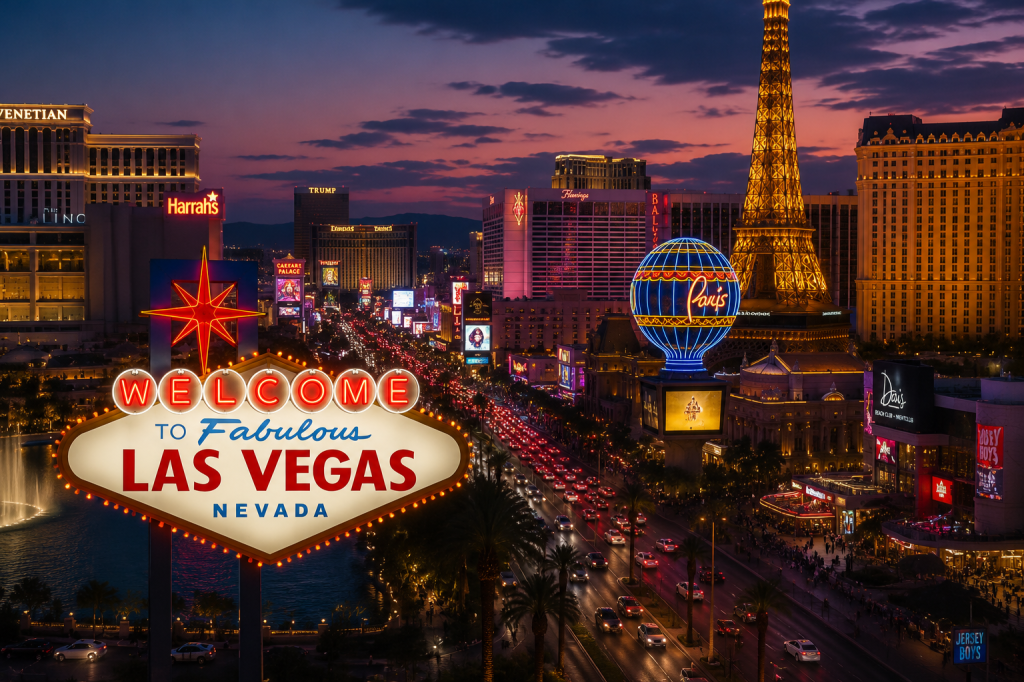
    Las Vegas and I have a complicated relationship.

    I travel there several times a year for work. I’ve stayed in many of the major resorts, eaten at countless restaurants, walked miles of casino floors, and spent enough time on the Strip to know it beyond the typical vacation experience.

    Here’s the thing.

    I’m not much of a gambler.

    So when I visit Las Vegas, I’m looking at it through the eyes of a traveler, not someone trying to hit a jackpot.

    And over the past few years, I’ve noticed something that has become impossible to ignore.

    Vegas keeps getting more expensive.

    I’m not talking about inflation.

    I’m talking about paying more while feeling like you’re getting less.

    Recent reporting points out exactly what many travelers have been saying. Las Vegas has shifted its focus toward luxury travelers, premium experiences, celebrity restaurants, expensive sporting events, and higher-end visitors. Visitor numbers fell in 2025 while the average income of those still coming continued to rise. The city appears to be betting that fewer wealthy travelers can replace larger numbers of middle-class visitors. 

    From my perspective, that’s a risky bet.

    Vegas Used to Feel Like a Deal

    There was a time when Las Vegas had a simple formula.

    You could get a reasonably priced hotel room.

    Meals were affordable.

    Buffets were legendary.

    Parking was free.

    Drinks flowed.

    Sure, the casinos expected you’d spend money gambling, but you always felt like you were getting something in return.

    Vegas understood value.

    Today?

    It feels like every interaction comes with another charge.

    Resort fees.

    Parking fees.

    Higher room rates.

    Restaurant prices that rival New York or Los Angeles.

    A bottle of water that costs more than lunch used to.

    None of those things, individually, ruin a trip.

    Together, they absolutely change how the city feels.

    My Biggest Expense Isn’t the Hotel

    Whenever I travel, I keep a pretty close eye on costs.

    One thing consistently surprises me.

    Food in Las Vegas is almost always my biggest expense.

    Not airfare.

    Not transportation.

    Not even the hotel.

    Just eating.

    Breakfast.

    Lunch.

    Dinner.

    Coffee.

    A quick snack between meetings.

    It adds up faster in Las Vegas than almost anywhere else I travel.

    Now, are there still affordable places?

    Absolutely.

    One of my favorite discoveries was Battista’s Hole in the Wall, where dinner includes soup or salad, garlic bread, pasta, house wine with refills, and cappuccino for a price that actually feels fair. Places like that remind you what Vegas used to do so well.

    The problem is they’re becoming the exception instead of the rule.

    Are We Really Getting More?

    Vegas defenders will point to new resorts, renovated casinos, and attractions like Sphere.

    Those are impressive.

    But if you’ve been visiting for several years, many of the major casino resorts don’t feel dramatically different than they did five years ago.

    Rooms have been refreshed.

    Restaurants have changed.

    A lobby has been remodeled.

    But has the overall experience improved enough to justify what you’re paying?

    For me, the answer is often no.

    Travelers Notice Value

    Here’s something I think the travel industry sometimes forgets.

    Travelers don’t mind paying for quality.

    They mind paying premium prices for an average experience.

    There’s a difference.

    When I stay at a luxury resort somewhere that delivers exceptional service, outstanding dining, and unforgettable experiences, I’m usually happy to pay more.

    When I’m paying luxury prices for a crowded hotel, expensive parking, and a sandwich that somehow costs $28…

    That’s a different conversation.

    Vegas Still Has Plenty to Offer

    I don’t dislike Las Vegas.

    Far from it.

    It’s still one of the entertainment capitals of the world.

    The restaurants can be phenomenal.

    The shows are world class.

    The hotels are impressive.

    And for business travelers like me, it’s incredibly convenient because so many conventions and trade shows are held there.

    But I do think the city has drifted away from one of the things that originally made it famous.

    Value.

    If Las Vegas becomes just another expensive destination, it loses part of what made it unique.

    Final Thoughts

    I’ll keep visiting Las Vegas because my work brings me there.

    I’ll continue sharing restaurants, hotels, and hidden gems that I think are worth your money.

    But as a traveler, I hope Vegas remembers something important.

    People don’t return just because a destination is flashy.

    They return because they feel like they got their money’s worth.

    And right now, for many everyday travelers, that feeling is getting harder to find. 

    Travel smart,
    Tommy Pags

  • TSA Is Finally Cracking Down on Oversized Carry-Ons. Good.

    TSA Is Finally Cracking Down on Oversized Carry-Ons. Good.

    TSA Is Finally Cracking Down on Oversized Carry-Ons. Good.

    If you’ve flown recently, you’ve probably seen it.

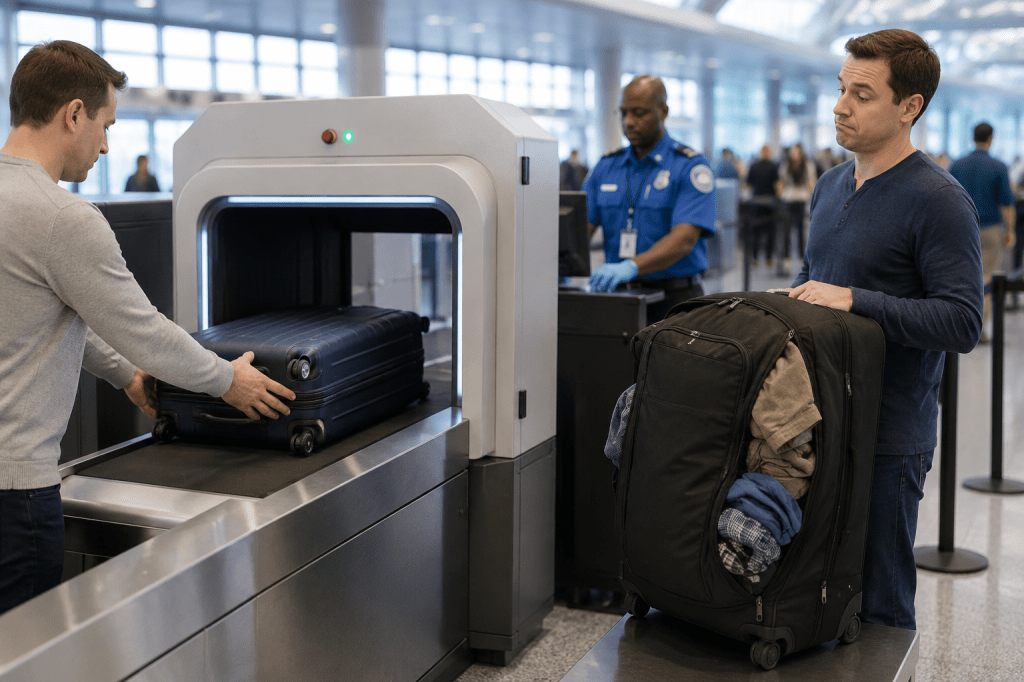
    Someone shows up at the TSA checkpoint with a carry-on that’s bulging at the seams, barely zips shut, and somehow is expected to fit through security, into the overhead bin, and not delay everyone else.

    That may be coming to an end.

    The TSA is rolling out advanced 3D CT scanners at airports across the country. Besides providing much better security screening, these machines have a smaller opening than many of the older X-ray scanners. If your carry-on won’t physically fit through the scanner, you may be sent back to the airline counter to check it before you can continue through security. In many cases, that means leaving the security line, checking the bag, and starting the process all over again. (New Jersey 101.5)

    The Rules Aren’t New

    This is an important distinction.

    The TSA isn’t changing carry-on size limits.

    The airlines already have those rules. For most major U.S. carriers, the standard maximum carry-on size is 22 x 14 x 9 inches, although every airline publishes its own baggage policy. (Yahoo Travel)

    What’s changing is enforcement.

    For years, many travelers pushed the limits. Overstuffed bags, oversized rollers, duffel bags that somehow became twice their normal size. Sometimes they made it through security only to be gate checked later. Sometimes they somehow squeezed into an overhead bin after holding up the boarding process.

    The new scanners don’t care how persuasive you are.

    If the bag doesn’t fit, it doesn’t fit.

    This Is One TSA Change I Completely Support

    I know this probably won’t be a popular opinion with everyone, but I’m all for it.

    If you’ve followed Pags on the Go, you know I’m constantly looking for ways to make air travel smoother.

    The biggest slowdowns at an airport usually happen when something falls outside the normal process.

    That could be:

    • An oversized carry-on
    • A bag stuffed beyond its intended size
    • Someone trying to bring unusual items through security
    • Travelers who aren’t prepared when they reach the checkpoint
    • People reorganizing their luggage in the middle of the line

    Every exception creates friction.

    One person takes an extra minute, then the next person waits, then the next, and before long the entire checkpoint slows to a crawl.

    Multiply that by hundreds of travelers every day, and the delays become significant.

    Frequent Travelers Already Understand This

    There are different types of travelers.

    Some people fly once or twice a year for vacation.

    Others live in airports.

    Business travelers and frequent flyers aren’t trying to rush because they’re impatient. They’re trying to eliminate unnecessary delays.

    That’s why they enroll in TSA PreCheck, CLEAR, or Digital ID.

    That’s why they board efficiently.

    That’s why they pack consistently.

    And that’s why they appreciate anything that keeps the line moving.

    When everyone follows the same process, the entire airport works better.

    Better Technology, Better Security

    The new CT scanners aren’t just about baggage size.

    They produce a three-dimensional image of your carry-on that allows TSA officers to rotate, zoom, and inspect its contents far more effectively than older X-ray systems. At many checkpoints, they also allow travelers to leave laptops and other electronics inside their bags, reducing the amount of unpacking at security. More than 250 U.S. airport checkpoints have already received these scanners, with additional installations planned. (New Jersey 101.5)

    So while stricter carry-on enforcement is getting the headlines, the real story is that airport security is becoming both smarter and, in many cases, faster.

    My Advice

    Before your next trip:

    • Measure your carry-on instead of guessing.
    • Don’t overstuff expandable luggage.
    • Check your airline’s published carry-on dimensions before you leave home.
    • If your bag is questionable, check it before getting in the TSA line.

    A few extra minutes at home can save you from being sent back to the ticket counter after you’ve already waited in security.

    For once, I think this is a change that benefits everyone.

    Less arguing.

    Less congestion.

    Fewer oversized bags competing for overhead space.

    And hopefully, a faster trip through the airport.

    That’s something I can get behind.

    Travel smart,
    Tommy Pags

  • Renaissance Denver Hotel & Conference Center Review: A Marriott Gem That Deserves More Attention

    Renaissance Denver Hotel & Conference Center Review: A Marriott Gem That Deserves More Attention

    Renaissance Denver Hotel & Conference Center Review: A Marriott Gem That Deserves More Attention

    When you travel as much as I do, hotels can start to blend together. The layouts are similar, the rooms are familiar, and after a while it takes something special to stand out.

    The Renaissance Denver Hotel & Conference Center managed to do exactly that.

    As a longtime Marriott loyalist, I tend to have pretty high expectations. This property not only met them, it exceeded them in several ways.

    First Impressions

    The lobby is what immediately caught my attention.

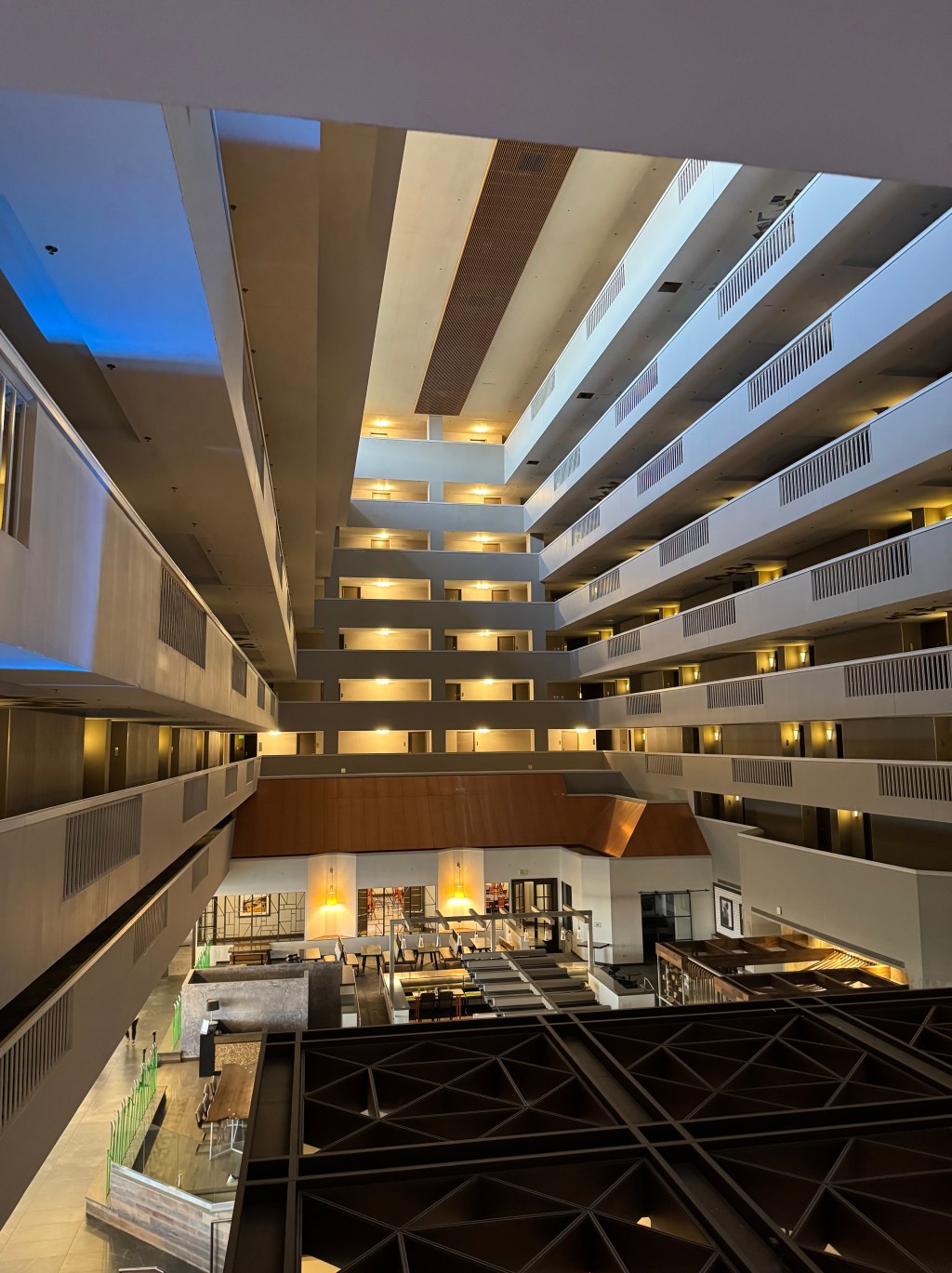
    It’s a massive open atrium that stretches several stories high, with balconies overlooking the center from every floor. The design instantly reminded me of Disney’s Contemporary Resort at Walt Disney World.

    In fact, I couldn’t help but think that if you dropped a monorail through the middle of the building, you’d almost believe the same architect designed both.

    It’s an impressive space that immediately makes the hotel feel larger and more upscale than you’d expect.

    The Room

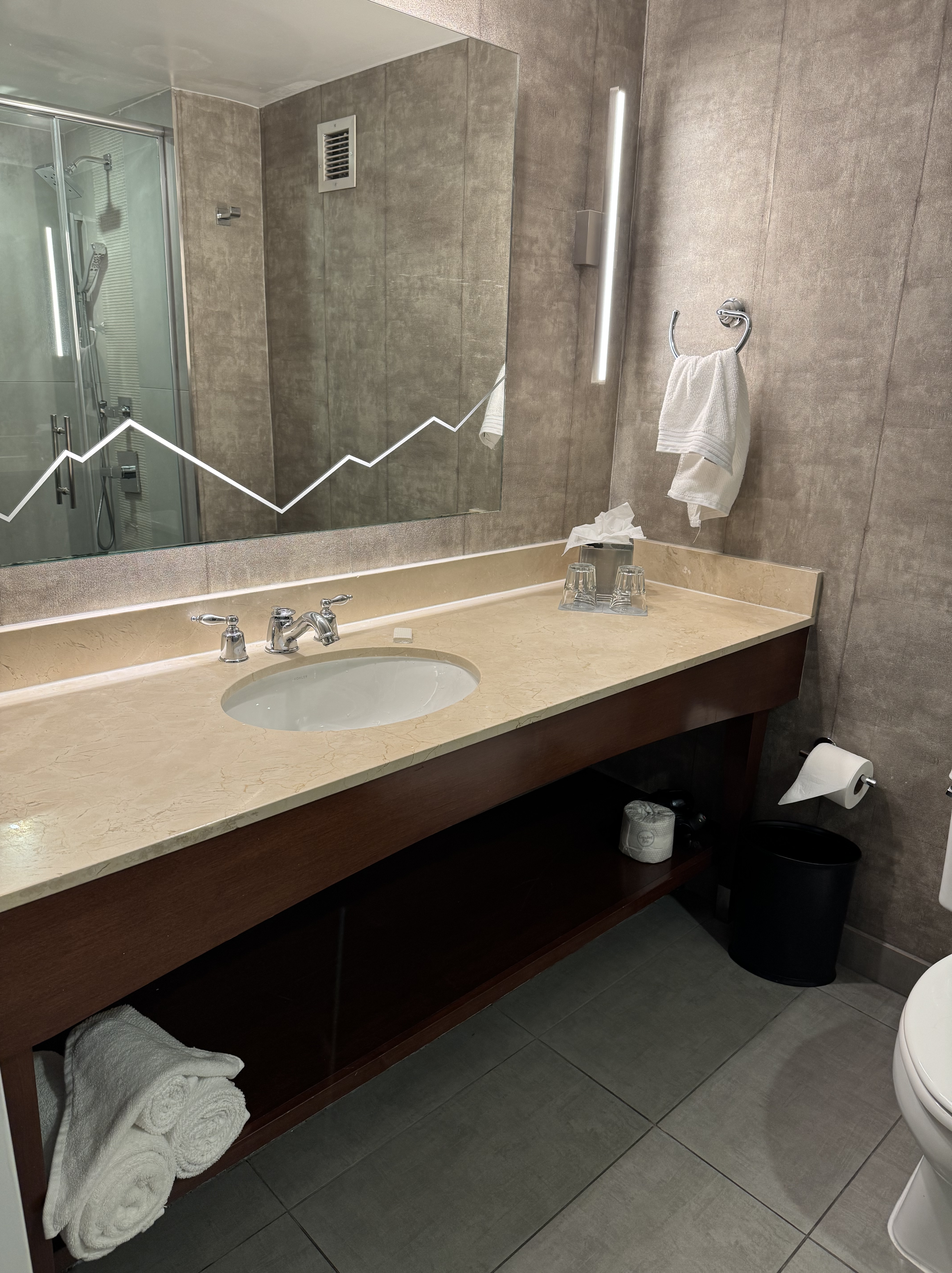
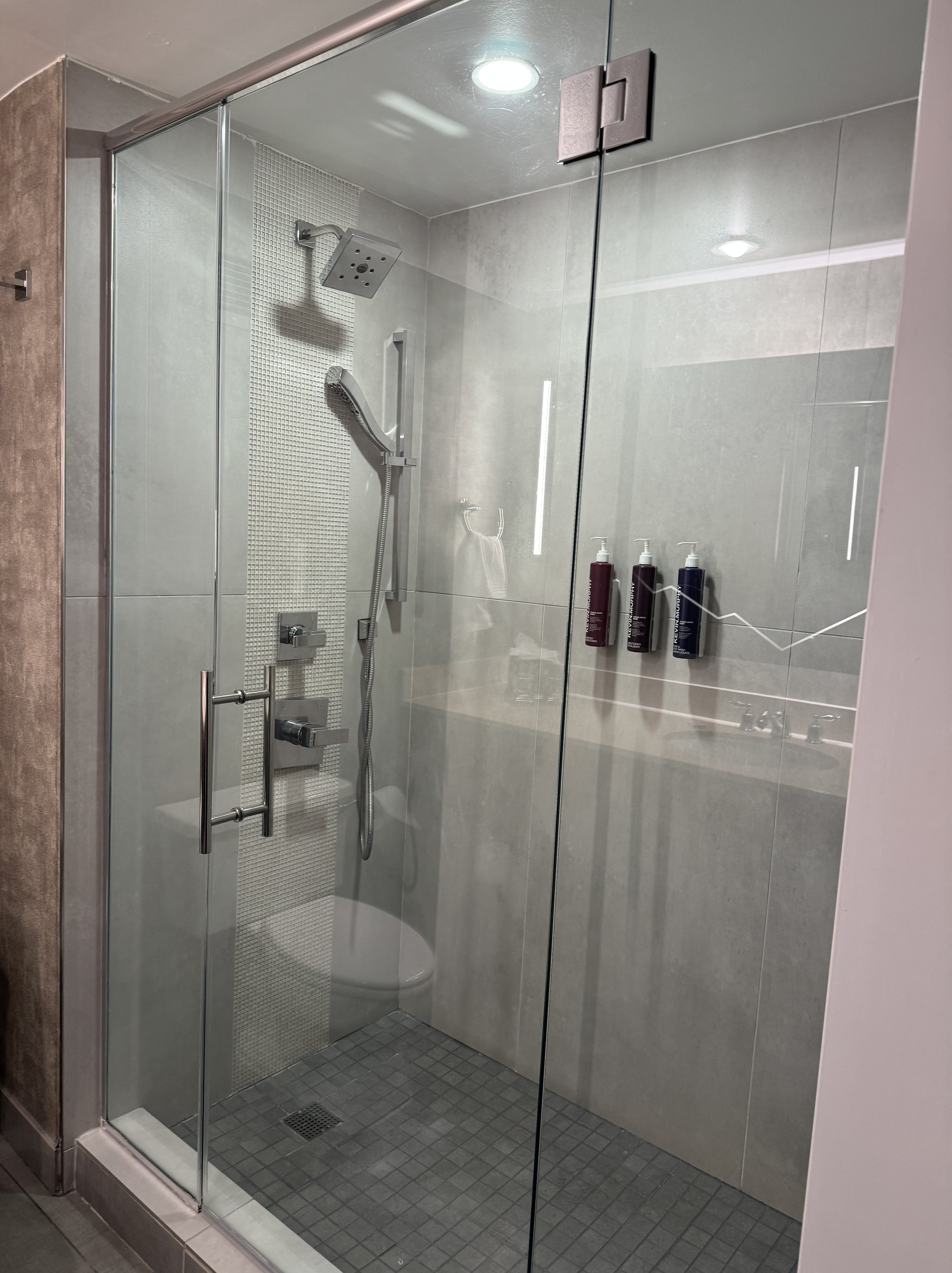
    The guest room was exactly what I hope for when I check into a Marriott property.

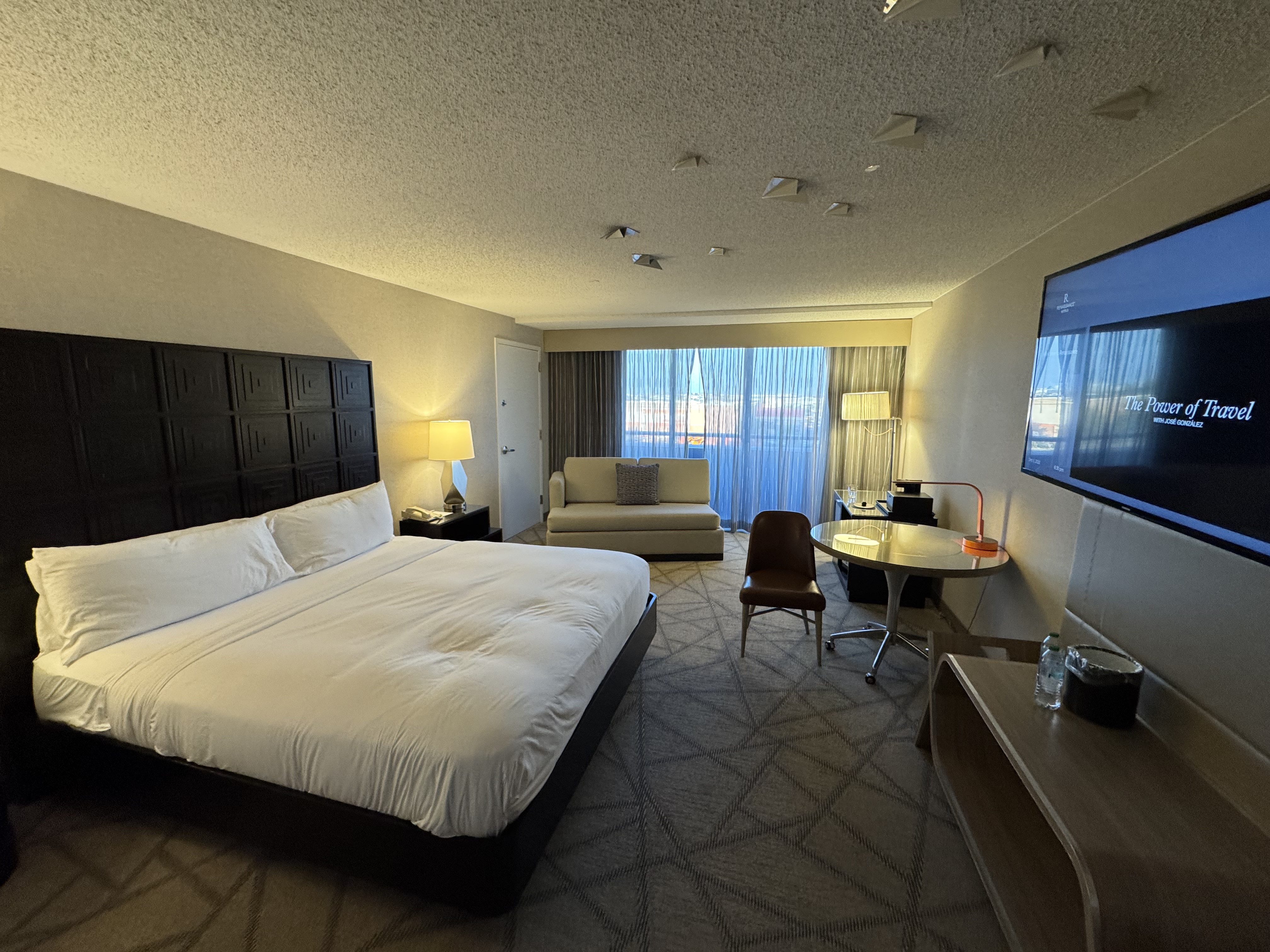
    It was clean, modern, and extremely well maintained.

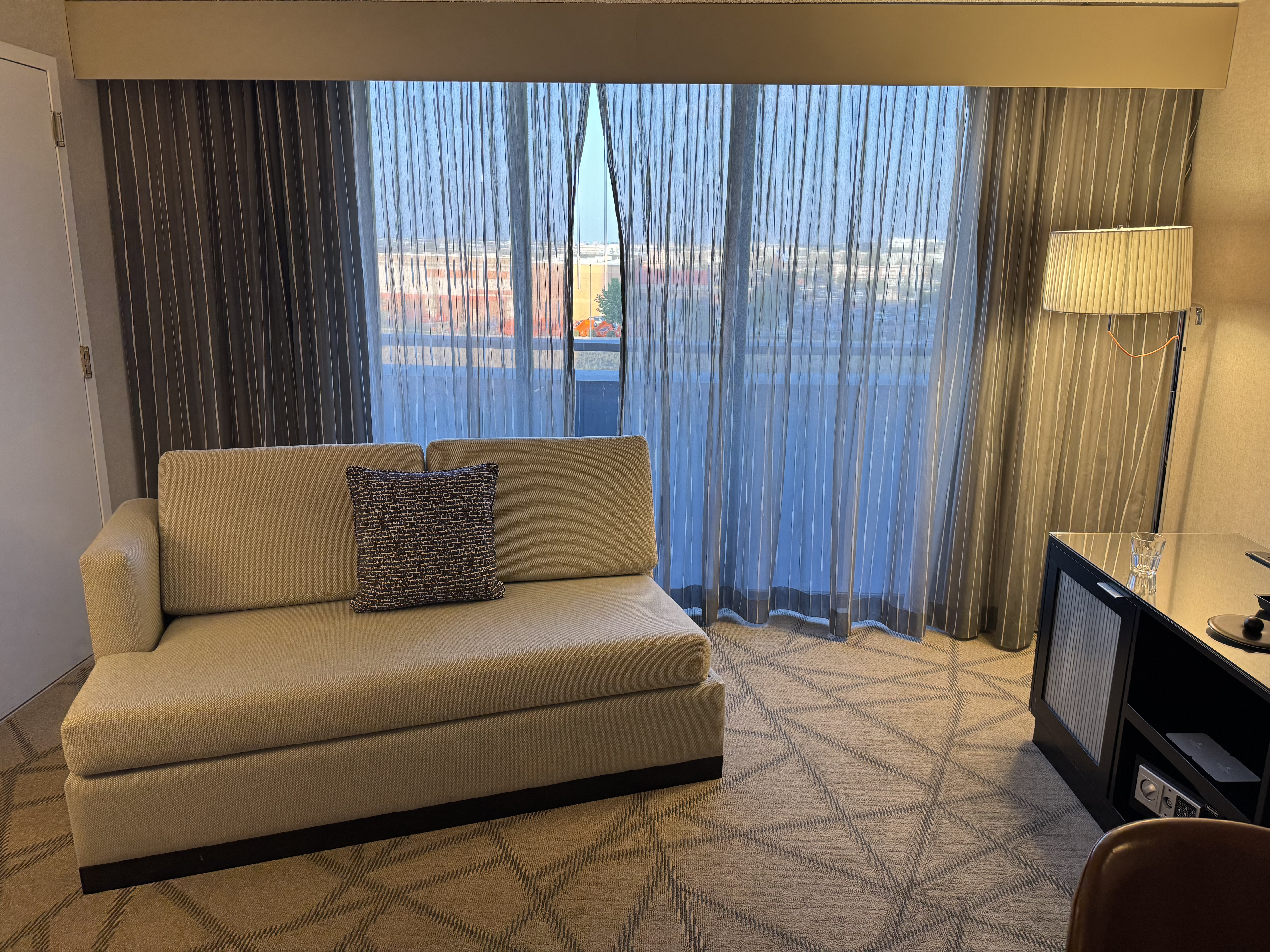
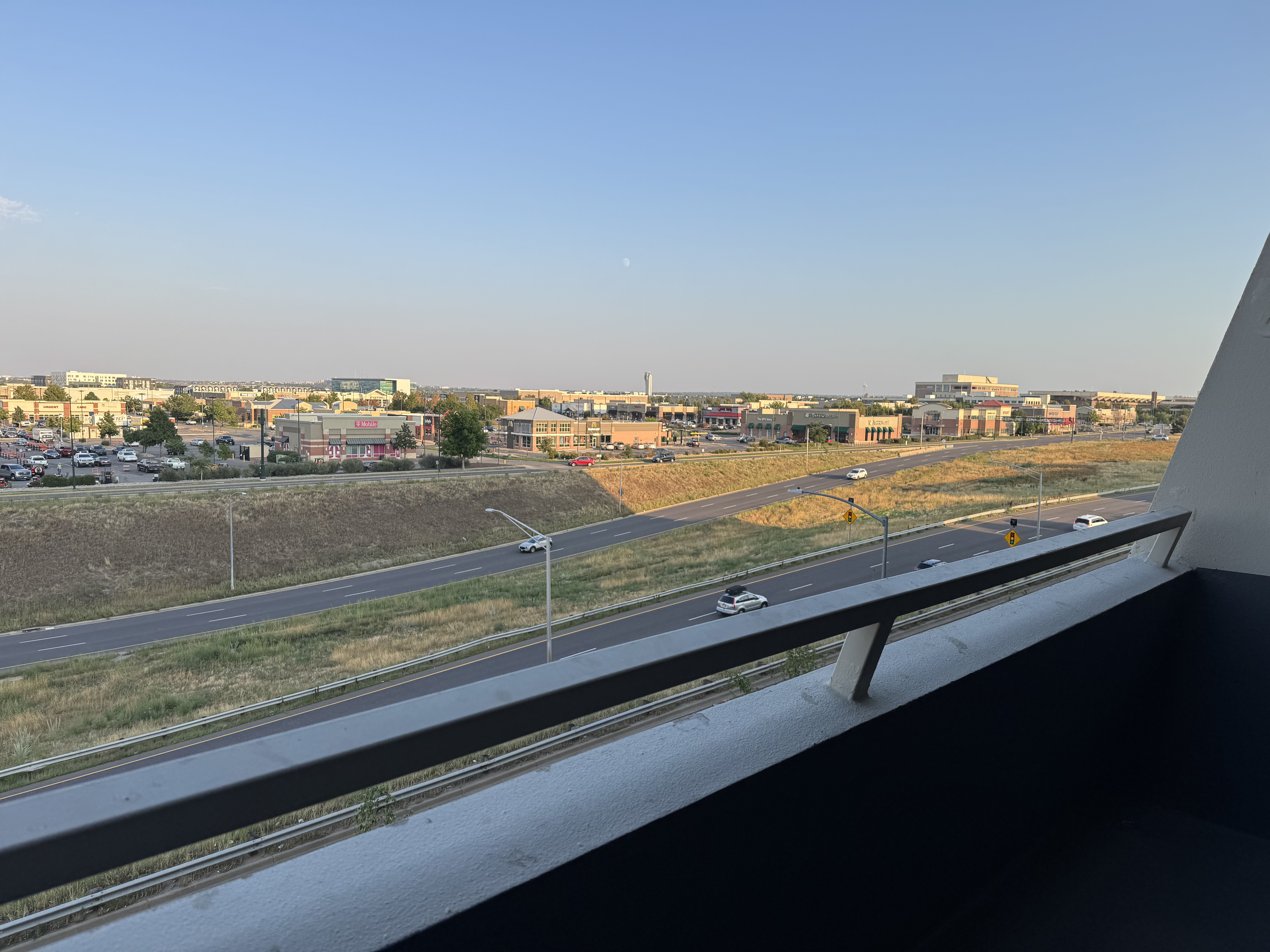
    The bed was comfortable, there was plenty of room to work, relax, and unpack, and I appreciated having a small balcony overlooking the surrounding area. It’s not a mountain view, but it was still a nice place to enjoy a cup of coffee before heading out.

    Sometimes it’s the little things that separate one hotel from another.

    The Details

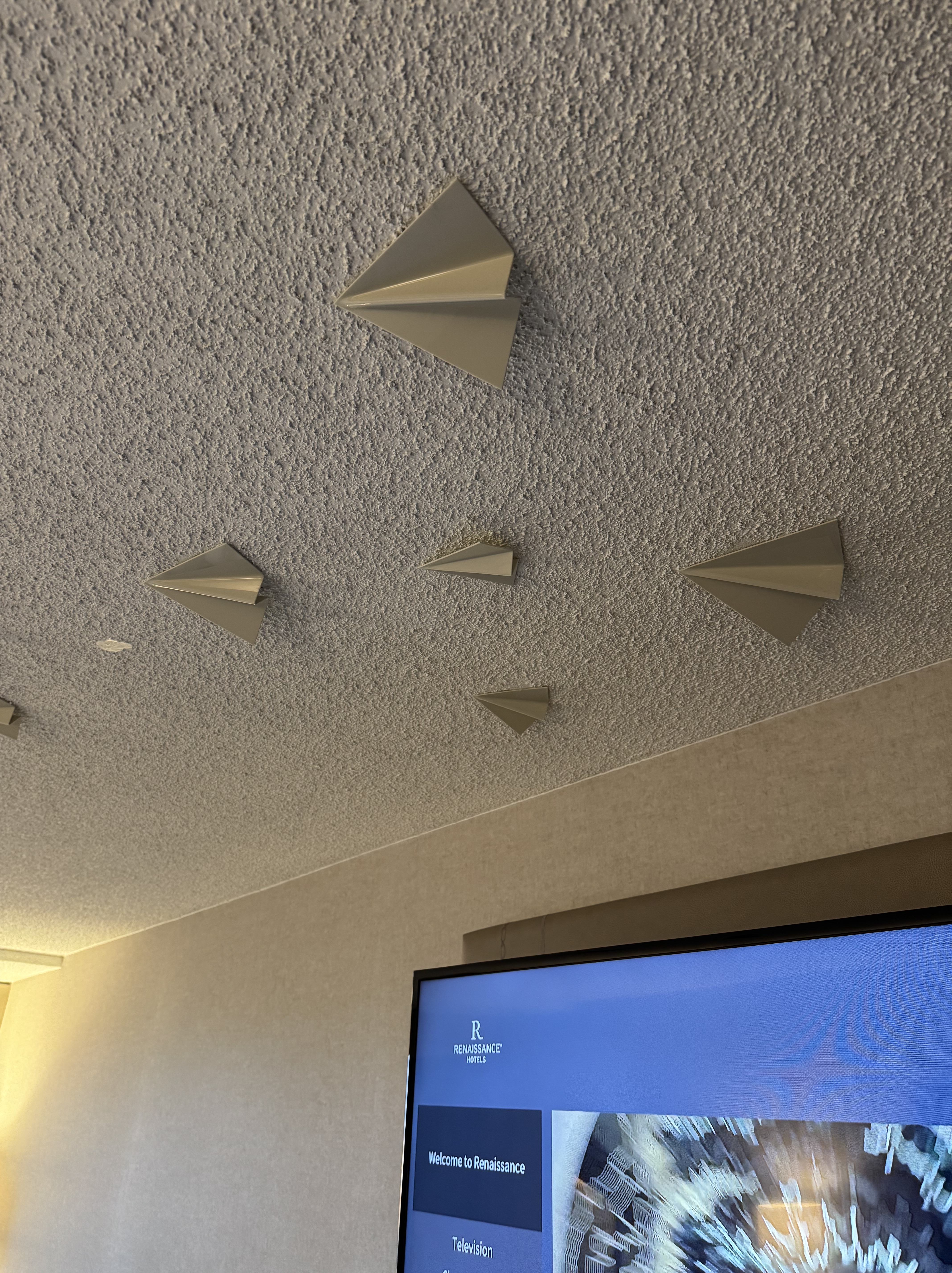
    One thing I really enjoyed was the playful aviation theme sprinkled throughout the room.

    There were small paper airplane accents on the ceiling and decorative touches inside the closet that most guests probably walk right past.

    They’re subtle, but they add personality. It’s nice to see a hotel put some thought into the guest experience instead of making every room feel identical.

    Those little details are exactly the kind of thing I notice.

    Food

    The food was another pleasant surprise.

    Hotel restaurants can be hit or miss, but I had a very good meal here. It was well prepared, the service was excellent, and it saved me from having to head back out after a long day.

    Sometimes convenience comes at the expense of quality.

    Not here.

    The One Drawback

    If there’s one thing worth mentioning, it’s the location.

    The hotel sits roughly 25 to 30 minutes from Denver International Airport, depending on traffic.

    If you’re expecting an airport hotel that’s five minutes from your gate, this isn’t it.

    For me, though, the extra drive was well worth it considering the quality of the property.

    Would I Stay Here Again?

    Without hesitation.

    The Renaissance Denver Hotel & Conference Center is clean, modern, comfortable, and has enough unique character that it doesn’t feel like another cookie-cutter business hotel.

    That’s becoming increasingly rare.

    If you’re a Marriott member, or simply looking for a dependable hotel in Denver that offers a premium experience without luxury hotel pricing, this is one I’d absolutely recommend.

    My Rating

    Cleanliness: ⭐⭐⭐⭐⭐ (5/5)

    Comfort: ⭐⭐⭐⭐⭐ (5/5)

    Design & Atmosphere: ⭐⭐⭐⭐⭐ (5/5)

    Location: ⭐⭐⭐⭐☆ (4/5)

    Overall: ⭐⭐⭐⭐⭐ (5/5)

    Travel Smart,

    Tommy Pgas