Tag: Delta Air Lines

  • AI Should Make Flying Better, Not Figure Out How Much It Can Squeeze Out of You

    AI Should Make Flying Better, Not Figure Out How Much It Can Squeeze Out of You

    AI Should Make Flying Better, Not Figure Out How Much It Can Squeeze Out of You

    I love technology.

    I love what it can do for travelers. I love when an airline uses technology to predict a missed connection, get a bag where it belongs, improve maintenance, reduce delays, communicate better during an irregular operation or help an employee solve a problem faster.

    And I am genuinely excited about what artificial intelligence could do for air travel.

    But there is a line.

    Technology should help companies serve customers better. It should not help companies figure out exactly how much they can squeeze out of each individual customer.

    That is why the growing debate over what is being called “surveillance pricing” deserves the attention it is getting.

    Congress Is Asking Questions

    On August 12, Rep. Frank Pallone, the ranking Democrat on the House Energy and Commerce Committee, announced that he had sent inquiries to eight major U.S. airlines: Alaska, American, Delta, Frontier, Hawaiian, JetBlue, Southwest and United.

    He wants the airlines to explain whether artificial intelligence and consumer data play a role in determining the prices travelers see.

    The airlines have been asked to respond by August 25.

    And Congress isn’t asking only whether airlines use AI.

    The questions get much more specific.

    Pallone’s letter asks about information including age, employment, income, spending history, loyalty-program participation, browsing behavior, location, IP address and device information. In other words, lawmakers want to know whether the airline is pricing the flight, or pricing the person shopping for the flight.

    That difference matters.

    Dynamic Pricing Is Not the Problem

    I want to be careful here because airline tickets have never worked like a gallon of milk sitting on a grocery-store shelf.

    Airlines have used dynamic pricing and revenue management for decades.

    A flight that costs $249 today might cost $329 tomorrow. As seats disappear, demand increases, departure gets closer or competitors change their fares, prices move.

    I understand that.

    I may not always like it, but there is a legitimate business reason behind it.

    What I have a serious problem with is something entirely different.

    Imagine you and I are sitting next to each other.

    Same flight.

    Same date.

    Same cabin.

    Same seat availability.

    Same moment.

    But an algorithm believes I travel frequently for business, knows I usually buy at the last minute, knows my approximate income, sees that I have searched this route four times today and concludes that I am probably desperate to go.

    So my ticket is $489.

    You get $379.

    Not because the flight changed.

    Because the computer decided I would tolerate paying more.

    That is not ordinary dynamic pricing.

    That is the issue Congress is investigating.

    The Federal Trade Commission has already found that surveillance-pricing technology in the broader economy can use remarkably granular information, including location, demographics, browsing activity, shopping history and even how consumers behave on a webpage, to help tailor prices and offers.

    And I think consumers have every reason to be concerned about that.

    Then Delta Said Something That Got Everyone’s Attention

    This controversy didn’t come from nowhere.

    In 2025, then-Delta President Glen Hauenstein discussed the airline’s work with AI pricing company Fetcherr. Delta said the technology was being used across about 3% of its domestic network at the time, with plans to expand it significantly.

    But it was an earlier description of Delta’s long-term pricing vision that really set off alarm bells.

    Hauenstein talked about eventually having a price available for a particular flight, at a particular time, “to you, the individual.”

    He also described the technology as part of a major reengineering of how Delta prices its product.

    Now, to be fair to Delta, the company has subsequently been very clear in its denial.

    Delta says it has never used, is not testing and does not plan to use personal information to create individualized airline fares. It says Fetcherr works from aggregated market and demand information, not individual customer data.

    That matters, and Delta’s denial deserves to be included in this conversation.

    But I also understand why lawmakers heard those earlier comments and started asking questions.

    If you tell Wall Street that technology is going to dramatically improve revenue and someday help create an offer for “you, the individual,” consumers are naturally going to ask:

    Exactly what does the computer know about me when it determines that price?

    That is a fair question.

    And Then Came JetBlue

    JetBlue has an entirely separate controversy.

    In April, a traveler complained publicly after a fare reportedly increased $230 while he was trying to book travel for a funeral.

    JetBlue’s social-media account responded by suggesting that he clear his cache and cookies or try an incognito browser.

    You can imagine what happened next.

    The Internet exploded.

    JetBlue later said the response was simply a mistake by a customer-service employee and that clearing cookies would not have changed the available airfare. JetBlue says it does not use personal information, browsing history or AI to set individualized ticket prices.

    But the exchange helped trigger additional scrutiny and a proposed federal class-action lawsuit alleging that JetBlue uses consumer information in what the complaint calls “dynamic surveillance pricing.”

    Those are allegations, not proven facts, and JetBlue denies them.

    Still, the story demonstrates exactly why airlines need to be incredibly transparent about this.

    Technology Without a Conscience Is a Dangerous Business Model

    Here is where I come down on it.

    I don’t have a problem with airlines making money.

    I don’t have a problem with airlines using sophisticated revenue-management systems.

    I don’t even have a problem with AI helping an airline determine that demand for Allentown to Orlando next Friday is stronger than expected and that the market can support a higher fare.

    That’s business.

    But the price should be based on the product and the market, not on an algorithm digging through my digital life trying to determine my breaking point.

    Because think about where that eventually leads.

    The computer knows you’re searching at 2:00 in the morning.

    It knows you’ve looked at the same flight eight times.

    It knows you’re searching one-way.

    It knows where you are.

    It potentially knows what you’ve bought before.

    Maybe someday it can infer that you’re dealing with an emergency.

    And suddenly the question isn’t, “What is this airline seat worth?”

    The question becomes:

    “How desperate is this person, and how much can we get out of him?”

    That is where technology stops serving the customer and starts exploiting the customer.

    I call that cheating.

    Trust Takes Years to Build and Seconds to Destroy

    Companies sometimes underestimate how quickly consumers figure these things out.

    Twenty years ago, maybe a pricing experiment could remain buried inside a complicated computer system.

    Not anymore.

    Someone posts a screenshot.

    Someone else tries the exact same search.

    Reddit starts comparing prices.

    TikTok picks it up.

    News organizations start calling.

    Congress starts asking questions.

    And suddenly something that looked like a brilliant revenue opportunity in a conference room becomes a full-blown brand problem.

    The worst part is that by the time senior leadership realizes how angry customers are, the damage may already be done.

    Trust is incredibly valuable.

    Customers want to believe that the company they are doing business with is dealing with them fairly.

    They understand sales. They understand promotions. They understand prices changing because supply and demand change.

    What they don’t want is the feeling that a company is secretly sizing them up before deciding how hard it can hit their wallet.

    There Is a Better Way to Use AI

    Interestingly, American Airlines CEO Robert Isom addressed this controversy in 2025 and described a very different approach.

    He said American wanted to use AI to improve things like operations, how products are presented and employee efficiency, and specifically rejected using the technology for “bait-and-switch” or tricking customers.

    That’s the direction I hope the entire industry takes.

    Use AI to predict mechanical problems before they cancel my flight.

    Use it to automatically protect my connection when my inbound aircraft is running late.

    Use it to make baggage tracking nearly perfect.

    Use it to help gate agents.

    Use it to improve scheduling.

    Use it to reduce call-center wait times.

    Use it to identify operational problems before they become problems.

    Use it to make flying safer, easier and less stressful.

    There are a thousand ways artificial intelligence could make air travel better.

    We don’t need the thousand-and-first use to be turning travelers upside down and shaking them to see what falls out of their pockets.

    That isn’t innovation.

    It’s just an incredibly sophisticated way to nickel-and-dime people.

    And if the airline industry ever crosses that line, I suspect travelers will figure it out much faster than the airlines think.

    Pags Take

    I am extremely optimistic about AI.

    But innovation without ethics isn’t progress.

    Airlines should absolutely use artificial intelligence to understand their business better. They should use it to improve the customer experience, support employees, operate more efficiently and make aviation safer.

    What they should never do is use what technology knows about me to figure out how much more they can make me pay.

    The airfare can change because the market changed.

    It should never change because the airline thinks it has figured me out.

    That is a line worth protecting.

    And Congress is right to ask whether anyone has crossed it.

    Travel smart,
    Tommy Pags

  • A Pilot Made $458,000. Before You Call It Crazy, Think About the Job.

    A Pilot Made $458,000. Before You Call It Crazy, Think About the Job.

    A Pilot Made $458,000. Before You Call It Crazy, Think About the Job.

    An American Airlines pilot recently shared a pay statement online, and the number immediately got everyone’s attention.

    The Miami-based Boeing 737 captain had earned nearly $458,000 by the middle of December, with a flight-pay rate of more than $360 per hour. Predictably, social media filled up with people wondering whether they had chosen the wrong profession.

    I understand the reaction. When you first see someone earning nearly half a million dollars flying airplanes, it sounds almost unbelievable.

    But the more I have learned about what it takes to reach that level, the less shocking the salary has become.

    In fact, I think many of the pilots earning that kind of money have probably earned every dollar of it.

    The Retirement Flight That Made Me Start Looking

    I first became interested in pilot salaries after reading about retiring Delta captain Keith Rosenkranz.

    After a 33-year career with Delta, he chartered an Airbus A330neo and took 112 friends and family members on a 24-hour retirement trip to Hawaii. The charter reportedly cost him roughly one year’s salary.

    My first thought was simple:

    How much does a pilot have to make to charter an entire Delta airplane?

    I started thinking about the aircraft, the crew, the fuel, the airport costs and the revenue Delta would normally collect from every passenger who would have occupied that airplane.

    That sent me down the rabbit hole of researching pilot compensation. That was when I realized how much some senior airline captains can earn.

    At first, the numbers were shocking.

    Then I started looking at the career behind the paycheck.

    Nobody Starts at $458,000

    The important thing to understand is that the American Airlines captain in this story was not a brand-new pilot walking into the cockpit on his first day.

    Pilot compensation generally increases based on seniority, airline, aircraft, position, schedule and the amount and type of flying performed. A senior captain flying for a major airline is in a completely different position from a new first officer beginning a commercial aviation career.

    Before most pilots can even qualify for an airline cockpit, they must build an enormous amount of flying experience. The FAA says virtually all new airline-pilot applicants must possess at least 1,500 hours of flight experience, although certain military pilots and graduates of approved aviation programs may qualify for restricted certificates with fewer hours.

    Many pilots spend years building those hours by working as flight instructors, charter pilots, cargo pilots or pilots for smaller regional carriers.

    They may begin flying smaller aircraft carrying dozens of passengers on shorter routes. Over time, they can move to larger airlines, upgrade from first officer to captain and eventually qualify on more complex aircraft.

    That progression requires more than simply waiting around for a promotion. Pilots undergo recurrent training, medical examinations, simulator evaluations, check rides and aircraft-specific qualification programs throughout their careers.

    The paycheck at the top may be impressive, but the runway to reach it is long.

    The Bigger the Aircraft, the Bigger the Responsibility

    There is also a major difference between flying a smaller regional jet and commanding a wide-body aircraft carrying hundreds of passengers across an ocean.

    The larger the airplane and the more complicated the operation, the greater the responsibility.

    A captain must understand the aircraft, weather, fuel, flight planning, airport conditions, mechanical concerns and emergency procedures. The pilots are coordinating with dispatchers, air traffic controllers, flight attendants, maintenance personnel and ground crews throughout the operation.

    Most passengers only notice the pilots when they make an announcement about turbulence or when they are standing near the cockpit door as everyone leaves.

    But during the flight, those pilots are responsible for making decisions that can affect hundreds of lives.

    You are not simply paying a pilot to hold the controls while the airplane cruises through a clear sky.

    You are paying for the pilot’s judgment when the weather changes, a warning light appears, an airport closes, a passenger has a medical emergency or something happens that was not part of the original plan.

    You are paying for the moment when everything does not go perfectly.

    That is when you want the most experienced and capable person possible sitting in that seat.

    There Is a Personal Price Too

    The salary conversation also tends to ignore the lifestyle.

    Pilots spend nights in hotels, work weekends and holidays, cross multiple time zones and regularly miss family events. Newer pilots may spend years working reserve schedules, taking undesirable trips and flying when more senior pilots would rather be home.

    Even when they are not flying, they may be commuting to their assigned base or waiting to find out whether they will be called to work.

    Federal regulations limit flight and duty periods and require rest between assignments, but those rules exist precisely because fatigue and irregular schedules are real safety concerns in aviation.

    As pilots build seniority, they usually gain more influence over their aircraft assignments, vacations and monthly schedules. Airlines commonly use bidding systems that award schedule preferences partly according to seniority.

    That can eventually produce a very good lifestyle.

    But it often comes after spending the first 10 or 15 years taking the schedules nobody else wanted.

    You do not receive the preferred international trip, the better days off and the premium compensation simply because you showed up.

    You earn your position on the seniority list one year at a time.

    So, Are Pilots Overpaid?

    When people see $458,000, they naturally compare it with their own salary.

    That is understandable.

    But I do not think the right question is whether that number sounds high compared with what most people earn.

    The better question is what we should pay someone who has spent decades developing an extremely specialized skill and is responsible for safely transporting hundreds of people through the sky.

    When I step onto an airplane, I want the pilots to be experienced, rested, properly trained and well compensated.

    I do not want the airline searching for the least expensive person it can find to operate the aircraft.

    Pilots are not perfect, and high compensation does not eliminate mistakes. However, this is one profession where experience, training and sound judgment can have immediate life-or-death consequences.

    That is worth paying for.

    I Might Have Chosen the Cockpit

    Honestly, if I could go back in time and select another career, becoming a pilot is something I would seriously consider.

    Part of that is because I enjoy flying and traveling as much as I do. There is something fascinating about aviation, airports, aircraft and the entire system required to move people around the world.

    Of course, I am looking at it now as someone who loves air travel.

    I might have felt differently after my fifth delayed flight of the week, my third night in a hotel and another holiday away from home.

    Still, I understand why pilots love the profession.

    The view from the office is difficult to beat.

    So yes, nearly $458,000 is a remarkable salary.

    But after decades of training, responsibility, missed family time, difficult schedules and safely carrying millions of passengers, I am not going to complain that an experienced airline captain is earning a substantial paycheck.

    I am just going to hope the person flying my airplane is worth every penny.

    Travel smart.

    Tommy Pags
  • Basic Economy Just Got Even Worse for Frequent Flyers: Here’s Why I’m Avoiding It

    Basic Economy Just Got Even Worse for Frequent Flyers: Here’s Why I’m Avoiding It

    Basic Economy Just Got Even Worse for Frequent Flyers: Here’s Why I’m Avoiding It


    Basic Economy Isn’t the Bargain It Used to Be

    There was a time when booking Basic Economy came with a few compromises. You might lose seat selection or board a little later, but if you were a loyal customer with airline status, you still earned something for your loyalty.

    Those days are over.

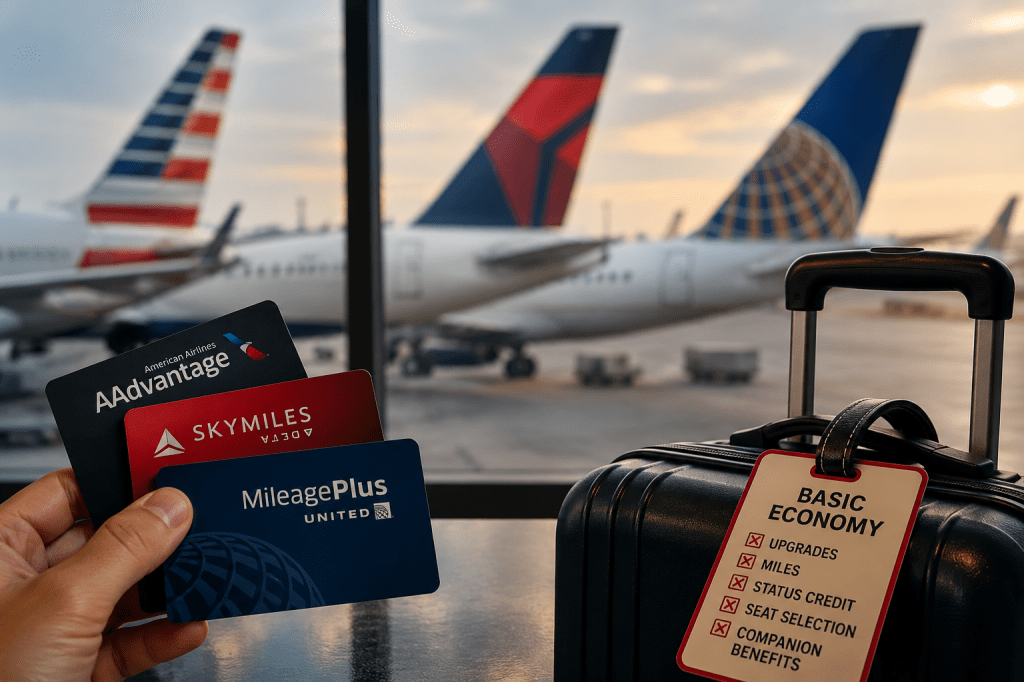
    American Airlines, Delta Air Lines, and United Airlines have all made it clear: if you buy Basic Economy, don’t expect your elite status to help you much anymore.

    For travelers chasing status, this isn’t just another policy change. It completely changes the value equation.


    The New Reality

    The biggest change is simple.

    If you’re flying Basic Economy:

    • No redeemable miles on many qualifying fares.
    • No progress toward elite status.
    • No complimentary upgrades.
    • Reduced or eliminated elite benefits.
    • In many cases, fewer opportunities to use the perks you’ve spent years earning.

    American officially eliminated mileage earning on Basic Economy tickets in late 2025. Delta and United have continued moving in the same direction, making their lowest fares little more than transportation from Point A to Point B.

    The message from the airlines couldn’t be clearer:

    Want loyalty benefits? Buy a more expensive ticket.


    This Hits Frequent Travelers the Hardest

    As someone who flies almost every week, this caught my attention.

    For years I was a Delta loyalist. If you’ve been following Pags on the Go, you already know my relationship with Delta has become… complicated.

    Lately I’ve seen Delta pricing become dramatically more expensive than United and American on many of my regular routes. Sometimes we’re talking hundreds of dollars more for essentially the same trip.

    Now they’re asking frequent travelers to pay even more just to preserve the benefits we’ve already worked hard to earn.

    That doesn’t sit particularly well with me.


    Loyalty Programs Are Becoming Revenue Programs

    This is the part that I think many travelers are missing.

    Airline loyalty programs used to reward how often you flew.

    Today they reward how much money you spend.

    That’s a huge philosophical shift.

    The airlines have figured out something simple:

    Business travelers, corporate travelers, and premium leisure travelers are willing to pay more.

    Instead of rewarding frequency, they’re rewarding revenue.

    From a business standpoint, I understand it.

    From a customer standpoint, it certainly feels different than it did even five years ago.


    Should You Ever Book Basic Economy?

    For many travelers, the answer is actually…

    Yes.

    If you fly once or twice a year…

    If you don’t care about airline status…

    If you’re simply looking for the cheapest possible fare…

    Basic Economy may still make perfect sense.

    But if you’re chasing elite status, trying to earn upgrades, or hoping to keep your Gold, Platinum, Executive Platinum, Premier, Medallion, or similar level…

    Basic Economy has become a trap.

    The savings on the ticket can easily cost you far more in lost benefits later.


    My Rule of Thumb

    Here’s how I look at it.

    If Main Cabin is only $30 to $75 more than Basic Economy, I almost always choose Main Cabin.

    Why?

    Because I want:

    • Seat selection.
    • Flexibility if plans change.
    • Miles earned.
    • Credit toward future status.
    • Better upgrade opportunities.
    • The ability to actually use the loyalty program I’m investing in.

    Those benefits usually outweigh the small upfront savings.


    One More Thing to Watch

    One detail that deserves attention is codeshare flights.

    If you’re booking through one airline but flying on another, Basic Economy restrictions don’t always match what you expect. The operating airline’s rules often determine which benefits you actually receive.

    Before clicking “Purchase,” take a minute to verify exactly what you’re buying.

    That five-minute check could save you a lot of frustration at the airport.


    Final Thoughts

    I’ve said it before on this site, and I think it applies here too:

    Airline loyalty is becoming a two-way negotiation.

    The airlines expect us to stay loyal.

    But they also have to earn ours.

    When ticket prices climb, benefits shrink, and elite status becomes harder to maintain, travelers should feel comfortable shopping around. Blind loyalty doesn’t make much sense anymore.

    Book the airline that gives you the best overall value, not just the one with the logo you’ve been flying for years.

    That’s exactly what I’ve started doing.

    Travel smart,
    Tommy Pags

  • Delta’s New A321neo First Class: Is the Hype Worth It? I Finally Found Out.

    Delta’s New A321neo First Class: Is the Hype Worth It? I Finally Found Out.

    Delta’s New A321neo First Class: Is the Hype Worth It? I Finally Found Out.

    I’ve heard people rave about Delta’s new first class cabin for months. As much as I fly, somehow I kept ending up on older aircraft. This trip finally changed that.

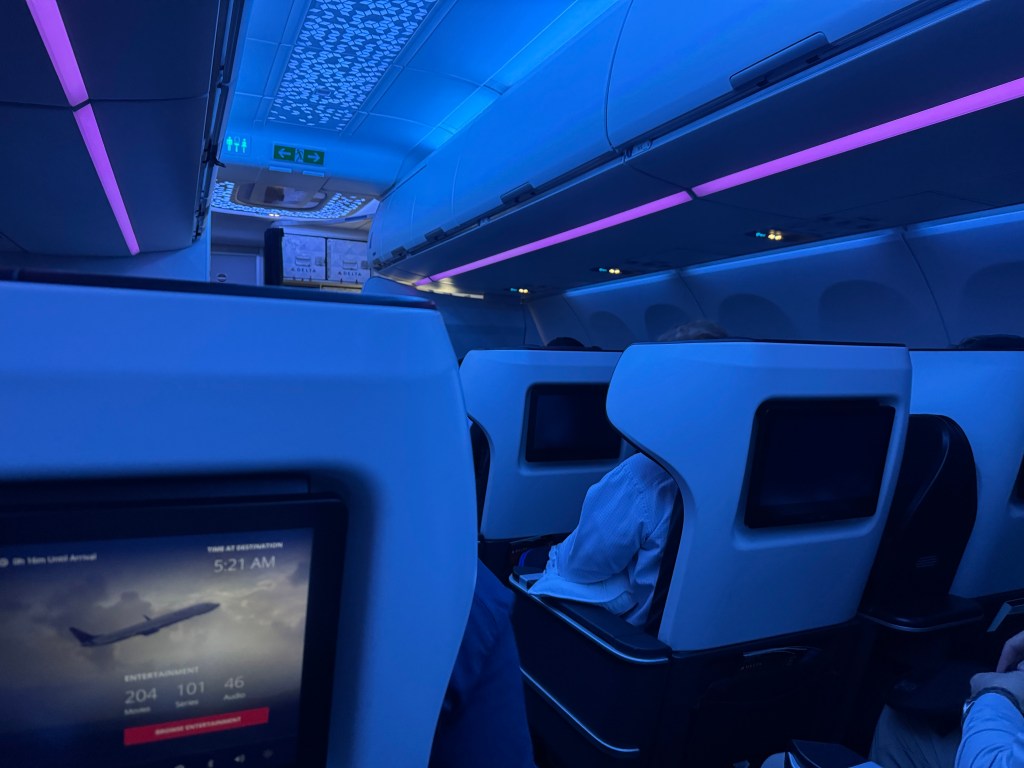
    Flying from Las Vegas to Cincinnati on one of Delta’s brand-new Airbus A321neo aircraft (tail number N581DA), I finally got to see what all the excitement was about.

    After spending a few hours in the seat, I understand why travelers have been talking about it.

    First Impressions

    The moment you step into the cabin, it feels different.

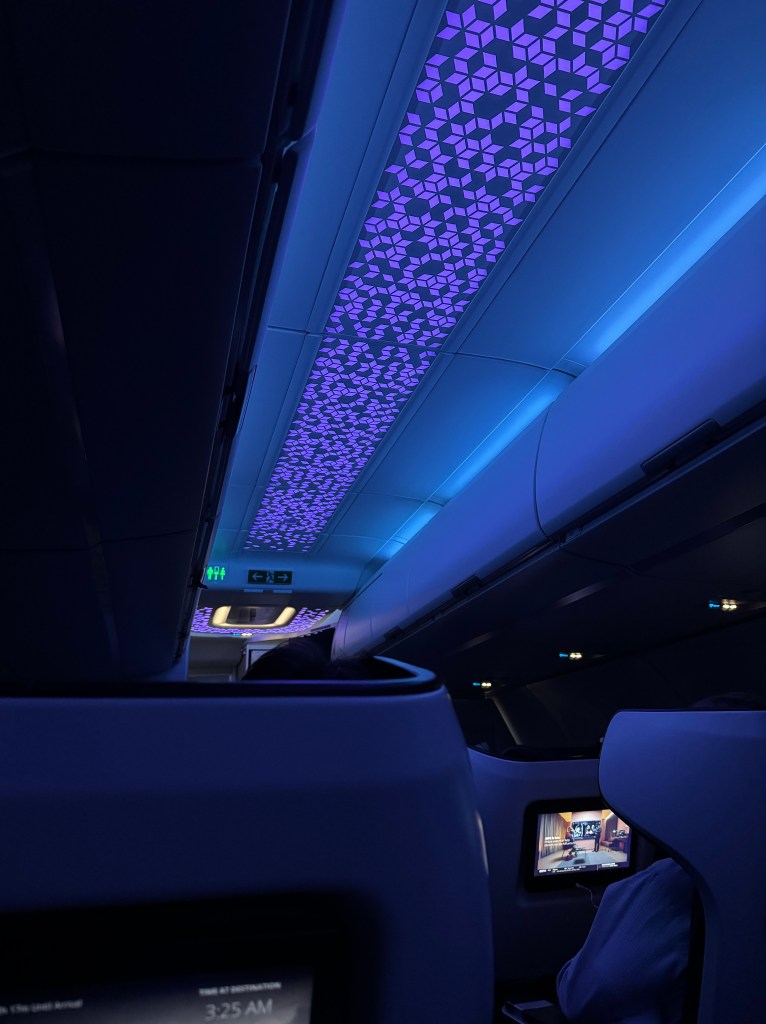
    Delta has done a nice job making the space feel modern without going over the top. The blue and purple mood lighting gives the cabin a premium feel, especially during an early morning or evening flight. It isn’t flashy. It’s just… polished.

    One thing that immediately stood out was how clean and fresh everything looked. That’s one of the advantages of flying a brand-new airplane.

    The Seat

    This is where Delta really got it right.

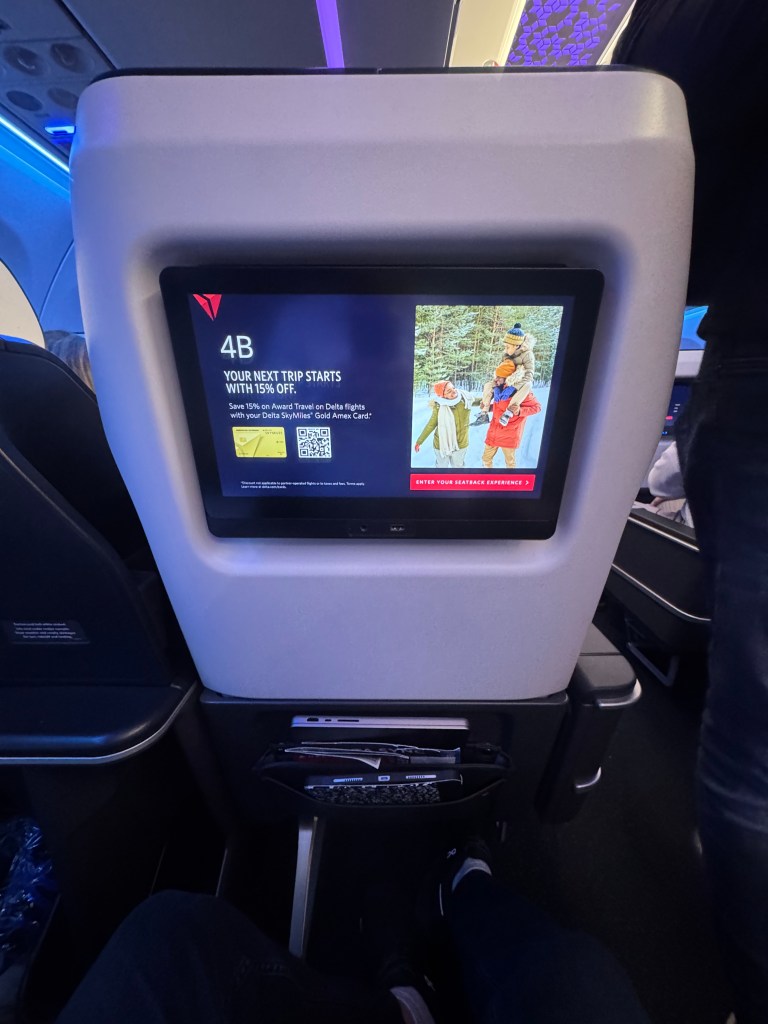
    The redesigned first class seat features wraparound wings on the headrest that create just enough privacy to make your seat feel like your own little space. It’s not Delta One, but it gives you a sense of separation from the rest of the cabin that you don’t usually get in domestic first class.

    The seat itself was extremely comfortable. Plenty of support, good padding, and enough room that I never felt cramped during the flight.

    It’s one of those seats where you actually relax instead of constantly shifting around trying to get comfortable.

    Technology

    The entertainment system worked well, and the screen was crisp and responsive.

    That said, this is probably my one nitpick.

    For Delta’s newest domestic aircraft, I expected an even larger display. The screen is certainly big enough, but with how much technology has advanced, I thought they might push it a little further.

    It’s not a complaint so much as one of those moments where your expectations are incredibly high because everything else around you feels so cutting edge.

    The Cabin Atmosphere

    Sometimes it’s the little details that make the biggest difference.

    The lighting throughout the cabin created an atmosphere that felt much more upscale than a typical domestic flight. Instead of harsh white cabin lights, the ambient colors made boarding and cruising noticeably more relaxing.

    It sounds like a small thing until you experience it.

    Is It Worth Seeking Out?

    Absolutely.

    If you’re booking Delta First Class and have the option of choosing an Airbus A321neo over an older aircraft, I’d make that choice every time.

    The improvements aren’t revolutionary by themselves, but together they create a noticeably better experience.

    Comfortable seating.
    Modern design.
    Excellent lighting.
    A cabin that simply feels premium.

    That’s exactly what domestic first class should be.

    My Rating

    Comfort: ⭐⭐⭐⭐⭐ (5/5)

    Cabin Design: ⭐⭐⭐⭐⭐ (5/5)

    Technology: ⭐⭐⭐⭐☆ (4.5/5)

    Overall Experience: ⭐⭐⭐⭐⭐ (5/5)

    Pags on the Go Take

    I’ve been pretty vocal lately when Delta deserves criticism, especially with some of the pricing decisions they’ve been making. So it’s only fair to give credit where it’s due.

    This cabin is excellent.

    It doesn’t reinvent domestic first class, but it refines it in all the right ways. If this is the direction Delta is taking its fleet, passengers are going to appreciate it.

    Now… if they could just make some of those fares a little easier to swallow.

    Travel Safe,

    Tommy Pags