Tag: Hotels

  • Staying at a New Hotel Could Earn You Extra Points. Here’s Why I Always Check.

    Staying at a New Hotel Could Earn You Extra Points. Here’s Why I Always Check.

    Staying at a New Hotel Could Earn You Extra Points. Here’s Why I Always Check.

    Here’s a hotel loyalty benefit that is surprisingly easy to overlook.

    World of Hyatt offers members 500 bonus points per qualifying night at participating newly opened hotels.

    No complicated promotion code.

    No giant spending requirement.

    And according to Hyatt’s current promotion, you don’t even need to register.

    If you’re staying at one of the participating properties during its promotional period, you can earn the bonus automatically on qualifying nights.

    That’s worth knowing before you book.

    Why New Hotels?

    Hotel companies obviously want travelers walking through the doors when a property first opens.

    A new hotel has to establish itself.

    It needs reviews.

    It needs repeat customers.

    It needs occupancy.

    And it needs loyalty members to start considering it when they visit that market.

    Giving existing loyalty members extra points is a pretty straightforward way to encourage that.

    As of September 1, The Points Guy identified 32 recently opened Hyatt properties participating in the offer.

    The participating list changes as hotels open and promotional periods expire, so this isn’t something I’d memorize.

    It’s something I’d check.

    Award Stays Can Count Too

    Here’s where the promotion gets more interesting.

    According to the current terms summarized by The Points Guy, award stays booked with Hyatt points and eligible free-night certificates can also qualify for the 500-point new-hotel bonus.

    Think about that.

    You can potentially redeem points for the room and still earn bonus points back because the property is new.

    That’s the kind of loyalty-program detail that frequent travelers should know exists.

    Every Hotel Has Its Own Window

    This isn’t one giant promotion with one expiration date.

    Each participating property has its own eligible period.

    For example, the current list includes properties with bonus windows extending into October, November and December.

    Hyatt Vivid Punta Cana, one of Hyatt’s newest all-inclusive resorts, currently offers the new-hotel bonus for qualifying nights through November 30.

    Other properties have different deadlines.

    That’s why I wouldn’t assume anything.

    Before booking, check the current list.

    New Hotels Have Another Advantage

    There’s also something nice about staying somewhere new.

    The mattress hasn’t hosted thousands of guests.

    The furniture hasn’t been beaten up.

    The USB ports hopefully still work.

    The hallway carpet hasn’t spent five years battling rolling suitcases.

    Everything should feel fresh.

    But notice that I said should.

    New Doesn’t Always Mean Perfect

    Newly opened hotels can have growing pains.

    That’s normal.

    Staff may still be learning systems.

    Breakfast operations may still be getting figured out.

    A restaurant may not have opened yet.

    The pool may technically exist but still be waiting on final approvals.

    Some amenities shown on the website may still be coming online.

    That’s one reason I always recommend checking recent reviews when booking a very new property.

    Look specifically at reviews from the previous few weeks.

    Not six months ago.

    If five recent guests mention that the restaurant isn’t open yet, believe them.

    Can You Stack Promotions?

    Sometimes.

    Hyatt promotions can potentially overlap depending on the individual terms.

    So a stay at a new Hyatt might qualify for the 500-point new-hotel bonus while also qualifying for another eligible Hyatt promotion.

    Don’t assume they’ll stack, but definitely check.

    One minute looking at the current offers page could turn a stay you were already going to book into several thousand additional points.

    That’s a pretty good return on one minute of research.

    Don’t Chase Points at the Expense of the Trip

    There is an important rule here.

    Never choose the wrong hotel just because somebody offers you bonus points.

    Five hundred points per night is a nice extra.

    It should not convince you to stay 30 minutes farther from where you need to be, pay substantially more or book a hotel with terrible reviews.

    Points are supposed to make travel better.

    Don’t make the trip worse trying to earn them.

    The ideal situation is simple.

    You’re already considering two comparable hotels.

    One happens to be offering an additional loyalty bonus.

    That’s when the promotion becomes meaningful.

    My Take

    Hotel loyalty programs contain dozens of little opportunities like this.

    Most travelers never know they exist.

    The hotel companies certainly aren’t going to stop you before booking and say, “Before you reserve that property, you should see if another hotel is offering extra points.”

    That’s our job as travelers.

    Before I book, I want to know:

    Is there a promotion?

    Do I need to register?

    Does this hotel have a new-property bonus?

    Can I stack offers?

    Does an award stay qualify?

    Those questions take a few minutes.

    Over a year of traveling, those few minutes can add up to a lot of points.

    Travel smart,
    Tommy Pags.

  • The Most Important Part of a Business Hotel Might Be Helping You Stop Working

    The Most Important Part of a Business Hotel Might Be Helping You Stop Working

    The Most Important Part of a Business Hotel Might Be Helping You Stop Working

    I spend a lot of time traveling for work, and there’s one thing people sometimes forget about business travel.

    Just because I’m traveling for work doesn’t mean I want to work 24 hours a day.

    Hyatt recently commissioned a survey of 2,000 U.S. business travelers, and one number immediately caught my attention.

    Ninety percent said their hotel room was the only place they truly felt “off the clock” during a business trip.

    I completely understand that.

    Because after spending the day working with customers, attending meetings, standing at a trade show, traveling between appointments or dealing with airports, there comes a point where you need the day to end.

    And sometimes the only place where that actually happens is when the hotel room door closes behind you.

    A Business Hotel Has to Do Two Things

    Here’s the challenge.

    I still need to work in my hotel room.

    There are emails that need responses. There may be reports to finish, presentations to adjust or preparation for the next morning.

    Hyatt’s research found that nearly three-quarters of the business travelers surveyed typically do some work in their hotel rooms after the normal workday.

    Again, I get it.

    That’s why I want a legitimate desk or work area.

    I want a comfortable chair.

    I want enough outlets.

    I want strong Wi-Fi.

    And please, hotel designers, put outlets somewhere that makes sense.

    But once I’m finished, I want that room to transition from office back to hotel room.

    That’s the part I think some hotels miss.

    I Don’t Want to Sleep in My Office

    There’s a difference between having a good workspace in a hotel room and having a room that feels like somebody shoved a bed into an office.

    A business hotel needs to let me work efficiently so I can finish what I need to do and then put the laptop away.

    After that, I want to relax.

    Watch television.

    Order something to eat.

    Call home.

    Take a shower.

    Maybe scroll through my phone for longer than I should.

    And sleep.

    That’s normal.

    Business travel already blurs the line between work and personal time. A good hotel shouldn’t blur it even more.

    The Little Things Become Big Things

    The Hyatt survey found business travelers placed a premium on things such as comfortable beds, reliable Wi-Fi, food availability, breakfast and early check-in.

    None of those things sound revolutionary.

    That’s exactly the point.

    When you travel regularly, consistency beats gimmicks.

    I’d rather have great Wi-Fi than an app-controlled curtain.

    I’d rather have a comfortable mattress than mood lighting with six different settings.

    I’d rather have easily accessible outlets than a decorative telephone I’ll never touch.

    And when I’ve been traveling all day, having food available without needing another Uber can feel like a luxury.

    The best business hotels understand that.

    Give Me a Good Desk

    I do think the desk deserves more attention.

    Hotels increasingly design rooms around leisure travelers, and some properties have reduced the traditional work area to a tiny table or shelf.

    That doesn’t always work for business travelers.

    Sometimes I actually need to spread out.

    Laptop.

    Phone.

    Chargers.

    Notebook.

    Maybe paperwork.

    Possibly an iPad.

    I don’t need a corporate cubicle in my room, but I need enough functional space to work comfortably for an hour or two.

    The faster I can finish my work, the faster I can stop working.

    That’s the real benefit.

    Then Let Me Shut the World Off

    Nearly half of the travelers in Hyatt’s study said they would rather spend their downtime relaxing alone in the room than attend an optional networking event.

    That doesn’t surprise me either.

    There’s only so much talking a person can do.

    Business trips can involve spending almost every waking minute around people.

    Customers.

    Coworkers.

    Convention attendees.

    Restaurant servers.

    Uber drivers.

    Airport crowds.

    People sitting next to you on airplanes.

    Sometimes the best amenity a hotel can give you is simply a quiet room and a closed door.

    What I Look For

    The longer I travel, the more I appreciate hotels that get the basics right.

    For business travel, my ideal room isn’t necessarily luxurious.

    It’s functional.

    I want:

    • A comfortable bed
    • A real work surface
    • A comfortable desk chair
    • Fast, reliable Wi-Fi
    • Accessible outlets
    • Good lighting
    • A strong shower
    • Effective blackout shades
    • A room that stays quiet
    • Good climate control
    • Food available reasonably late
    • A television that actually works easily

    None of that belongs in a hotel commercial.

    All of it matters when you’re actually staying there.

    Loyalty Matters Too

    Another interesting result from Hyatt’s study was that 80% of respondents said hotel loyalty programs influence where they stay for business.

    That makes sense.

    If work requires you to spend nights away from home, earning points, elite status and benefits toward future travel at least gives you something back.

    But loyalty only goes so far.

    I won’t keep staying somewhere uncomfortable simply because there’s a logo on the building.

    The hotel still has to do its job.

    My Take

    A business hotel doesn’t have to entertain me every minute.

    It has to make my trip easier.

    Give me somewhere I can work when I need to work.

    Give me what I need to get that work done efficiently.

    Then give me a comfortable place where work can stop.

    Because business travelers aren’t traveling machines.

    We’re still people.

    And at some point during every business trip, the laptop needs to close.

    Travel smart,
    Tommy Pags.

  • Google’s AI Can Book Your Hotel. But I Think Travelers Should Fight AI With AI.

    Google’s AI Can Book Your Hotel. But I Think Travelers Should Fight AI With AI.

    Google’s AI Can Book Your Hotel. But I Think Travelers Should Fight AI With AI.

    Artificial intelligence has already worked its way into almost every part of travel planning. Now it is moving one step closer to actually making the reservation for you.

    Google announced on August 27 that its AI Mode in Search is adding new travel capabilities, including the ability to compare hotel options, see some hotel prices in points, and complete hotel bookings with participating partners.

    That is a pretty significant change.

    But the part that interests me most isn’t simply that AI can book my hotel.

    I want to use AI to figure out whether the hotel AI wants me to book is actually the best hotel for me.

    Welcome to AI versus AI.

    Booking a Hotel Is About More Than the Lowest Rate

    If all I cared about was finding the cheapest room, hotel shopping would be pretty easy.

    That’s rarely how I travel.

    If you’re part of a hotel loyalty program, carry travel credit cards, have elite status or travel frequently for work, the room rate is only one piece of the equation.

    A hotel that costs $20 more per night may actually be the cheaper choice when you factor in:

    • Complimentary breakfast
    • Parking costs
    • Resort or destination fees
    • Lounge access
    • Possible room upgrades
    • Early check-in
    • Late checkout
    • Hotel points earned
    • Promotional bonus points
    • Credit card statement credits
    • Cancellation flexibility
    • Free Wi-Fi
    • Transportation costs based on location

    Suddenly, that $179 hotel may be a much better deal than the one listed for $159.

    This is where I think AI becomes extremely useful for travelers.

    Let AI Do the Math

    Google’s new AI travel tools are moving in the direction of becoming something closer to a digital travel agent.

    You can tell AI Mode where you’re going, when you’re traveling and what you’re looking for. Google can then return hotel choices and, with participating partners, help complete the reservation.

    It can also show points pricing for participating hotel loyalty programs.

    That’s convenient.

    But before I hit the button, I’d take the hotels I’m considering and run my own analysis.

    For example, I might give an AI assistant something like this:

    “I’m staying in Denver for three nights. I’m comparing these three hotels. I’m a member of these loyalty programs and have this elite status. Compare the total cost of each hotel, including parking and destination fees. Factor in breakfast, lounge access, late checkout, upgrades, points earned, current promotions, cancellation rules and distance from where I need to be. Tell me which benefits are guaranteed and which are only based on availability. Then rank the hotels by total value, not just room rate.”

    Now I’m not simply asking AI to find a room.

    I’m asking it to help me make a travel decision.

    That’s much more valuable.

    The Merchant of Record Matters

    There is another detail travelers need to pay attention to.

    Google says that when hotels are booked through AI Mode, the hotel company or booking platform involved in the transaction remains the merchant of record and handles customer service.

    That’s important.

    If the reservation ultimately goes through the hotel chain, great.

    If it goes through an online travel agency, I want to know that before booking.

    Hotel loyalty programs commonly treat qualifying direct reservations differently from certain third-party bookings. Depending on the program and reservation, booking through an online travel agency can affect points, elite-night credit and elite benefits.

    So one of my questions before clicking “book” will always be:

    Who am I actually booking with?

    Convenience isn’t worth unknowingly giving up benefits.

    AI Still Needs a Human in the Loop

    I use technology constantly when I travel, but I don’t think we should confuse convenience with accuracy.

    AI can compare information incredibly quickly, but hotel policies change. Promotions expire. Elite benefits vary. Parking costs change. A lounge can close. A hotel can be undergoing renovations.

    So I would still verify the few pieces of information that could materially affect my trip.

    Especially cancellation policies.

    If AI tells me one hotel includes breakfast and another doesn’t, that’s helpful.

    Before booking five nights based on that answer, I’m checking.

    Think of AI as the person doing the research for you, not the person ultimately responsible for the decision.

    That part is still yours.

    This Could Completely Change Hotel Search

    For years the basic process has been pretty predictable.

    Search a city.

    Scroll through hotels.

    Open 15 tabs.

    Check Google reviews.

    Check the hotel website.

    Check your loyalty account.

    Check points.

    Check parking.

    Check the map.

    Forget which hotel was in which tab.

    Start over.

    AI has the potential to take a lot of that friction out of the process.

    Instead of searching for a specific hotel, we may increasingly say:

    “Find me a quiet Marriott or Hilton near the convention center with a good desk, breakfast, a gym, late checkout and parking under $30. I want to earn points and don’t want a resort fee.”

    That’s a very different way of searching.

    And probably a better one.

    My Take

    I’m not worried about AI becoming part of travel booking.

    I’m interested in what happens when travelers start using the same technology for themselves.

    If an algorithm is deciding which hotels to put in front of me, I want my own technology helping me decide whether those recommendations make sense.

    Don’t just ask AI where to stay.

    Ask it why.

    Ask it what you’re getting.

    Ask what you’re giving up.

    Ask what the real cost is after fees.

    Ask what your loyalty status is worth.

    Then make the decision yourself.

    That’s when AI stops being a gimmick and starts becoming a genuinely useful travel tool.

    Travel smart,
    Tommy Pags.

  • The Hotel Floor That Does Not Exist: Why the Number 13 Keeps Disappearing

    The Hotel Floor That Does Not Exist: Why the Number 13 Keeps Disappearing

    The Hotel Floor That Does Not Exist: Why the Number 13 Keeps Disappearing

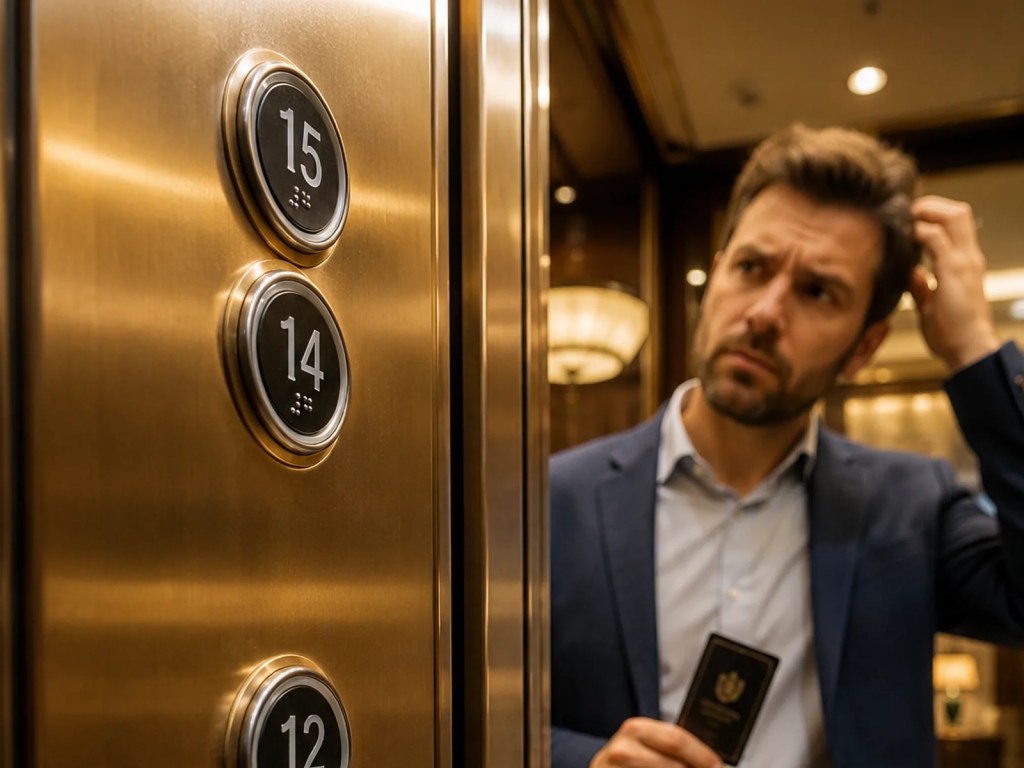
    Have you ever stepped into a hotel elevator, looked at the buttons, and noticed that the building apparently jumps directly from the 12th floor to the 14th?

    No explanation. No apology. The 13th floor has simply vanished.

    Of course, the floor is still physically there. The hotel did not discover a way to suspend the 14th floor in midair. What would normally be called the 13th floor has simply been renamed because, apparently, changing the number is enough to keep bad luck from finding the room.

    I am not sure bad luck is that easily confused, but hotels have been doing this for generations.

    You May Never Have Noticed

    Most of us probably do not inspect hotel elevator buttons very carefully.

    We get in, press the number for our floor, and immediately begin watching the doors as though staring at them will make the elevator move faster.

    I have spent more nights in hotels than I could possibly count, and I honestly cannot remember the last time I specifically looked to see whether there was a button for the 13th floor.

    At many suburban and roadside hotels, the question never comes up. When your hotel has four floors, a complimentary breakfast area, and a parking lot wrapped around the building, there is no mysterious missing floor to investigate.

    But stay in a high-rise hotel in New York, Chicago, Las Vegas, or another major city, and you may notice the numbers jump directly from 12 to 14.

    Congratulations. You have found the floor that exists but officially does not.

    The Missing 13th Floor Is Still Very Common

    According to a recent report, approximately 91% of New York City high-rise buildings do not officially label a 13th floor.

    Some buildings jump directly from 12 to 14. Others call it 12A, use it as a mechanical floor, or give it another designation that avoids displaying the number 13.

    The reason is not structural. It is business.

    Even travelers who say they are not superstitious may suddenly become a little less confident when the front desk clerk hands them a key to Room 1313 on the 13th floor.

    A hotel could attempt to explain that numbers cannot affect the quality of a stay, but it is much easier to change the elevator button and move on.

    After all, hotels already have enough guest concerns to manage. They do not need someone calling the front desk at 2:00 a.m. because the ice machine made a strange noise and the room number feels cursed.

    Different Countries, Different Unlucky Numbers

    The number 13 is primarily associated with bad luck in Western cultures, but travelers should not assume every country shares the same numerical concerns.

    In parts of East Asia, the number 4 may be avoided because its pronunciation can sound similar to the word for “death” in certain languages.

    That can affect hotel floors, room numbers, apartments, hospitals, license plates, and even telephone numbers.

    In some buildings, you may see several missing numbers. A hotel influenced by both Western and East Asian superstitions might skip 4, 13, 14, 24, and other numbers containing a 4.

    At that point, the elevator directory begins to look less like a floor count and more like someone lost several pieces from a board game.

    You might be staying on the 38th floor according to the elevator, while the building itself has considerably fewer actual levels.

    The view is still real. The numbering may be a little optimistic.

    Some Numbers Are Considered Lucky

    While certain numbers are avoided, others can be extremely desirable.

    The number 8 is considered lucky in Chinese culture because its pronunciation is associated with prosperity. Apartments, telephone numbers, addresses, and other items containing repeated 8s may command higher prices.

    One widely reported example involved Sichuan Airlines paying the equivalent of hundreds of thousands of dollars for a telephone number made entirely of 8s.

    That is a serious commitment to good fortune.

    Most of us are simply hoping the hotel Wi-Fi works and the room is not next to the elevator.

    Even Airlines Get Involved

    The practice is not limited to hotels and skyscrapers. Some airlines have also skipped row 13 when numbering their aircraft.

    The airplane still has the same number of seats, of course. Renaming the row does not create additional legroom or improve the boarding process.

    It simply means the passenger in Row 14 may technically be sitting in what would otherwise have been Row 13.

    Apparently, bad luck checks the row marker but does not count.

    Should Travelers Actually Care?

    From a practical standpoint, a missing floor number usually changes nothing about your stay.

    The room is still there. The elevator still stops there. Housekeeping still has to clean it.

    But it is an interesting reminder that travel is filled with cultural details we often pass without noticing. Elevator buttons, room numbers, building layouts, and even telephone numbers can reflect beliefs that have existed for generations.

    It is also worth remembering that a room number considered perfectly ordinary at home may carry a very different meaning somewhere else.

    You do not need to become an expert in international numerology before checking into a hotel. Just pay attention. Travel becomes more interesting when you begin noticing the small decisions built into the places around you.

    The next time you enter a hotel elevator, take a quick look at the buttons.

    You may discover that the 13th floor is missing.

    Or perhaps it is hiding behind a button marked 14, hoping nobody figures it out.

    Travel smart,

    Tommy Pags

  • The Hotel Breakfast Eggs? Yeah… I’ll Pass.

    The Hotel Breakfast Eggs? Yeah… I’ll Pass.

    The Hotel Breakfast Eggs? Yeah… I’ll Pass.

    I was scrolling through my phone the other day when I came across a story showing how many hotel breakfast buffet scrambled eggs are actually made.

    Let’s just say… once you see it, you can’t unsee it.

    A hotel kitchen employee posted a behind-the-scenes video showing large bags of liquid egg product being heated, cut open, and broken apart into what eventually becomes the scrambled eggs sitting in those stainless steel buffet trays. The internet reacted exactly how you’d expect, with some people swearing they’d never touch hotel eggs again, while others shrugged and said, “Hey, it’s free.” 

    Honestly?

    I laughed.

    Not because the process is necessarily gross, but because I’m not sure why anyone thought they were cracking hundreds of fresh eggs every morning at a hotel serving breakfast to 300 guests.

    Hotel Breakfast Is About Efficiency

    When you’re feeding a handful of people, you cook breakfast.

    When you’re feeding hundreds of travelers between 6:00 and 9:30 in the morning, you’re running a small food production line.

    Hotels need food that’s consistent, safe, fast to prepare, and easy to serve.

    That’s why many use pasteurized liquid egg products. They’re made from real eggs, just processed differently for consistency and food safety. 

    So no, this isn’t some massive hotel conspiracy.

    It’s just hospitality.

    But I’ve Never Been a Hotel Egg Guy Anyway

    If you’ve traveled with me, or followed Pags on the Go for any length of time, you know I try to get the most value out of every hotel stay.

    If breakfast is included, I’m absolutely going downstairs.

    I’m just probably not heading straight for the eggs.

    For me, the breakfast lineup usually looks something like this:

    • Plain Greek yogurt, if they have it.
    • A drizzle of honey if I can find some.
    • Fresh fruit.
    • A glass of milk.
    • Coffee, obviously.

    If I’m feeling like I’ve earned it after a long travel day…

    Sure, maybe I’ll grab a pancake.

    Life’s about balance.

    The eggs?

    I’m good.

    It’s Not Even About This Video

    Truthfully, this video didn’t change my mind because hotel scrambled eggs have always been a little… suspicious.

    You know the ones.

    Bright yellow.

    Perfectly identical.

    Somehow both fluffy and rubbery at the same time.

    Whether I’m staying at a budget hotel off the interstate or a nicer property from one of the major brands, they all seem strangely familiar.

    Now I know why.

    Eat What Makes You Happy

    Here’s the funny part.

    Millions of people have eaten these breakfasts for years without giving the eggs a second thought.

    Some people watched the video and immediately said they’d never eat hotel eggs again.

    Others basically said, “They’re free. Hand me another scoop.”

    Neither side is wrong.

    Travel is supposed to be enjoyable.

    If the eggs make you happy, have the eggs.

    If you’d rather build yourself a yogurt parfait and call it a day, that’s perfectly fine too.

    As for me?

    I’ll wave as I walk past the scrambled eggs on my way to the yogurt station.

    Travel smart,
    Tommy Pags

  • Gaylord Opryland Resort Review: One of the Most Incredible Hotels You’ll Ever Get Lost In

    Gaylord Opryland Resort Review: One of the Most Incredible Hotels You’ll Ever Get Lost In

    Gaylord Opryland Resort Review: One of the Most Incredible Hotels You’ll Ever Get Lost In

    Some hotels are simply places to sleep.

    The Gaylord Opryland Resort & Convention Center isn’t one of them.

    This place is an attraction all by itself.

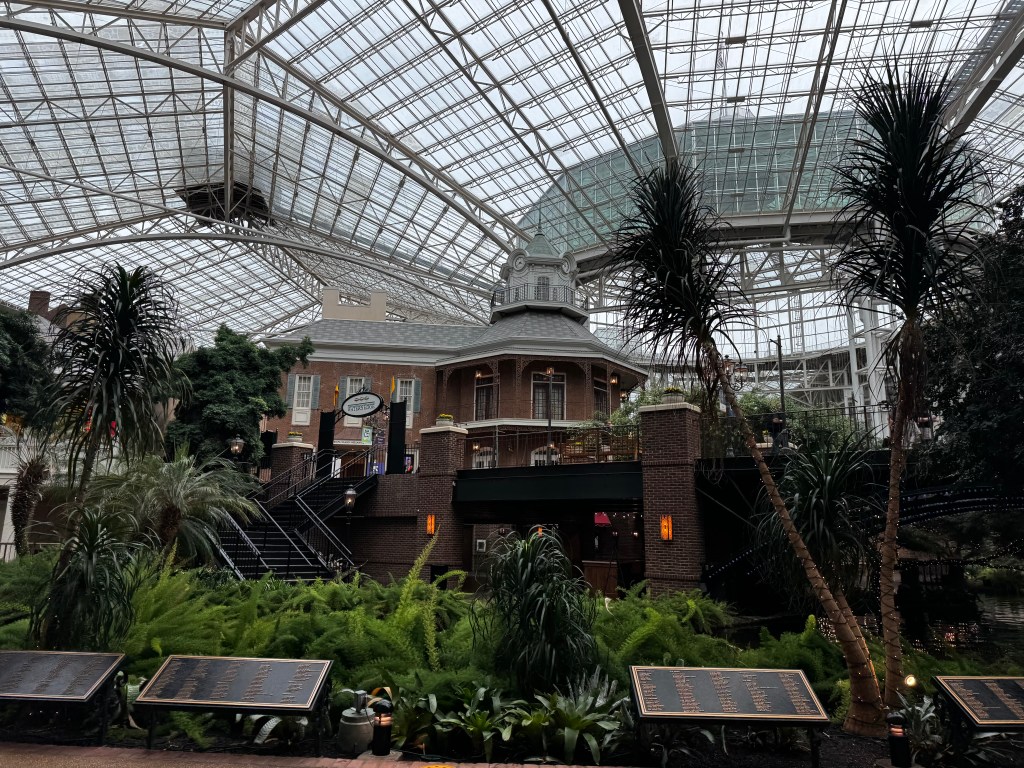
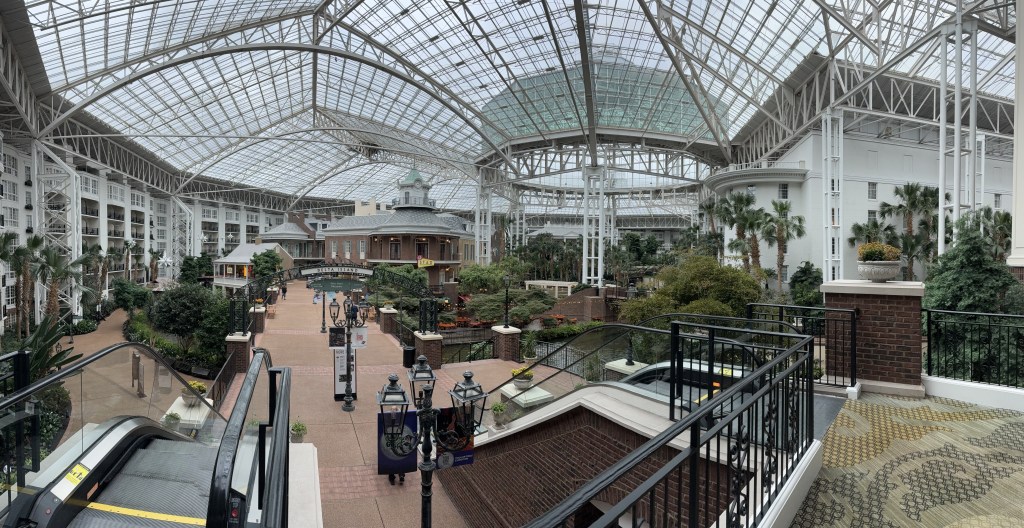
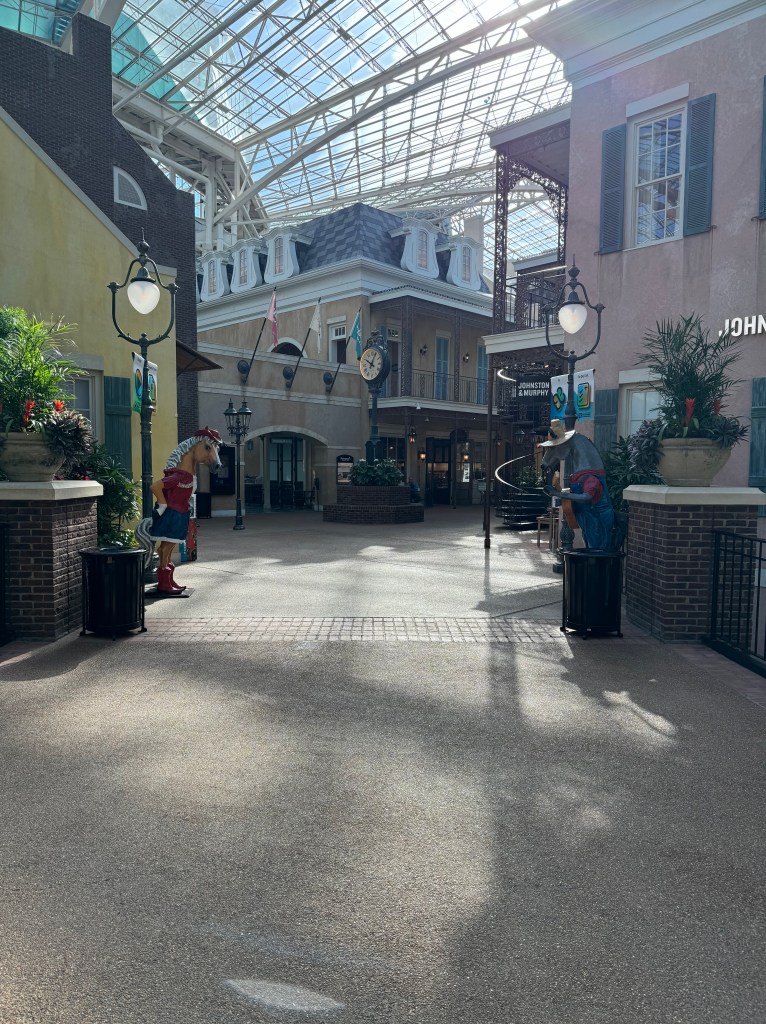
    The first time you walk through the doors, your brain almost has trouble processing what you’re seeing. Massive glass atriums. Winding rivers. Waterfalls. Bridges. Thousands of tropical plants. Restaurants tucked into little corners that feel like they’re part of a small village.

    It’s almost like someone built an indoor resort, then decided to put a hotel around it.

    And honestly…

    It’s one of the coolest hotels I’ve ever stayed in.

    First Impressions

    Pictures don’t prepare you for the scale of this place.

    The resort features three enormous glass atriums covering more than nine acres of indoor gardens. Inside you’ll find waterfalls, tropical plants, walking paths, restaurants, fountains, and the famous Delta River, where guests can ride flat-bottom Delta Riverboats through the indoor gardens. 

    It feels less like a hotel and more like a miniature city under glass.

    You could spend hours simply wandering around.

    There’s Always Something To Do

    One thing I really appreciated is that this isn’t just somewhere you stay between sightseeing trips.

    The resort itself is the destination.

    You can:

    • Ride the Delta Riverboats through the indoor gardens.
    • Walk the beautifully landscaped atriums.
    • Watch the light and fountain shows.
    • Visit dozens of restaurants, bars, and shops.
    • Spend time at SoundWaves, the resort’s indoor and outdoor water attraction (with the appropriate package).
    • Relax at the spa.
    • Simply sit by the river and enjoy the atmosphere. 

    There aren’t many hotels where you can spend an entire day without ever stepping outside.

    This is one of them.

    The Room

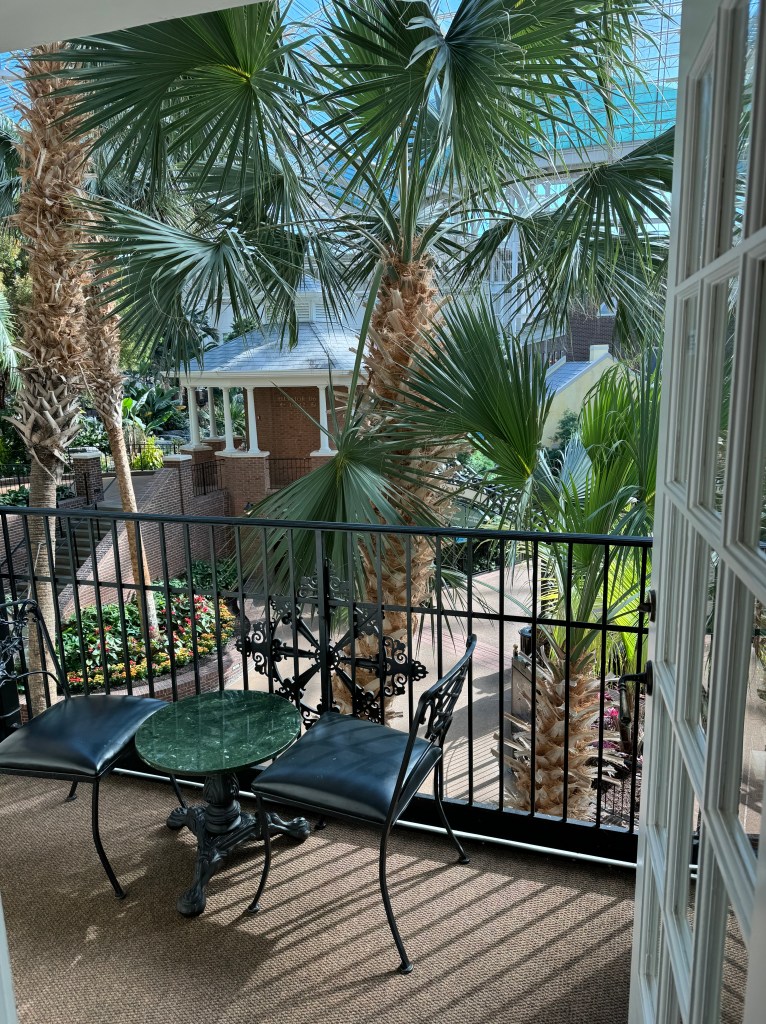
    The room itself was exactly what I’d expect from a premium Marriott property.

    Clean.

    Comfortable.

    Well maintained.

    Honestly, though…

    That’s not really why you stay here.

    The room almost becomes secondary because the real experience begins the moment you leave it.

    The Food

    I ate at several places throughout the resort during my stay.

    Overall, everything ranged from good to very good.

    I even grabbed some pizza while I was there.

    Was it the best pizza I’ve ever had?

    No.

    Was it the worst?

    Not even close.

    It was perfectly fine, and with so many dining options spread throughout the resort, there’s something for just about everyone.

    The Biggest Problem

    Now for the downside.

    This hotel is enormous.

    And I mean enormous.

    It’s beautiful.

    It’s impressive.

    It’s also one of the most confusing hotels I’ve ever been inside.

    The maps didn’t help much.

    At one point I asked an employee for directions, and they couldn’t answer my question. They actually had to bring me to another employee.

    That pretty much summed it up.

    Walking from your room to a meeting room or convention hall can easily take 20 minutes.

    That’s if you know where you’re going.

    If you don’t…

    Good luck.

    The same thing happened when heading out for the evening. Coming back from downtown Nashville meant a surprisingly long walk from the rideshare drop-off back to my room.

    It’s just part of staying at a property this size.

    Would I Stay Here Again?

    Absolutely.

    Without hesitation.

    I’d just leave earlier to get anywhere.

    The Gaylord Opryland isn’t the kind of hotel you choose because it’s convenient.

    You choose it because it’s unlike almost anything else in the country.

    The indoor gardens are breathtaking.

    The atmosphere is incredible.

    The resort is beautifully maintained.

    And Nashville remains one of my favorite cities to visit.

    Just make sure your phone is charged…

    Because you’re probably going to be using the map.

    A lot.

    My Rating

    Property: ⭐⭐⭐⭐⭐ (5/5)

    Atmosphere: ⭐⭐⭐⭐⭐ (5/5)

    Room: ⭐⭐⭐⭐⭐ (5/5)

    Food: ⭐⭐⭐⭐☆ (4/5)

    Navigation: ⭐⭐☆☆☆ (2/5)

    Overall Experience: ⭐⭐⭐⭐☆ (4.8/5)

    Pags on the Go Take

    There aren’t many hotels where I tell people to set aside time just to explore the property.

    This is one of them.

    The Gaylord Opryland is one of the most unique resorts I’ve ever visited. The indoor gardens, waterfalls, riverboats, restaurants, and atmosphere make it feel like you’re walking through an indoor resort town instead of a hotel.

    Just don’t assume you’ll find your room on the first try.

    Or the second.

    Travel smart,
    Tommy Pags