Tag: Travel News

  • TSA May Let PreCheck Travelers Bring Full Water Bottles Through Security. Here’s What Travelers Need to Know

    TSA May Let PreCheck Travelers Bring Full Water Bottles Through Security. Here’s What Travelers Need to Know

    TSA May Let PreCheck Travelers Bring Full Water Bottles Through Security. Here’s What Travelers Need to Know

    There are certain airport rituals most frequent flyers could probably perform in their sleep.

    Shoes stay on if you have TSA PreCheck. Laptop stays in the bag. ID comes out. Carry-on goes on the belt.

    And then there is the water bottle.

    Drink it, dump it, or stand there at the checkpoint wondering how you somehow forgot, yet again, that a 24-ounce bottle of water is apparently the enemy.

    That particular ritual may finally be headed for a change.

    The Transportation Security Administration is reportedly considering allowing some TSA PreCheck travelers to bring full water bottles through airport security at select airports in the coming months. Senior administration officials confirmed to CBS News that the idea is actively being evaluated.

    Before you fill up the Yeti and head to the airport tomorrow, however, there are several important catches.

    This is not a new TSA rule yet

    Let’s start with the most important part.

    TSA has not announced that PreCheck passengers can begin carrying full water bottles through security.

    Right now, the familiar 3-1-1 liquids rule still applies. Liquids, gels, aerosols, creams and pastes in your carry-on generally must be in containers of 3.4 ounces or less, with those containers fitting inside a quart-size bag. TSA’s own current guidance still lists that requirement.

    So if you’re flying this weekend, don’t stroll into PreCheck with a full 32-ounce Hydro Flask and tell the TSA officer Tommy Pags said it was OK.

    Tommy Pags most definitely did not say that.

    What TSA is considering

    According to reporting from CBS News, TSA is evaluating a program that would allow PreCheck passengers to carry full bottles of water through security at certain airports equipped with newer screening technology.

    The important word here is water.

    There is currently no indication that TSA is preparing to throw out the entire liquids rule and let you start carrying full-size shampoo, sunscreen, coffee, soda, bourbon or that suspiciously large bottle of ranch dressing through security.

    The proposal appears to be a narrowly targeted exemption for water.

    And honestly, that makes sense as a starting point.

    The technology is changing

    The reason TSA can even consider something like this is the growing use of computed tomography, or CT, scanners at airport checkpoints.

    Instead of producing the traditional flat X-ray image of your bag, newer CT systems create three-dimensional images that security officers can manipulate and examine from different angles. TSA says the systems improve the ability to identify prohibited or dangerous items and can reduce the need for travelers to remove certain belongings from their bags.

    According to officials cited by CBS, some newer systems also have automated detection capabilities sophisticated enough to distinguish water from other liquids and identify potential threats.

    That is the real story here.

    For years, airport security rules have often been built around what screening equipment could reliably identify. As the technology gets better, some of those blanket restrictions can potentially become more targeted.

    The catch: not every airport has the technology

    This is where things get complicated.

    Even if TSA decides to move forward, don’t expect every airport in America to suddenly allow full water bottles.

    The initial program would reportedly be limited to airports equipped with the newer CT screening technology. Officials have not yet identified which airports would participate.

    And there is another problem: money.

    The technology necessary to screen full bottles already exists, but TSA reportedly does not have enough of the equipment deployed to support a nationwide rollout, even one limited to PreCheck travelers. Officials also indicated that funding for a nationwide expansion currently isn’t available.

    That could create one of my least favorite things in air travel: airport-by-airport rules.

    Imagine flying out of one airport where your full water bottle is fine, connecting through another where it isn’t, and returning from a third airport where nobody knows what you’re talking about.

    Frequent flyers know exactly how that conversation goes.

    “But they let me do it in Denver.”

    The TSA officer in Philadelphia does not care what happened in Denver.

    Is this connected to TSA’s new Gateside program?

    The timing is interesting because TSA has also just launched Gateside by TSA PreCheck, which allows approved PreCheck members without airline tickets to pass through security and enter the secure side of the airport at 13 participating airports.

    That program allows people to meet arriving family members, walk someone to a gate, meet a traveler during a layover, or visit restaurants and shops beyond the checkpoint.

    Some reports discussing the water-bottle proposal have mentioned Gateside alongside it, but don’t assume the water-bottle pilot will automatically operate at those same 13 airports.

    At this point, TSA has not publicly announced which airports would participate in the water program.

    That distinction matters.

    My two cents

    As someone who spends a lot of time going through airports, I’m all for this one.

    Is carrying a full water bottle through security going to revolutionize air travel?

    No.

    Most of us already know the workaround. Carry an empty reusable bottle through TSA and fill it at a water station on the other side.

    But that’s not really the point.

    Airport security has accumulated a lot of procedures over the past 25 years. Some remain necessary. Others were designed around the threats and technology available at a particular moment in time.

    If technology can now reliably screen something that previously required a blanket restriction, then the policy should evolve with the technology.

    And if TSA wants PreCheck to represent more than just a shorter security line, this is exactly the type of practical benefit that makes sense for a trusted-traveler program.

    We’ve already seen PreCheck evolve beyond “keep your shoes on.” Gateside is another example, and allowing water through checkpoints could be another small step toward making airport security smarter rather than simply more restrictive.

    But don’t change how you pack yet

    For now, my advice is simple.

    Keep following the existing TSA liquids rules.

    Bring your reusable bottle empty, fill it after security, and don’t assume anything has changed until TSA officially announces otherwise.

    If the program launches, you’ll also want to check the rules for the specific airport you’re departing from because this almost certainly won’t be nationwide on day one.

    I’ll be watching this one closely.

    Because after enough early flights, delayed connections and airport water bottles that cost roughly the same as a small mortgage payment, I’ll gladly take any travel improvement that lets me bring my own water through security.

    Even if it took us 20 years to get there.

    Travel smart,
    Tommy Pags

  • No Ticket? No Problem: TSA Is Bringing Back the Airport Gate Goodbye

    No Ticket? No Problem: TSA Is Bringing Back the Airport Gate Goodbye

    No Ticket? No Problem: TSA Is Bringing Back the Airport Gate Goodbye

    For nearly 25 years, one of the most human parts of air travel has been missing.

    You drive someone to the airport. You unload the bags. Maybe you get a quick hug at the curb. And depending on the airport, if you sit there for more than about 14 seconds, you start wondering whether airport police are going to make you circle the terminal again.

    Then your traveler walks through the doors.

    That’s it.

    You don’t sit with them before their flight. You don’t grab lunch together. You don’t walk them to the gate. You don’t watch their airplane pull away. And when someone you love comes home, you usually wait around baggage claim instead of being the first familiar face they see when they step off the jet bridge.

    For most of us, that has simply become part of flying.

    But TSA is beginning to change that.

    A new program called Gateside by TSA PreCheck is allowing eligible people who are not flying to pass through airport security and enter the secure side of participating airports.

    And I absolutely love this idea.

    What Is Gateside by TSA PreCheck?

    Gateside by TSA PreCheck allows eligible trusted travelers who do not have an airline ticket to apply for access beyond the security checkpoint at participating airports.

    In other words, you may be able to go through TSA without actually having a flight.

    Think about what that means.

    You could walk a family member to the gate.

    You could meet someone the moment they arrive.

    You could visit a friend who has a long layover.

    You could accompany someone who is nervous about traveling and stay with them until it is time to board.

    Or you could simply enjoy some of the restaurants, shops and other amenities located inside the secure portion of an airport.

    TSA launched the program in September 2026 at 13 airports, with the potential for additional airports to be added as the program develops.

    The initial airports include:

    Mesa Gateway Airport in Arizona

    John Glenn Columbus International Airport

    Dallas Fort Worth International Airport

    Detroit Metropolitan Wayne County Airport

    Wichita Dwight D. Eisenhower National Airport

    Indianapolis International Airport

    Harry Reid International Airport in Las Vegas

    Los Angeles International Airport

    Bill and Hillary Clinton National Airport in Little Rock

    Will Rogers International Airport in Oklahoma City

    Eppley Airfield in Omaha

    San Diego International Airport

    Salt Lake City International Airport

    You Still Have to Go Through Security

    This does not mean TSA is simply opening the doors and allowing anyone into the terminal.

    Gateside is built around the trusted traveler system.

    Participants need qualifying TSA PreCheck benefits and a Known Traveler Number or another eligible trusted traveler credential. You apply before your visit, receive approval, bring proper identification to the airport and go through TSA screening.

    Airport security rules still apply.

    TSA can also limit the number of Gateside visitors based on security conditions and airport capacity.

    So no, this is not a return to the completely open airport terminals of decades ago.

    It is something smarter.

    It combines modern airport security with the ability to bring back something air travel lost a long time ago.

    This Gives TSA PreCheck an Entirely New Kind of Value

    I already think TSA PreCheck is one of the better investments a frequent traveler can make.

    But Gateside changes the value of PreCheck in an interesting way.

    Until now, TSA PreCheck was something you used when you were traveling.

    Now it could have value when somebody else is traveling.

    Maybe you only fly a couple of times a year and have wondered whether TSA PreCheck is worth paying for.

    Now imagine your son or daughter is taking their first trip alone.

    Maybe your parents are flying somewhere and you want to help them navigate the airport.

    Maybe your spouse is leaving on a long trip.

    Maybe your best friend has a four-hour connection through your local airport.

    Or maybe a family member you haven’t seen in a year is finally coming home.

    Suddenly, your trusted traveler membership can be useful even when you are not getting on an airplane.

    That is a completely different benefit.

    And I think it is a very smart one.

    Airports Can Become Places Again

    Something changed about airports after September 11, 2001, and understandably so.

    Security had to change.

    Before 9/11, family and friends could generally accompany travelers to their gates. After the attacks, the security checkpoint became a dividing line between passengers and everyone else.

    That change served an important purpose.

    But we also lost something.

    Airports used to be part of the experience.

    People dressed differently when they traveled. Flying felt like an occasion.

    Families went to the airport together.

    Kids stood at huge terminal windows watching airplanes taxi.

    People said goodbye at the gate.

    Someone returning home might step off an airplane and see an entire family waiting for them.

    Today, air travel often feels much more transactional.

    Get dropped off.

    Check your bag.

    Clear security.

    Find the gate.

    Board the plane.

    Repeat.

    Gateside brings a little humanity back into that process.

    Imagine the Arrivals

    This may be the part of the program that I like the most.

    Imagine a servicemember coming home and walking off the jet bridge to see family waiting at the gate.

    Imagine your grandson flying in to visit and seeing Grandpa standing there when he arrives.

    Imagine somebody coming home after being away for six months and seeing a ridiculous homemade welcome sign waiting for them.

    Those moments used to be part of flying.

    Now, at least at participating airports, they can be again.

    And I think that matters.

    There is something completely different about walking off an airplane and immediately seeing the person you came home to see.

    Not 20 minutes later at baggage claim.

    Not after navigating escalators, trams and crowds.

    Right there.

    At the gate.

    It Could Make Travel Easier for Nervous Travelers

    There is another side to Gateside that deserves attention.

    Not everyone loves flying.

    Some people are anxious travelers.

    Some people are flying for the first time.

    Some people have no problem with the airplane itself but find large airports confusing or intimidating.

    Until now, unless there was a qualifying circumstance that allowed an airline to issue an escort pass, friends and family usually had to say goodbye before security.

    Gateside creates another possibility.

    A trusted family member or friend may be able to go through security with you, help you find your gate, grab something to eat, sit with you and stay until boarding begins.

    It does not replace airline assistance programs or accessibility services for travelers who need them.

    It simply gives people another option.

    Sometimes having someone you know sitting beside you is the best travel assistance there is.

    And Don’t Overlook the Restaurants

    Frequent travelers know something that people who rarely fly may not realize.

    Airport food has gotten a lot better.

    Sure, there are still plenty of overpriced grab-and-go sandwiches that can make you reconsider every decision that brought you to that moment.

    But many airports now have great local restaurants, breweries, chef-driven concepts, shopping, lounges, art installations and other experiences beyond security.

    Gateside suddenly gives some non-travelers access to that world.

    Have a friend with a three-hour layover?

    You might be able to meet them for dinner.

    Want to take your grandchild to watch airplanes and grab lunch?

    Potentially.

    Want to spend another hour with someone before a long trip rather than dropping them at the curb?

    Now there may be another option.

    The airport does not have to be somewhere you only go because you are flying.

    It can become a place again.

    Philadelphia Travelers Already Have Something Similar

    There is an important distinction for travelers in the Philadelphia area.

    Philadelphia International Airport is not currently one of the airports participating in Gateside by TSA PreCheck.

    However, PHL already operates its own program called Wingmate Pass.

    Wingmate allows approved non-ticketed visitors to enter the secure side of Philadelphia International Airport to accompany someone to a gate, greet a domestic arrival or enjoy airport restaurants, shopping and other amenities.

    Unlike Gateside, Wingmate does not require TSA PreCheck membership.

    Programs like Wingmate are important because they show that airports have already been experimenting with bringing non-ticketed visitors back into secure terminals.

    What makes Gateside especially interesting is that TSA itself is now building a broader program around its trusted traveler system.

    That could make this concept much easier to expand.

    I Think the Golden Age of Air Travel May Be Coming Back

    I keep saying something that might sound a little crazy.

    I think we may be seeing the beginning of a new golden age of air travel.

    No, I don’t think everyone is going to start wearing suits and dresses to fly again.

    And based on what I see in airports every week, I think pajamas are probably here to stay.

    But I do think the travel industry is beginning to think differently about the customer experience.

    For years, so much of flying has been focused on efficiency.

    Move people through security faster.

    Board the airplane faster.

    Turn the aircraft faster.

    Move passengers from Point A to Point B.

    Those things matter.

    But somewhere along the way, the experience itself became secondary.

    Now we are starting to see technology and new programs being used to make travel enjoyable again.

    United Airlines, for example, is currently testing a program at Newark Liberty International Airport where eligible passengers can order food, drinks and certain travel essentials through the United app and have those items waiting for them at the gate.

    United has said Houston is also expected to receive the program later in 2026.

    Think about how useful that could be during a tight connection.

    Instead of getting off one airplane, sprinting through Newark, standing in a restaurant line and then running to your next gate, your food could already be there waiting for you.

    That may sound like a small change.

    It isn’t.

    Small improvements like that can completely change how stressful a travel day feels.

    I’ll be talking more about that program in another Pags on the Go article.

    Maybe the Airport Can Be Fun Again

    I don’t expect us to recreate air travel from the 1960s.

    And frankly, we probably shouldn’t.

    The so-called golden age of aviation gets romanticized. Flying was much more expensive relative to household income, far fewer people could afford it and there were plenty of things about the experience that were not nearly as glamorous as the old photographs make them look.

    But there was something about travel that I think we lost.

    It felt special.

    Going to the airport meant something.

    Leaving meant something.

    Coming home meant something.

    Maybe the next golden age of air travel does not need to look like the old one.

    Maybe we create a new version.

    One that keeps modern aviation security but uses trusted traveler programs intelligently.

    One where technology removes some of the frustrating parts of travel instead of creating new ones.

    One where airports become places worth spending time again.

    One where families can walk together to the gate.

    One where a nervous traveler does not necessarily have to say goodbye before security.

    One where a child can stand at the terminal window with Grandpa and watch airplanes taxi.

    And one where somebody can step off a plane after a long journey and see the person they love standing there holding a sign.

    That may seem like a small thing.

    I don’t think it is.

    Travel has always been about more than moving people from Point A to Point B.

    It is about leaving.

    It is about arriving.

    It is about who you are going to see.

    And sometimes, it is about who is standing there when you get there.

    Gateside by TSA PreCheck brings a little piece of that back.

    I hope it comes to a lot more airports.

    Travel smart,
    Tommy Pags

  • American Airlines Is Bringing Seatback Screens Back. Good. They Never Should Have Left.

    American Airlines Is Bringing Seatback Screens Back. Good. They Never Should Have Left.

    American Airlines Is Bringing Seatback Screens Back. Good. They Never Should Have Left.

    American Airlines just announced that seatback entertainment screens are coming back to its narrowbody fleet.

    My first reaction?

    Good.

    My second reaction?

    Why did they take them out in the first place?

    American is reversing a strategy that dates back to 2017, when the airline decided its new Boeing 737 MAX aircraft would not have seatback entertainment screens. At the time, American’s argument was that more than 90% of its passengers already brought a phone, tablet or laptop onboard, so it made more sense to invest in streaming entertainment and connectivity than screens built into the seats.

    On a PowerPoint presentation in a conference room somewhere, I can see how that probably made perfect sense.

    In the real world?

    I think it completely misunderstood the customer.

    Just Because I Have a Screen Doesn’t Mean I Want to Use It

    I travel with an iPhone and an iPad on virtually every flight I take.

    And ironically, I am probably not American’s best argument for bringing the screens back because I usually watch something on my iPad anyway.

    But that’s my choice.

    There is a big difference between saying, “Most passengers carry a device,” and saying, “Most passengers would prefer to use that device instead of a seatback entertainment system.”

    Those are two entirely different things.

    Your phone might be charging. You might want to text someone using the Wi-Fi. You might want to check your email while watching a movie. You might have a child with you who doesn’t have a device. Maybe you didn’t download anything before the flight. Maybe your battery is dying.

    Or maybe you simply don’t want to hold your phone or balance an iPad somewhere for three hours.

    Having a phone in your pocket doesn’t make the screen in front of you unnecessary.

    Sometimes Companies Stop Watching Their Customers

    I’ve worked in enough companies, departments and leadership teams over the years to see the human side of how decisions like this happen.

    Consumers normally see the finished decision.

    They don’t see the meetings.

    They don’t see the personalities.

    They don’t see the person who walks into a room convinced that he or she has the answer, or the people around the table who might disagree but eventually stop arguing.

    Good leadership, in my experience, isn’t simply walking into the room with the best idea.

    It’s bringing together people with different experiences, listening to them, challenging assumptions and then making the best decision possible for the customer and the business.

    Sometimes companies do that extraordinarily well.

    Sometimes somebody falls in love with an idea.

    And once that happens, an organization can spend years defending something customers never really wanted.

    I can’t tell you exactly what happened inside American Airlines in 2017, and I’m certainly not suggesting one person made this decision alone.

    But from the outside, this has always looked like one of those decisions where the spreadsheet won over the customer.

    Here’s the Research I Would Have Done

    This part isn’t complicated.

    Get on an airplane.

    Sit in economy.

    Look around.

    I do it every week.

    When I’m on an aircraft equipped with seatback entertainment, plenty of those screens are being used. My completely unscientific observation from flying is that on many flights it looks like more than half the cabin has something playing.

    Movies.

    TV shows.

    The moving map.

    Kids programming.

    Sometimes people aren’t even actively watching. The map is simply running while they’re doing something else.

    That’s customer behavior happening right in front of you.

    And here’s the important part: those passengers often have phones sitting next to them too.

    The seatback screen didn’t replace their device.

    It complemented it.

    That distinction seems obvious today, but apparently it wasn’t obvious enough in 2017.

    American Is Now Making a Very Big U-Turn

    This isn’t American putting screens on a handful of new airplanes.

    The airline says it plans to install seatback entertainment at every seat across its narrowbody fleet, including both new aircraft and retrofitted planes. New aircraft deliveries with screens are expected to begin in 2028, with the broader rollout continuing into the early part of the next decade.

    And these aren’t going to be the clunky airline screens many of us remember from years ago.

    American says the new system will include:

    • 4K displays
    • Bluetooth connectivity for wireless headphones
    • USB-C fast charging
    • Personalized entertainment
    • Enhanced flight maps
    • Movies, television, music and games
    • Integration alongside American’s upcoming Starlink Wi-Fi

    American is also increasing premium seating on its narrowbody fleet from roughly 25% of seats today to about 40% in the coming years.

    So clearly this is part of something bigger.

    American is trying to make its domestic product feel more premium and compete more directly with Delta and United.

    That makes sense.

    This Reminds Me of the CarPlay Debate

    There’s a similar corporate mindset happening in the automotive industry.

    Some automakers have moved away from Apple CarPlay and Android Auto in favor of their own integrated systems.

    Again, maybe there is a terrific business case for doing that.

    But there’s a simple customer question that has to come first:

    What does the customer actually want?

    People already live inside the ecosystems on their phones.

    They have their apps.

    Their music.

    Their messages.

    Their navigation preferences.

    Their contacts.

    Their podcasts.

    When someone buys a $50,000 vehicle, telling them they can’t use the interface they already prefer because the manufacturer has decided something else is better can feel incredibly tone deaf.

    The airline screen decision strikes me the same way.

    Technology should give customers more choices, not take choices away from them.

    Want to watch your iPad?

    Great.

    Want to stream American’s entertainment to your phone?

    Great.

    Want to put your phone down, connect your AirPods to the screen in front of you and watch a movie?

    You should be able to do that too.

    But There’s Still Something More Important Than the Screen

    I give American credit for reversing course.

    Companies don’t always do that.

    Sometimes the hardest words for a large organization to say are essentially, “We got this one wrong.”

    And American is putting real money behind the reversal.

    But if I’m American Airlines and I’m making a list of what passengers really want from me, a beautiful 4K entertainment system isn’t at the top.

    Get me where I’m going.

    Get me there safely.

    Get me there reasonably close to the time you told me I would arrive.

    Handle disruptions well when something goes wrong.

    Treat customers like human beings when their travel plans fall apart.

    Then we can talk about the television.

    The entertainment system absolutely affects the experience, particularly when American wants to position itself as a premium full-service airline.

    But reliability is still the product.

    Everything else is an amenity.

    My Take

    I think American made the wrong call in 2017.

    Not because phones and tablets weren’t becoming more important. American was absolutely right about that.

    The mistake was assuming one technology had to replace the other.

    Nearly a decade later, American seems to have reached the same conclusion.

    Your phone isn’t replacing the airplane screen.

    Your airplane screen isn’t replacing your phone.

    They can coexist.

    And sometimes the best market research isn’t another survey, consulting report or executive presentation.

    Sometimes you just need to sit in 28C, look around the cabin and watch what your customers are actually doing.

    American finally appears to have looked around.

    Better late than never.

    Travel Smart,

    Tommy Pags

  • AI Should Make Flying Better, Not Figure Out How Much It Can Squeeze Out of You

    AI Should Make Flying Better, Not Figure Out How Much It Can Squeeze Out of You

    AI Should Make Flying Better, Not Figure Out How Much It Can Squeeze Out of You

    I love technology.

    I love what it can do for travelers. I love when an airline uses technology to predict a missed connection, get a bag where it belongs, improve maintenance, reduce delays, communicate better during an irregular operation or help an employee solve a problem faster.

    And I am genuinely excited about what artificial intelligence could do for air travel.

    But there is a line.

    Technology should help companies serve customers better. It should not help companies figure out exactly how much they can squeeze out of each individual customer.

    That is why the growing debate over what is being called “surveillance pricing” deserves the attention it is getting.

    Congress Is Asking Questions

    On August 12, Rep. Frank Pallone, the ranking Democrat on the House Energy and Commerce Committee, announced that he had sent inquiries to eight major U.S. airlines: Alaska, American, Delta, Frontier, Hawaiian, JetBlue, Southwest and United.

    He wants the airlines to explain whether artificial intelligence and consumer data play a role in determining the prices travelers see.

    The airlines have been asked to respond by August 25.

    And Congress isn’t asking only whether airlines use AI.

    The questions get much more specific.

    Pallone’s letter asks about information including age, employment, income, spending history, loyalty-program participation, browsing behavior, location, IP address and device information. In other words, lawmakers want to know whether the airline is pricing the flight, or pricing the person shopping for the flight.

    That difference matters.

    Dynamic Pricing Is Not the Problem

    I want to be careful here because airline tickets have never worked like a gallon of milk sitting on a grocery-store shelf.

    Airlines have used dynamic pricing and revenue management for decades.

    A flight that costs $249 today might cost $329 tomorrow. As seats disappear, demand increases, departure gets closer or competitors change their fares, prices move.

    I understand that.

    I may not always like it, but there is a legitimate business reason behind it.

    What I have a serious problem with is something entirely different.

    Imagine you and I are sitting next to each other.

    Same flight.

    Same date.

    Same cabin.

    Same seat availability.

    Same moment.

    But an algorithm believes I travel frequently for business, knows I usually buy at the last minute, knows my approximate income, sees that I have searched this route four times today and concludes that I am probably desperate to go.

    So my ticket is $489.

    You get $379.

    Not because the flight changed.

    Because the computer decided I would tolerate paying more.

    That is not ordinary dynamic pricing.

    That is the issue Congress is investigating.

    The Federal Trade Commission has already found that surveillance-pricing technology in the broader economy can use remarkably granular information, including location, demographics, browsing activity, shopping history and even how consumers behave on a webpage, to help tailor prices and offers.

    And I think consumers have every reason to be concerned about that.

    Then Delta Said Something That Got Everyone’s Attention

    This controversy didn’t come from nowhere.

    In 2025, then-Delta President Glen Hauenstein discussed the airline’s work with AI pricing company Fetcherr. Delta said the technology was being used across about 3% of its domestic network at the time, with plans to expand it significantly.

    But it was an earlier description of Delta’s long-term pricing vision that really set off alarm bells.

    Hauenstein talked about eventually having a price available for a particular flight, at a particular time, “to you, the individual.”

    He also described the technology as part of a major reengineering of how Delta prices its product.

    Now, to be fair to Delta, the company has subsequently been very clear in its denial.

    Delta says it has never used, is not testing and does not plan to use personal information to create individualized airline fares. It says Fetcherr works from aggregated market and demand information, not individual customer data.

    That matters, and Delta’s denial deserves to be included in this conversation.

    But I also understand why lawmakers heard those earlier comments and started asking questions.

    If you tell Wall Street that technology is going to dramatically improve revenue and someday help create an offer for “you, the individual,” consumers are naturally going to ask:

    Exactly what does the computer know about me when it determines that price?

    That is a fair question.

    And Then Came JetBlue

    JetBlue has an entirely separate controversy.

    In April, a traveler complained publicly after a fare reportedly increased $230 while he was trying to book travel for a funeral.

    JetBlue’s social-media account responded by suggesting that he clear his cache and cookies or try an incognito browser.

    You can imagine what happened next.

    The Internet exploded.

    JetBlue later said the response was simply a mistake by a customer-service employee and that clearing cookies would not have changed the available airfare. JetBlue says it does not use personal information, browsing history or AI to set individualized ticket prices.

    But the exchange helped trigger additional scrutiny and a proposed federal class-action lawsuit alleging that JetBlue uses consumer information in what the complaint calls “dynamic surveillance pricing.”

    Those are allegations, not proven facts, and JetBlue denies them.

    Still, the story demonstrates exactly why airlines need to be incredibly transparent about this.

    Technology Without a Conscience Is a Dangerous Business Model

    Here is where I come down on it.

    I don’t have a problem with airlines making money.

    I don’t have a problem with airlines using sophisticated revenue-management systems.

    I don’t even have a problem with AI helping an airline determine that demand for Allentown to Orlando next Friday is stronger than expected and that the market can support a higher fare.

    That’s business.

    But the price should be based on the product and the market, not on an algorithm digging through my digital life trying to determine my breaking point.

    Because think about where that eventually leads.

    The computer knows you’re searching at 2:00 in the morning.

    It knows you’ve looked at the same flight eight times.

    It knows you’re searching one-way.

    It knows where you are.

    It potentially knows what you’ve bought before.

    Maybe someday it can infer that you’re dealing with an emergency.

    And suddenly the question isn’t, “What is this airline seat worth?”

    The question becomes:

    “How desperate is this person, and how much can we get out of him?”

    That is where technology stops serving the customer and starts exploiting the customer.

    I call that cheating.

    Trust Takes Years to Build and Seconds to Destroy

    Companies sometimes underestimate how quickly consumers figure these things out.

    Twenty years ago, maybe a pricing experiment could remain buried inside a complicated computer system.

    Not anymore.

    Someone posts a screenshot.

    Someone else tries the exact same search.

    Reddit starts comparing prices.

    TikTok picks it up.

    News organizations start calling.

    Congress starts asking questions.

    And suddenly something that looked like a brilliant revenue opportunity in a conference room becomes a full-blown brand problem.

    The worst part is that by the time senior leadership realizes how angry customers are, the damage may already be done.

    Trust is incredibly valuable.

    Customers want to believe that the company they are doing business with is dealing with them fairly.

    They understand sales. They understand promotions. They understand prices changing because supply and demand change.

    What they don’t want is the feeling that a company is secretly sizing them up before deciding how hard it can hit their wallet.

    There Is a Better Way to Use AI

    Interestingly, American Airlines CEO Robert Isom addressed this controversy in 2025 and described a very different approach.

    He said American wanted to use AI to improve things like operations, how products are presented and employee efficiency, and specifically rejected using the technology for “bait-and-switch” or tricking customers.

    That’s the direction I hope the entire industry takes.

    Use AI to predict mechanical problems before they cancel my flight.

    Use it to automatically protect my connection when my inbound aircraft is running late.

    Use it to make baggage tracking nearly perfect.

    Use it to help gate agents.

    Use it to improve scheduling.

    Use it to reduce call-center wait times.

    Use it to identify operational problems before they become problems.

    Use it to make flying safer, easier and less stressful.

    There are a thousand ways artificial intelligence could make air travel better.

    We don’t need the thousand-and-first use to be turning travelers upside down and shaking them to see what falls out of their pockets.

    That isn’t innovation.

    It’s just an incredibly sophisticated way to nickel-and-dime people.

    And if the airline industry ever crosses that line, I suspect travelers will figure it out much faster than the airlines think.

    Pags Take

    I am extremely optimistic about AI.

    But innovation without ethics isn’t progress.

    Airlines should absolutely use artificial intelligence to understand their business better. They should use it to improve the customer experience, support employees, operate more efficiently and make aviation safer.

    What they should never do is use what technology knows about me to figure out how much more they can make me pay.

    The airfare can change because the market changed.

    It should never change because the airline thinks it has figured me out.

    That is a line worth protecting.

    And Congress is right to ask whether anyone has crossed it.

    Travel smart,
    Tommy Pags

  • Three Airports Are Replacing TSA Screeners. I Hope Every Airport Is Next.

    Three Airports Are Replacing TSA Screeners. I Hope Every Airport Is Next.

    Three Airports Are Replacing TSA Screeners. I Hope Every Airport Is Next.

    Private security will still operate under federal standards, but it could bring something airport screening desperately needs: accountability.

    Three major airports are preparing to replace federally employed TSA screeners with private security contractors, and I think it is a fantastic idea.

    Tampa International Airport, Charleston International Airport, and Des Moines International Airport are set to become the first participants in a new program called TSA Gold+. Current projections call for the transition to begin at Des Moines in January 2027, Charleston in February 2027, and Tampa in May 2027.

    Before anyone pictures airports abandoning security regulations or returning to the inconsistent system that existed before September 11, that is not what is happening.

    TSA will continue setting the security standards. It will oversee the contractors, conduct inspections, perform covert testing, and retain federal security directors at participating airports. The private screeners must meet the same federal training and certification requirements as TSA officers. What changes is who employs the screeners, who manages the checkpoint, and, under the expanded Gold+ program, who can purchase and deploy some of the technology.

    In other words, this is not an elimination of federal oversight.

    It is an attempt to combine federal security standards with private-sector accountability.

    And I hope it works.

    Government Agencies Do Not Operate Like Businesses

    This is not intended as a personal attack against TSA officers. Most TSA employees are ordinary people trying to perform a difficult, repetitive, and frequently thankless job.

    The problem is the system surrounding them.

    A government agency does not operate under the same incentives as a private business. If a TSA checkpoint develops two-hour lines, passengers miss flights, families become frustrated, and the entire terminal backs up, TSA does not lose the airport’s business the following morning.

    There is no competing federal screening agency waiting to take its place.

    The airport cannot simply fire TSA and select a better provider. Travelers cannot choose a different checkpoint operator. The agency continues operating and continues receiving government funding.

    A private contractor works under a very different reality.

    Its contract can include measurable requirements for staffing, wait times, training, threat detection, customer satisfaction, and checkpoint throughput. Its performance can be reviewed. Its contract can be penalized, rebid, or ultimately given to another company.

    That does not guarantee perfection, but it creates accountability.

    TSA’s existing Screening Partnership Program already requires private screeners to provide security equal to or greater than the level provided by federal screeners. TSA has also established performance standards covering hiring, training, and the ability to detect threat objects during testing.

    The difference is simple: one organization is permanently assigned to the airport, while the other must continue earning the right to operate there.

    Security Must Be About More Than Looking Secure

    The most important argument for private airport security is not shorter lines.

    It is safety.

    TSA has experienced some deeply troubling results during undercover security tests.

    In 2015, officials briefed on a Department of Homeland Security Inspector General investigation said TSA screeners failed 67 of 70 undercover tests. Investigators were reportedly able to move simulated weapons and explosives through checkpoints in 95 percent of the attempts.

    Another round of covert testing in 2017 again found serious vulnerabilities. The official results were classified, but reporting at the time indicated that screeners or screening procedures failed more than half the tests, with one source describing an estimated 80 percent failure rate as being “in the ballpark.”

    Those tests are not current performance measurements, and TSA has made changes since they were conducted. But they demonstrate an important point: simply making screeners federal employees does not automatically make a checkpoint secure.

    The Department of Homeland Security Inspector General identified problems involving personnel, equipment, and procedures. A later Government Accountability Office review found that TSA improved its covert-testing program, but had not fully established an effective process for resolving vulnerabilities discovered during those tests. As of September 2018, nine vulnerabilities identified since 2015 had not been formally resolved.

    That is where private-sector accountability could matter.

    If a contractor repeatedly misses weapons, fails inspections, understaffs checkpoints, or ignores corrective actions, there should be contractual consequences. Security failures should threaten the company’s ability to keep the business.

    Private screening will never eliminate human error. No serious person should promise that it will. But a system in which performance directly affects whether a company retains its contract creates a much stronger incentive to identify weaknesses and correct them quickly.

    Innovation Should Include the Entire Experience

    Airport security innovation is usually discussed in terms of equipment.

    New scanners. Better identification technology. Automated screening lanes. Artificial intelligence. Touchless identity verification.

    Those developments matter, but technology is only part of the checkpoint.

    Real innovation should also examine how passengers enter the line, how bins are distributed, how bags are returned, how families are assisted, how staffing changes during peak periods, how travelers receive instructions, and how quickly lanes can be opened when passenger volume suddenly increases.

    A private operator has a reason to study every step.

    Under TSA Gold+, participating contractors may be able to fund and deploy technology on a commercial schedule instead of waiting through the full federal procurement and appropriations process. Tampa International Airport says that could allow technology to arrive faster while improving throughput, security, and customer experience.

    Tampa also reported that its passenger satisfaction score for TSA screening fell to its lowest level during the most recent government shutdown, ranking 45th among 56 participating airports in the Airports Council International customer survey.

    That matters.

    Travelers are not cargo being processed through a warehouse. Security must be thorough, but it can also be organized, professional, understandable, and respectful.

    A safe checkpoint does not have to be a miserable checkpoint.

    Private Screening Is Not Entirely New

    TSA Gold+ may sound like a radical experiment, but private screening under federal oversight has existed for more than two decades.

    Approximately 20 airports already use private screening contractors through TSA’s Screening Partnership Program. Participating airports include San Francisco International Airport, Kansas City International Airport, Atlantic City International Airport, and Orlando Sanford International Airport.

    San Francisco is particularly significant because it demonstrates that private screening is not limited to tiny regional airports.

    SFO is a major international airport and one of the busiest airports in the country. Its private contractor operates the checkpoints while TSA retains federal authority and oversight. Aviation security experts have pointed to San Francisco as evidence that the model can work at scale.

    The model has another advantage: stability during government shutdowns.

    Federal TSA officers are classified as essential employees and must continue working during shutdowns, even when their paychecks are temporarily stopped. As shutdowns continue, absenteeism can rise and checkpoints can become understaffed.

    Private screening contractors are generally paid through previously funded federal contracts, allowing their operations and payroll to continue. San Francisco officials have said that arrangement helped the airport maintain screening operations during previous shutdowns.

    Airport security should not depend on whether politicians in Washington can pass a budget.

    Private Does Not Automatically Mean Better

    There is an important warning that cannot be ignored.

    A private company can also perform poorly. A contractor could cut staffing, reduce training, chase profits, or attempt to meet the minimum standard at the lowest possible cost.

    The Government Accountability Office has previously found that comparisons between private and federal screeners contained enough methodological limitations that broad conclusions about which group performed better could not reliably be made.

    That means privatization alone is not the solution.

    The solution is privatization combined with strong federal standards, independent testing, transparent performance measurements, meaningful contract requirements, and the willingness to replace companies that fail.

    TSA should remain the regulator.

    It should establish the security requirements, conduct inspections, perform covert tests, certify workers, investigate failures, and enforce national standards.

    But it does not necessarily need to employ every person operating every checkpoint.

    The government can set the rules without running the entire operation.

    I Hope More Airports Follow

    I would be happy to see every airport in the country seriously consider moving to private security screening under TSA oversight.

    Not because private companies are automatically perfect. They are not.

    Not because every TSA officer is doing a poor job. That is clearly not true.

    I support it because the current system separates performance from consequences.

    A better model would make security companies compete on safety, efficiency, technology, staffing, and the passenger experience. It would allow airports to demand improvement. It would give operators a reason to innovate. Most importantly, it would create a mechanism for replacing an organization that consistently fails to perform.

    Airport security is too important to become a permanent government routine where long lines, outdated systems, inconsistent instructions, and security failures are accepted as unavoidable.

    Tampa, Charleston, and Des Moines are about to test another way.

    I hope they succeed.

    And I hope every other airport is watching.

    Travel smart,
    Tommy Pags

  • Chase Is Tightening Sapphire Lounge Access, and I Think It Is the Right Move

    Chase Is Tightening Sapphire Lounge Access, and I Think It Is the Right Move

    Chase Is Tightening Sapphire Lounge Access, and I Think It Is the Right Move

    Beginning August 15, 2026, Chase is changing who can enter its Sapphire Lounges and giving some of its own cardholders more time inside.

    The biggest change is that Chase Sapphire Lounges will no longer participate in the Priority Pass or LoungeKey networks. Until now, travelers who received Priority Pass through another credit card could visit a Sapphire Lounge once per calendar year at no charge. Additional visits, or certain guest visits, were available for $75.

    That option is going away.

    After August 15, complimentary access will be reserved for customers with an eligible Chase-issued card, including the Chase Sapphire Reserve, Sapphire Reserve for Business, J.P. Morgan Reserve and Ritz-Carlton Credit Card. Eligible cardholders will continue to receive unlimited Sapphire Lounge visits and may bring up to two complimentary guests. Additional guests will continue to cost $27 each.

    At the same time, Chase is adding a useful benefit for its customers. Cardholders traveling on a same-day connecting itinerary will be allowed to enter a Sapphire Lounge up to five hours before the departure of their connecting flight. That is an increase from the current three-hour window.

    The five-hour rule does not apply when you are starting your trip. Travelers originating at an airport, including those taking a nonstop flight, will still be limited to entering three hours before departure.

    Airport Lounges Are More Than a Travel Perk

    I understand why some travelers will be disappointed by the decision. Losing access to a good lounge is never going to feel like an improvement, particularly for someone who has been saving that one annual Priority Pass visit.

    But as someone who spends a lot of time in airports, I think Chase is making the right move.

    There is a real difference between the way a frequent business traveler uses an airport and the way an occasional vacation traveler may experience it. For the casual traveler, getting to the airport can be part of the excitement of the trip.

    For someone who travels regularly, the airport is usually not entertainment. It is another workplace, a place to answer emails, return phone calls, prepare for a meeting or simply decompress before getting on another airplane.

    That is why a good lounge matters.

    It provides a quieter environment, reliable Wi-Fi, room to work, something to eat and, depending on the day, perhaps a cocktail. During a delay or a long connection, the lounge can become the difference between getting meaningful work done and spending several hours searching for an outlet near a crowded gate.

    The complimentary food and drinks are certainly valuable, but the real benefit is having a functional place to spend your time.

    We Have Seen This Crowding Problem Before

    There was a period following the pandemic when Delta Sky Clubs became incredibly busy. At some airports, lines formed outside the clubs because so many people had access that the passengers who depended on them most frequently could not get inside.

    I remember seeing those lines and wondering what good lounge access was if you had to stand in the terminal waiting for permission to enter.

    Delta eventually tightened several of its access policies. Today, many eligible premium credit card customers have a limited number of Sky Club visits each year unless they meet a substantial annual spending requirement. Delta also generally limits entry to three hours before departure, although connecting customers may enter during their layovers.

    Those decisions were unpopular with some customers, but something had to change. A lounge cannot provide a calmer, more premium experience when it is just as crowded as the terminal outside.

    Chase now appears to be confronting the same issue.

    As the Sapphire Lounge network has expanded and more travelers have discovered how good the lounges are, demand has increased. Chase currently lists Sapphire Lounges in Boston, Las Vegas, New York-JFK, New York-LaGuardia, Philadelphia, Phoenix, San Diego and Dallas-Fort Worth, with a Los Angeles location coming soon.

    These are not basic waiting rooms with a bowl of pretzels and a soft-drink machine. Chase has invested in locally inspired food, made-to-order selections, signature cocktails, comfortable workspaces and, at some locations, wellness services and other premium amenities.

    I have had the opportunity to visit a Sapphire Lounge, and it was impressive. The lounge looked great, the food was excellent and the experience felt noticeably more elevated than sitting in the terminal. In fact, it deserves a complete review of its own.

    Chase Is Prioritizing Chase Customers

    The old Priority Pass policy was an effective way to introduce travelers to the Sapphire Lounge experience. Someone with Priority Pass from American Express, Capital One or another provider could visit once a year, see what Chase was offering and potentially consider becoming a Chase Sapphire Reserve customer.

    But that introductory period appears to be ending.

    Chase has built a recognizable lounge network, and now it wants to make sure that the customers carrying its premium cards can use it. That does not strike me as unreasonable.

    These lounges are part of the value Chase is selling to Sapphire Reserve customers. If the lounges become so crowded that those customers face long waits or cannot find a place to sit, Chase is weakening one of its own most visible benefits.

    The company is not eliminating lounge access for Sapphire Reserve customers. Eligible Chase cardholders will retain their Sapphire Lounge access, guest privileges and Priority Pass Select membership for participating lounges elsewhere in the Priority Pass network. Chase is simply removing the ability to enter its branded Sapphire Lounges through a Priority Pass or LoungeKey membership issued outside the eligible Chase card portfolio.

    That distinction is important.

    The Five-Hour Connection Window Makes Sense

    The other side of the announcement is particularly valuable for frequent travelers.

    A three-hour entry limit may be reasonable when someone arrives extremely early for the first flight of the day. A connection is different. Travelers do not always choose the length of their layovers, and delays, schedule changes and limited flight availability can create connections lasting four or five hours.

    Allowing eligible Chase cardholders to enter during a connection up to five hours before the next flight shows that Chase understands how its customers actually travel.

    A long connection is exactly when a lounge is most useful. You can have a meal, charge your devices, work for a few hours or simply relax without sitting at the gate for half a day.

    It is also worth noting that Delta currently allows eligible connecting passengers to access a Sky Club during a layover without applying its normal three-hour predeparture restriction. Chase’s new five-hour policy is more clearly defined, but both companies recognize that connections need to be treated differently from the beginning of a trip.

    Lounges Are Returning to Their Original Purpose

    Airport lounges have become a major part of the competition between airlines and premium credit card companies. Delta is investing heavily in its Sky Clubs and Delta One Lounges. American Express has its Centurion Lounges. Capital One continues developing its own lounge network, and Chase has quickly created a Sapphire Lounge product capable of competing with all of them.

    Some companies will offer better food. Others will have larger spaces, better bars, showers, wellness rooms or more impressive designs. Individual locations will always vary.

    But underneath all those premium touches, the basic purpose remains the same.

    A lounge should be a comfortable place to eat, relax and get some work done while waiting for a flight. It should also provide somewhere dependable to go when a delay turns a short airport visit into a much longer one.

    For lounges to serve that purpose, access has to be managed.

    Chase’s decision will disappoint travelers who were using a non-Chase Priority Pass membership for their annual Sapphire Lounge visit. That reaction is understandable. But for Sapphire Reserve customers, the change should help preserve the experience they are paying to receive.

    In my view, that is not Chase taking something away from its customers. It is Chase taking better control of a product it created for them.

    The airport lounge may never be the most exciting part of a trip, but for frequent travelers, it can be one of the most useful.

    Travel smart,

    Tommy Pags.

  • Why It’s “Too Hot to Fly” in Las Vegas, and What Smart Travelers Should Do About It

    Why It’s “Too Hot to Fly” in Las Vegas, and What Smart Travelers Should Do About It

    Why It’s “Too Hot to Fly” in Las Vegas, and What Smart Travelers Should Do About It

    If you’ve ever heard someone say, “It’s too hot for planes to fly,” it sounds ridiculous.

    After all, airplanes fly through deserts every day.

    But this week in Las Vegas, it became reality.

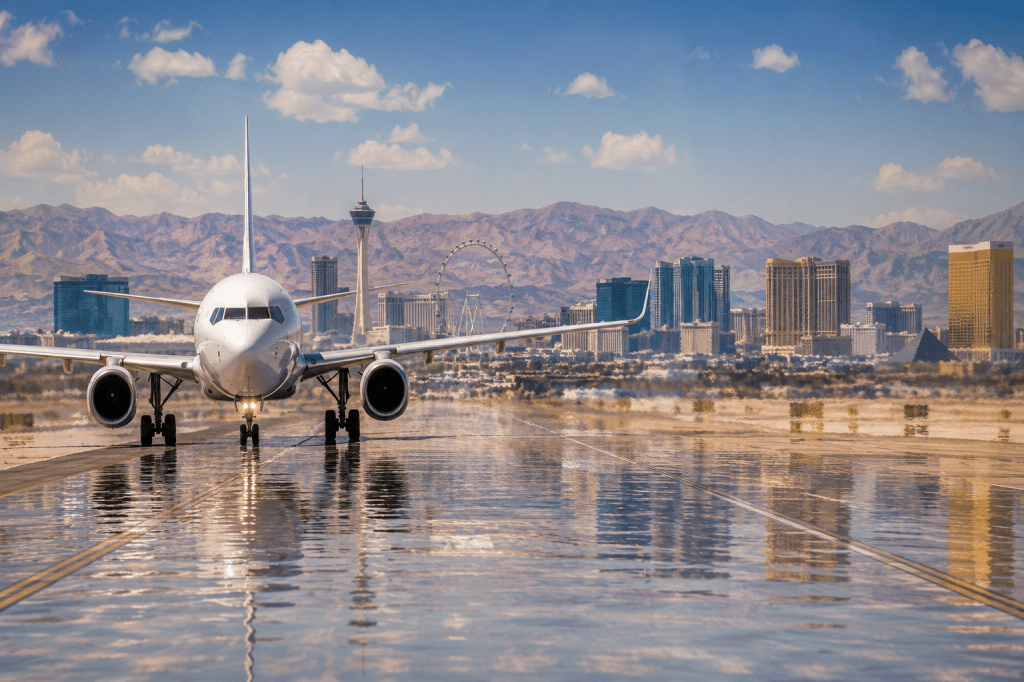
    As temperatures climbed well above 110°F, several flights at Harry Reid International Airport were delayed, and in one widely reported case, passengers were actually asked to volunteer to get off the airplane because it was too heavy to safely depart in the extreme heat.

    I’m actually in Las Vegas this week for the Summer Las Vegas Market, and let me tell you, it’s brutally hot outside. Walking between buildings feels like opening an oven door.

    So what’s really happening?

    The Science Is Actually Pretty Simple

    Airplanes fly because their wings generate lift.

    The hotter the air gets, the less dense it becomes. Think of it as the air becoming “thinner.” Thin air doesn’t give the wings as much to push against, and jet engines also produce slightly less thrust. The result is that airplanes need more runway and more speed before they can safely lift off.

    If the aircraft is carrying too much weight, there may not be enough runway available to safely accelerate and climb.

    That’s when airlines have a few options:

    • Delay the flight until temperatures cool.
    • Offload cargo or baggage.
    • Reduce fuel and make a fuel stop later.
    • Ask passengers to volunteer to take a later flight.

    Safety always wins.

    Las Vegas Makes It Even Harder

    Las Vegas is already challenging because of its desert climate.

    Now combine:

    • Temperatures over 110°F.
    • A busy airport with constant departures.
    • Aircraft loaded with passengers, luggage, and fuel.

    It’s the perfect recipe for weight restrictions. Fortunately, Harry Reid has one of the longest runways in the country, which helps, but even that has limits during extreme heat.

    Here’s the Real Travel Lesson

    The weather itself isn’t the story.

    Preparation is.

    One thing I’ve learned after hundreds of flights is that the travelers who recover the fastest are usually the ones who knew there was a problem before everyone else.

    Don’t just check the weather where you’re leaving.

    Check:

    • Your departure city.
    • Your connection city.
    • Your destination.

    A thunderstorm in Denver can affect your flight from Philadelphia to Salt Lake City. Extreme heat in Las Vegas can impact departures all afternoon.

    Weather anywhere in your aircraft’s journey can become your problem.

    The Biggest Mistake Travelers Make

    When a flight gets canceled, something interesting happens.

    Every single person on your airplane is suddenly trying to get to the exact same destination you are.

    If 180 passengers are stranded, they’re all competing for the same handful of available seats.

    That’s why speed matters.

    If you’ve already been watching your flight, already know your alternate flights, and already have the airline app open, you can often rebook before half the cabin has even stood up.

    I’ve seen travelers spend twenty minutes waiting in line at the gate while someone sitting in Row 22 has already secured the last available seat on the next departure using the airline’s app.

    My Advice

    Weather is one of the few things airlines can’t control.

    What you can control is your awareness.

    Know what’s happening before you leave for the airport.

    Watch your inbound aircraft.

    Know your backup flights.

    If things start going sideways, act quickly.

    In travel, information is often your biggest advantage.

    Travel Smart,

    Tommy Pags
  • TSA Is Finally Cracking Down on Oversized Carry-Ons. Good.

    TSA Is Finally Cracking Down on Oversized Carry-Ons. Good.

    TSA Is Finally Cracking Down on Oversized Carry-Ons. Good.

    If you’ve flown recently, you’ve probably seen it.

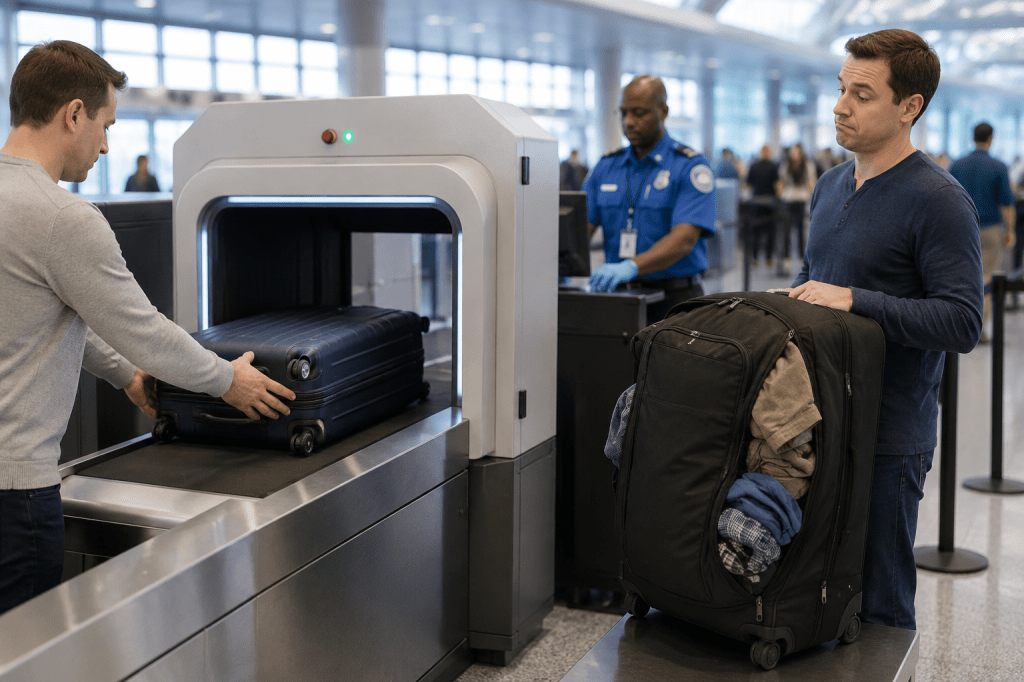
    Someone shows up at the TSA checkpoint with a carry-on that’s bulging at the seams, barely zips shut, and somehow is expected to fit through security, into the overhead bin, and not delay everyone else.

    That may be coming to an end.

    The TSA is rolling out advanced 3D CT scanners at airports across the country. Besides providing much better security screening, these machines have a smaller opening than many of the older X-ray scanners. If your carry-on won’t physically fit through the scanner, you may be sent back to the airline counter to check it before you can continue through security. In many cases, that means leaving the security line, checking the bag, and starting the process all over again. (New Jersey 101.5)

    The Rules Aren’t New

    This is an important distinction.

    The TSA isn’t changing carry-on size limits.

    The airlines already have those rules. For most major U.S. carriers, the standard maximum carry-on size is 22 x 14 x 9 inches, although every airline publishes its own baggage policy. (Yahoo Travel)

    What’s changing is enforcement.

    For years, many travelers pushed the limits. Overstuffed bags, oversized rollers, duffel bags that somehow became twice their normal size. Sometimes they made it through security only to be gate checked later. Sometimes they somehow squeezed into an overhead bin after holding up the boarding process.

    The new scanners don’t care how persuasive you are.

    If the bag doesn’t fit, it doesn’t fit.

    This Is One TSA Change I Completely Support

    I know this probably won’t be a popular opinion with everyone, but I’m all for it.

    If you’ve followed Pags on the Go, you know I’m constantly looking for ways to make air travel smoother.

    The biggest slowdowns at an airport usually happen when something falls outside the normal process.

    That could be:

    • An oversized carry-on
    • A bag stuffed beyond its intended size
    • Someone trying to bring unusual items through security
    • Travelers who aren’t prepared when they reach the checkpoint
    • People reorganizing their luggage in the middle of the line

    Every exception creates friction.

    One person takes an extra minute, then the next person waits, then the next, and before long the entire checkpoint slows to a crawl.

    Multiply that by hundreds of travelers every day, and the delays become significant.

    Frequent Travelers Already Understand This

    There are different types of travelers.

    Some people fly once or twice a year for vacation.

    Others live in airports.

    Business travelers and frequent flyers aren’t trying to rush because they’re impatient. They’re trying to eliminate unnecessary delays.

    That’s why they enroll in TSA PreCheck, CLEAR, or Digital ID.

    That’s why they board efficiently.

    That’s why they pack consistently.

    And that’s why they appreciate anything that keeps the line moving.

    When everyone follows the same process, the entire airport works better.

    Better Technology, Better Security

    The new CT scanners aren’t just about baggage size.

    They produce a three-dimensional image of your carry-on that allows TSA officers to rotate, zoom, and inspect its contents far more effectively than older X-ray systems. At many checkpoints, they also allow travelers to leave laptops and other electronics inside their bags, reducing the amount of unpacking at security. More than 250 U.S. airport checkpoints have already received these scanners, with additional installations planned. (New Jersey 101.5)

    So while stricter carry-on enforcement is getting the headlines, the real story is that airport security is becoming both smarter and, in many cases, faster.

    My Advice

    Before your next trip:

    • Measure your carry-on instead of guessing.
    • Don’t overstuff expandable luggage.
    • Check your airline’s published carry-on dimensions before you leave home.
    • If your bag is questionable, check it before getting in the TSA line.

    A few extra minutes at home can save you from being sent back to the ticket counter after you’ve already waited in security.

    For once, I think this is a change that benefits everyone.

    Less arguing.

    Less congestion.

    Fewer oversized bags competing for overhead space.

    And hopefully, a faster trip through the airport.

    That’s something I can get behind.

    Travel smart,
    Tommy Pags