
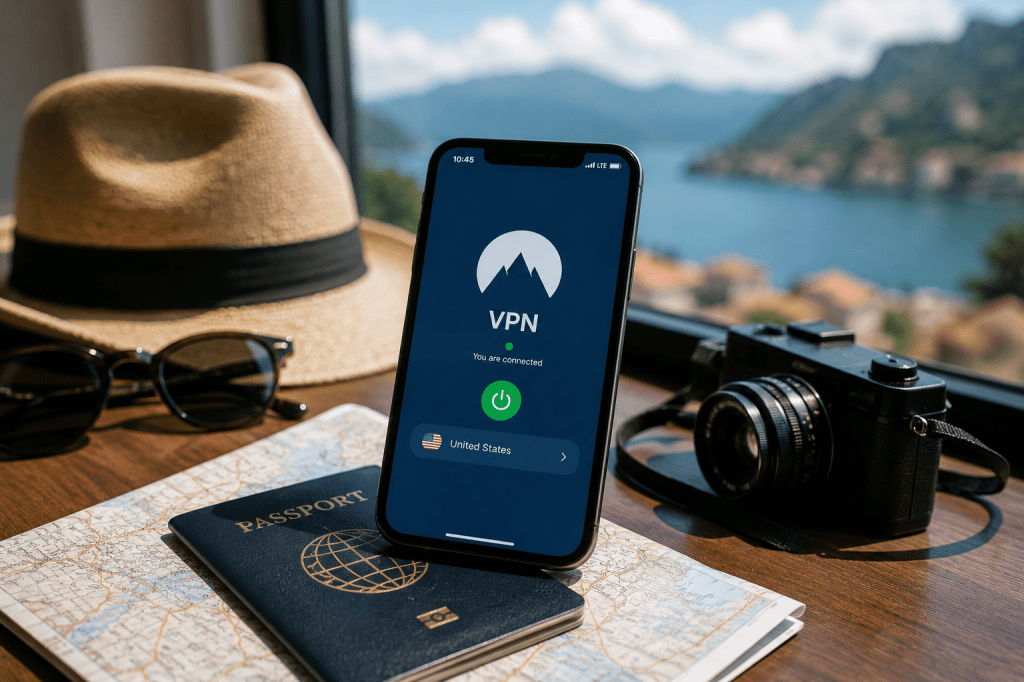
Should You Use a VPN While Traveling?
By Tommy Pags | Pags on the Go
If you travel long enough, you’ll hear people say, “You don’t need a VPN anymore. Banking websites are encrypted. Amazon is secure. Walmart is secure.”
And while there’s some truth to that, I don’t think it tells the whole story.
My philosophy has always been pretty simple.
Why take the chance?
When you’re sitting in an airport, hotel lobby, convention center, or coffee shop, you’re sharing that network with hundreds, sometimes thousands, of complete strangers. Most of them are just trying to get online like you are. But it only takes one bad actor to create a problem.
Could everything be perfectly safe?
Sure.
Could it also not be?
Absolutely.
What’s the Risk?
Most major websites today use encryption, which is a good thing. Your bank, credit card company, and favorite online stores invest heavily in protecting your information.
But security isn’t just about the website you’re visiting.
It’s also about the network you’re using to get there.
Public Wi-Fi networks can be compromised. Fake networks can be set up to look legitimate. Some attacks don’t target the website at all, they target the connection between your device and the internet.
Even if the odds are low, the consequences can be high.
Recovering stolen information isn’t just frustrating. It can mean replacing credit cards, changing passwords, monitoring your identity, dealing with your bank, and spending hours fixing something that could have been avoided.
My Rule Is Pretty Simple
If I’m traveling and I don’t need public Wi-Fi…
I don’t use it.
My phone’s cellular connection is usually more than fast enough for checking email, looking up flight information, navigating to my hotel, or posting to social media.
That’s my first choice every time.
But What If You Need Wi-Fi?
Sometimes you don’t have much of a choice. Maybe you’re overseas. Maybe your cell signal isn’t great. Maybe you’re downloading a large file for work. That’s where I think a VPN makes sense.
A Virtual Private Network, or VPN, encrypts your internet traffic before it leaves your device. Think of it as adding another layer of protection between you and everyone else using the same network.
Does it make you completely anonymous?
No.
Does it make you impossible to hack?
No.
But it does make it significantly harder for someone to intercept your information.
Which VPN Should You Buy?
There are plenty of good options.
NordVPN.
ExpressVPN.
Surfshark.
There are others too.
I’m not here to tell you which one is best. There are plenty of reviews online that compare features, speeds, and pricing.
My point is much simpler than that.
If you travel regularly, especially for work, having a reputable VPN is a smart investment.
My Recommendation
If you’re an occasional traveler who takes one vacation a year, you probably don’t need to overthink it.
Just stay off public Wi-Fi whenever possible.
If you do have to connect, avoid logging into banking websites, shopping accounts, or anything that requires sensitive personal information. But if you’re someone like me who’s constantly in airports, hotels, rental cars, and convention centers, I think a VPN is worth having. Hopefully you’ll never need it. But that’s exactly how I think about travel insurance too. You don’t buy it because you expect something to go wrong. You buy it because if something does go wrong, you’ll be glad you prepared.
Final Thoughts
Travel should be about enjoying the journey, not worrying about whether your personal information is safe.
Using your phone’s cellular connection whenever possible, avoiding public Wi-Fi when you can, and keeping a VPN available for the times you need it are simple habits that can go a long way toward protecting your data.
For me, it’s not about living in fear.
It’s about removing unnecessary risk.
That’s one less thing to think about while you’re enjoying the trip.
Safe travels, and I’ll see you at the airport.
Travel Smart,
Tommy Pags
 Pags on the Go
Leave a comment